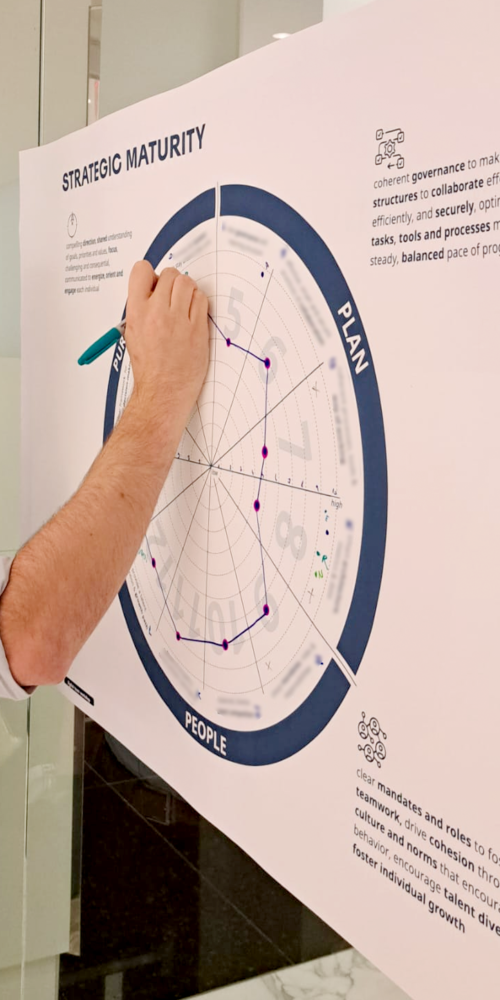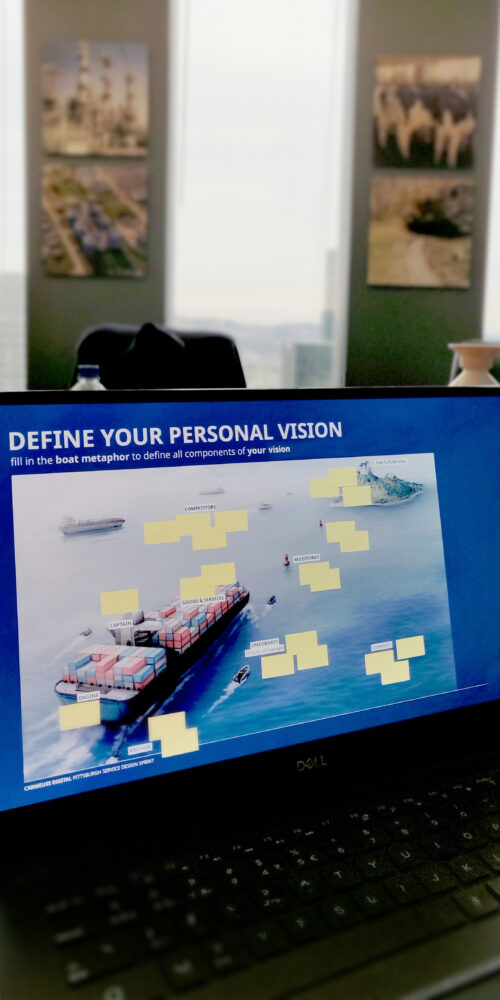
a 360° view of organizational maturity across Purpose, People and Plan
assess the current maturity and future ambition of strategic capabilities to highlight strengths, weaknesses & differences in perception among leadership teams. Repeated annually, Strategy Scan becomes a practical instrument to monitor & direct organizational evolution
how Strategy Scans create value:
- creates a fact-based view of organisational maturity
- reveals strengths, weaknesses & blind spots
- highlights differences in perception across the leadership team
- identifies priority capabilities for improvement
- defines realistic target maturity levels
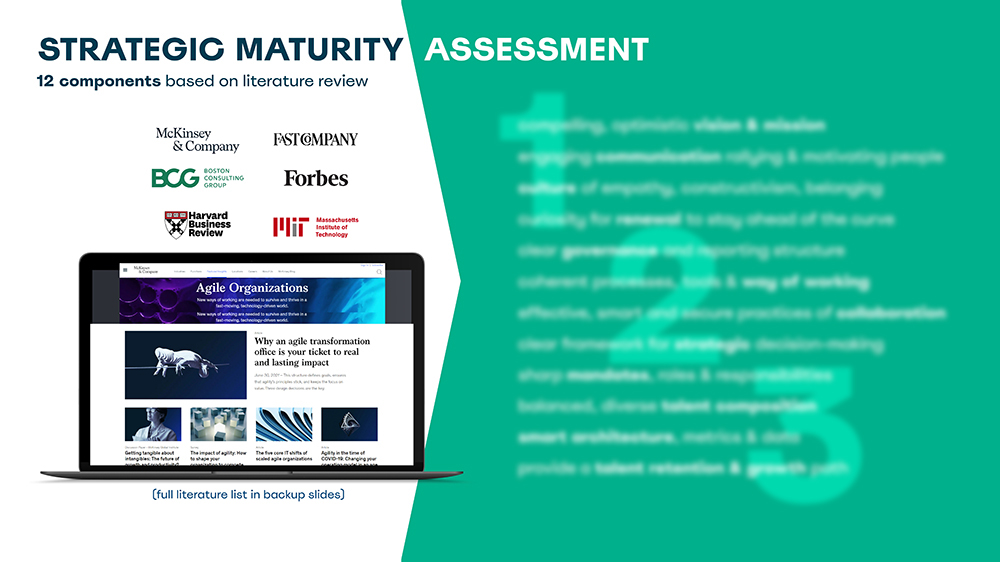
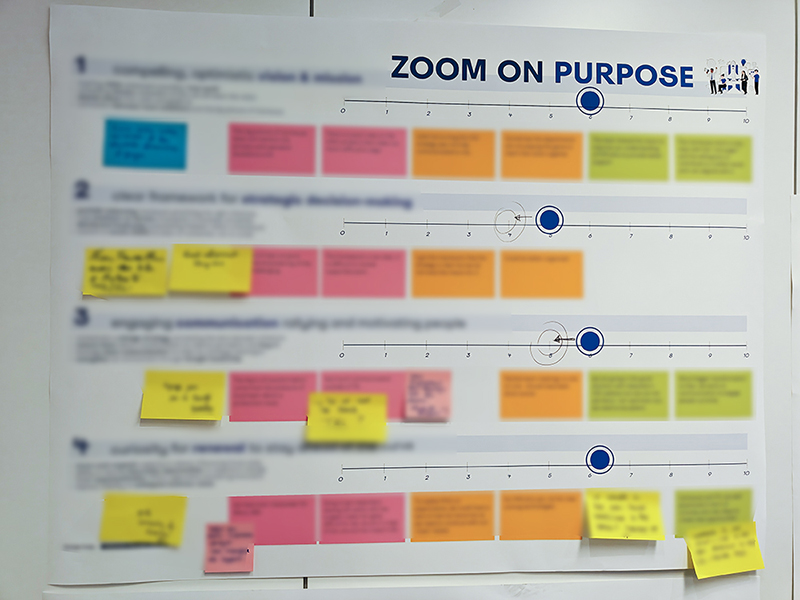
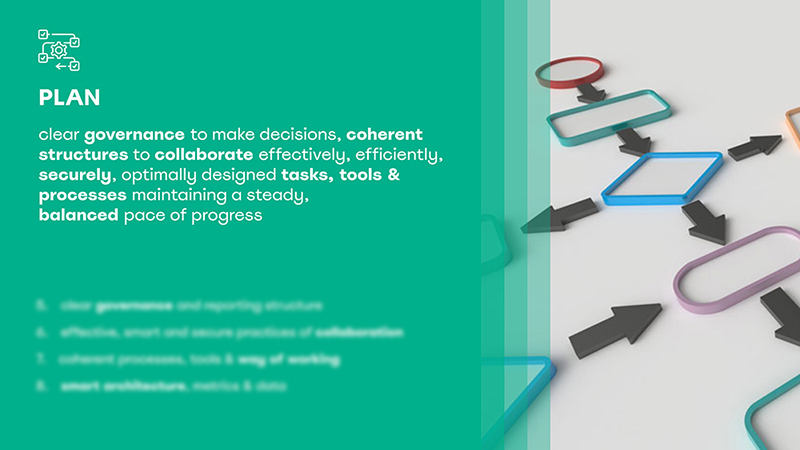
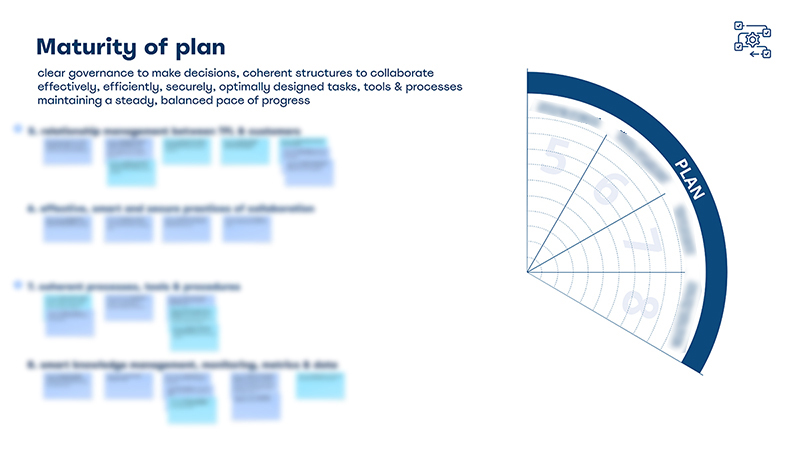
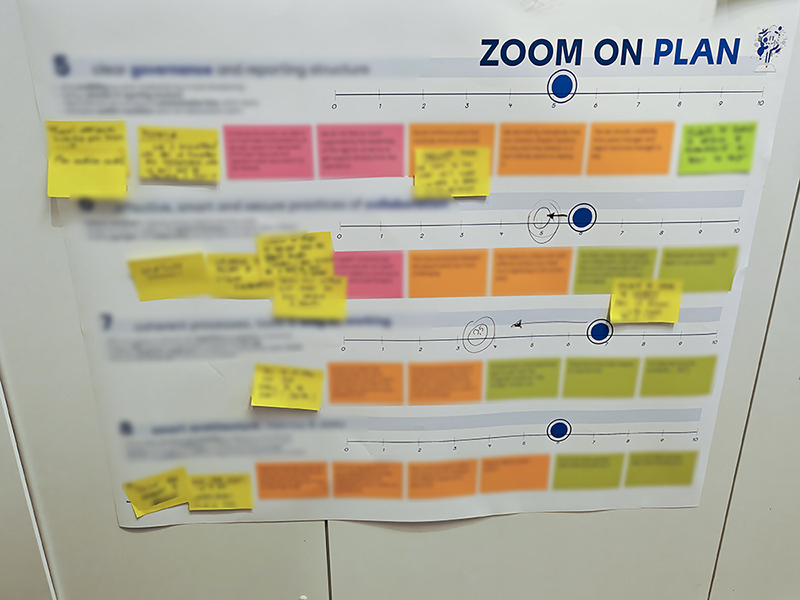

measure maturity. surface assumptions. align the leadership team.
whether you’re preparing a growth strategy, aligning an executive team or launching a transformation program, Strategy Scan provides a structured way to evaluate where you stand today and where you want to go tomorrow:
Leadership & Governance
Transformation & Change
Organisation & Culture
Strategy Growth
why it works:
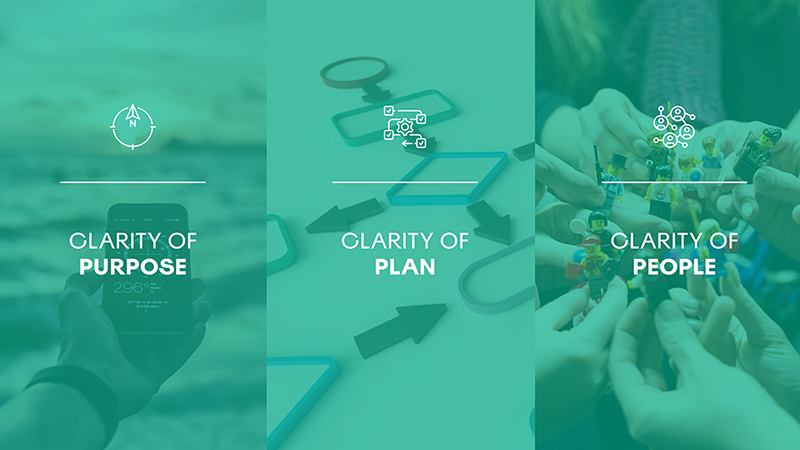
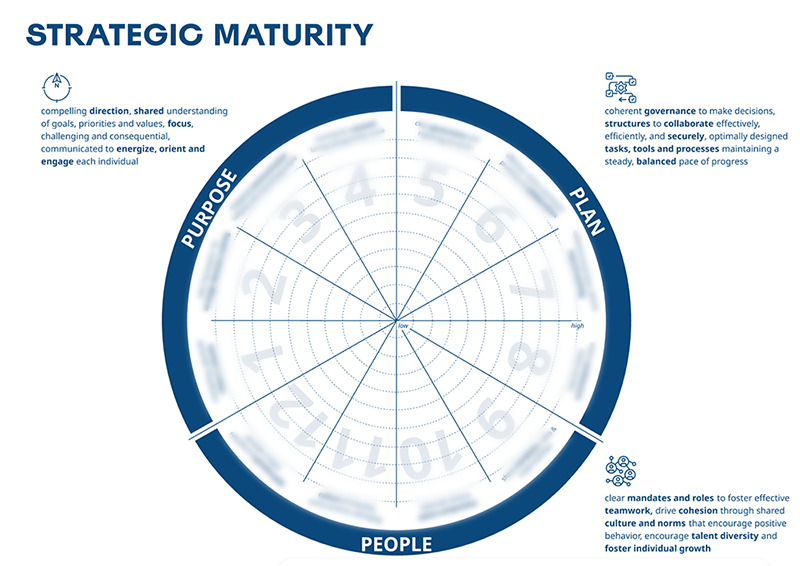
Strategy is sometimes discussed as a single concept, per silo, while in practice it consists of dozens of interconnected capabilities that determine an organisation’s ability to grow, adapt and execute. Strategy Scan breaks this complexity down into three dimensions: Purpose, People and Plan. Rather than asking whether an organisation has a strategy, it asks whether it possesses the capabilities required to execute the strategy.
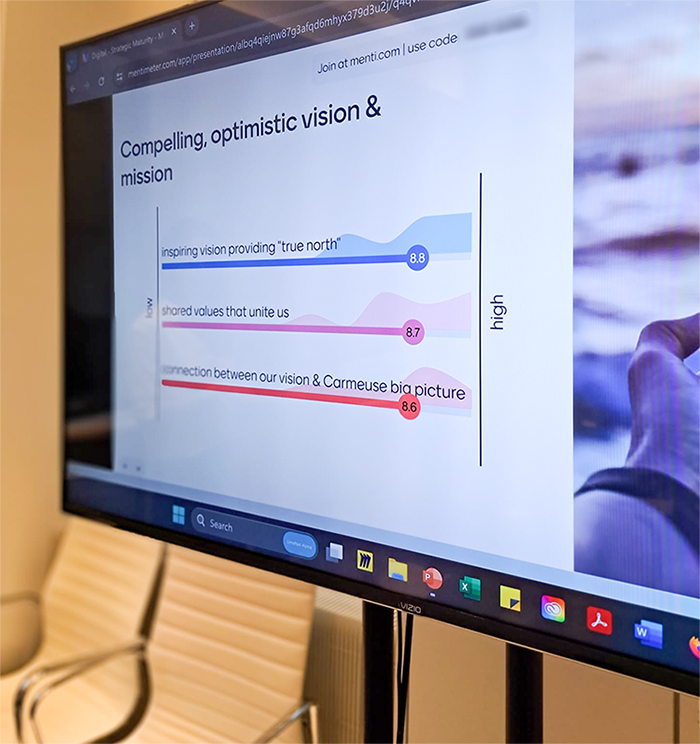
By visualising individual scores and differences in perception, the framework creates a shared language for discussing strengths, weaknesses and ambitions. In fifteen years of strategy and transformation projects, some of the most valuable conversations have emerged not from low scores, but from differences in scoring. If two leaders experience the same organisation very differently, there is a deeper conversation worth having.
Strategy Scan origin story: the long read
We created Strategy Scan as a starting point for yearly “health check-ins” for our clients, combining years of strategy workshops, leadership off-sites and transformation programmes across family businesses, SMEs, scale-ups and multinational organisations. It fulfills two core functions: 1) move the conversation away from the initiatives roadmap of each director, towards assessing whether the organisation possesses the capabilities required to deliver them and 2) start the day with identifying where the leadership team is already aligned (opportunities for quick decisions), and where deeper conversations are necessary (time needed to discuss). The framework structures strategic maturity into three interconnected dimensions:
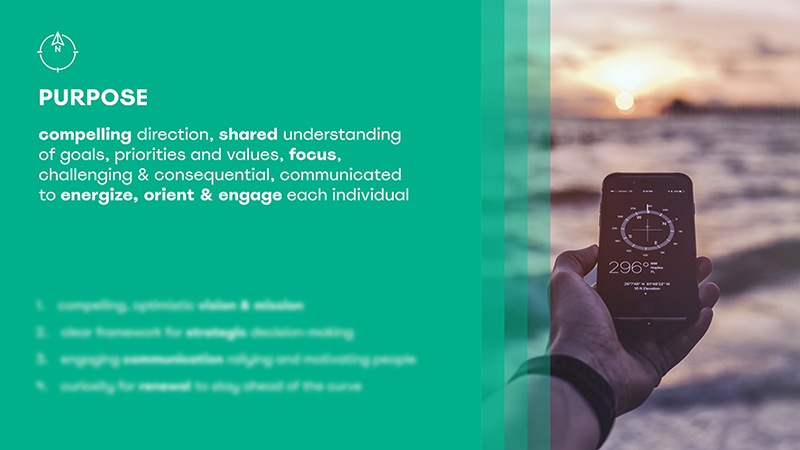
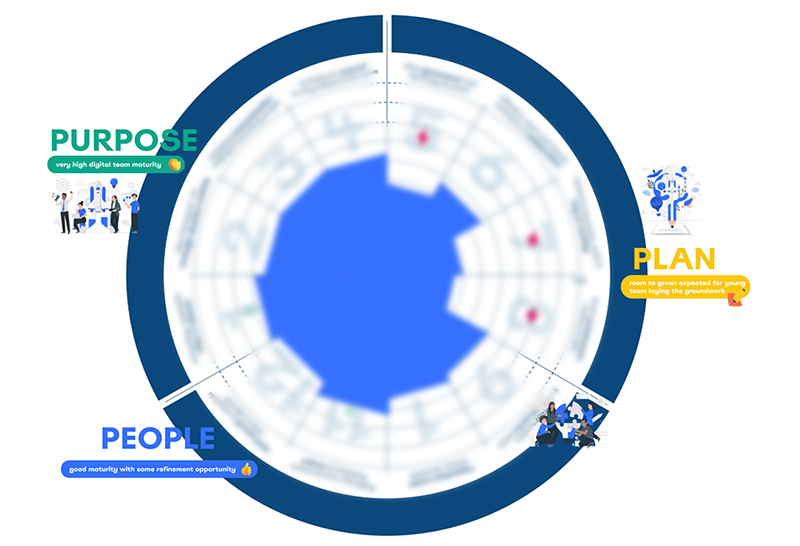
Purpose focuses on direction: it explores vision, mission, strategic priorities, decision-making frameworks, innovation sense & response and growth ambitions
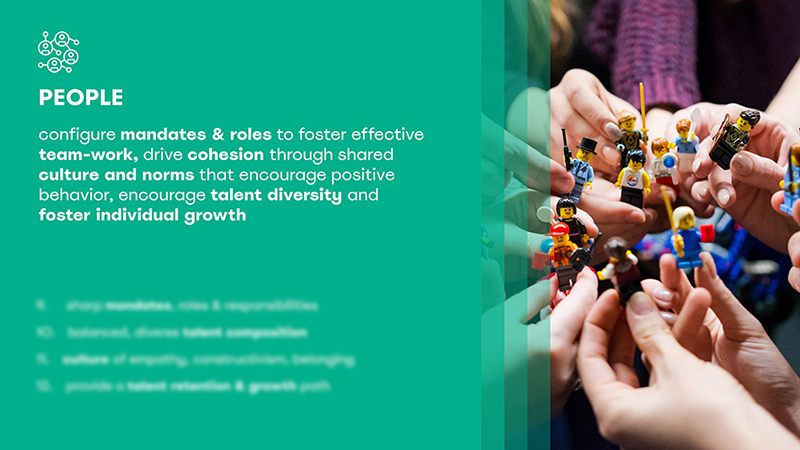
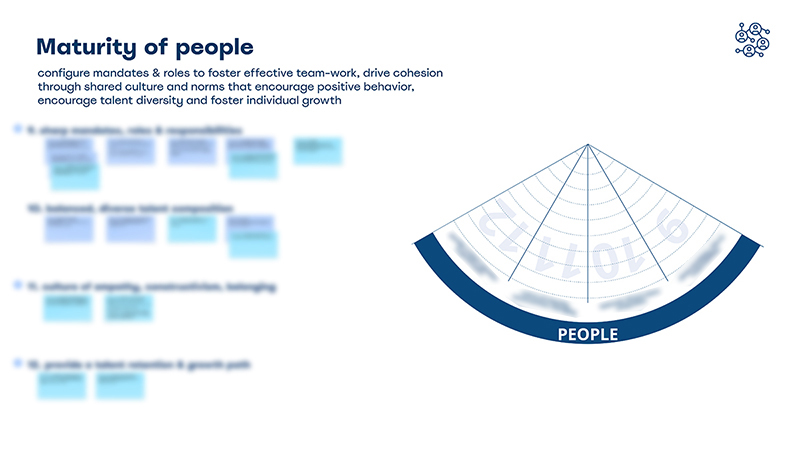
People focuses on the organisation behind the strategy: it looks at governance, organisational design, leadership, culture and talent development
Plan focuses on execution: it evaluates communication, collaboration, systems, processes, data and the organisation’s ability to consistently deliver results

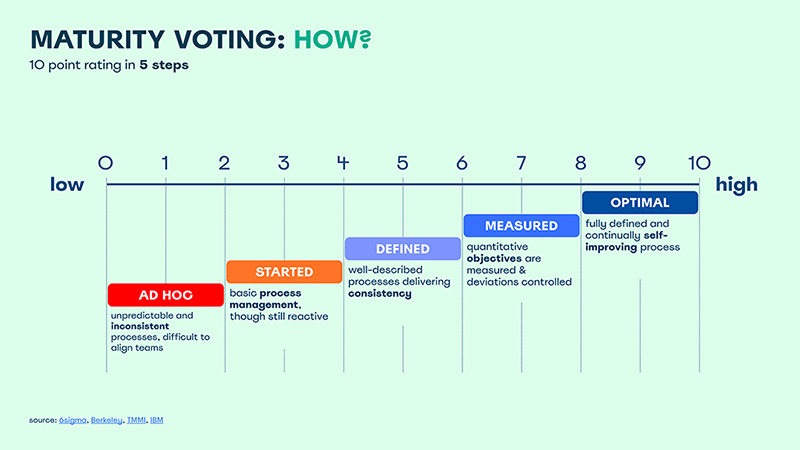
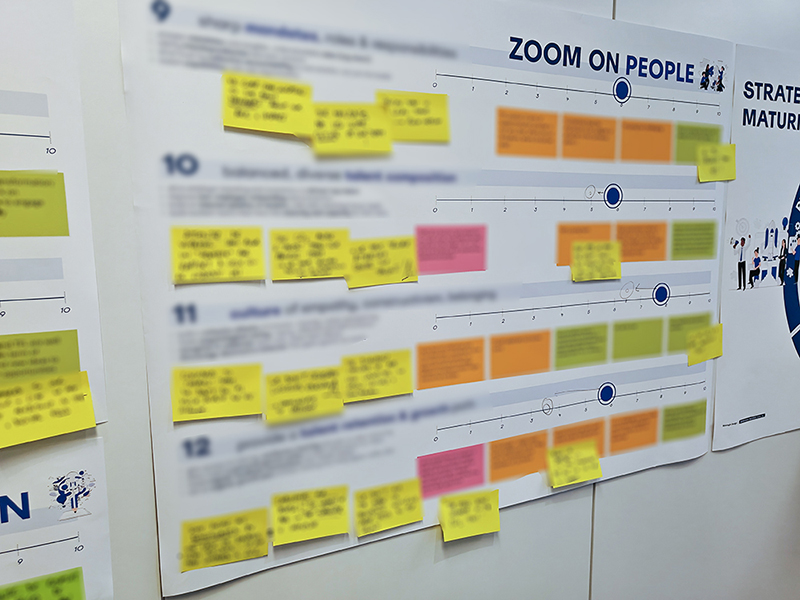
Each capability is assessed using a maturity model inspired by CMMI, ranging from 0 (Non-Existing) to 5 (Excellent): A score of 0 means the capability is largely absent. At 1 (Ad Hoc), success depends on individual effort rather than organisational practice. At 2 (Initial), structures start to emerge but remain inconsistent. At 3 (Adequate), the capability reliably supports day-to-day operations and decision-making. At 4 (Good), it has become a recognised organisational strength. At 5 (Excellent), it is deeply embedded, continuously improved and contributes to long-term competitive advantage.
Project experience shows that many organisations do not need to be excellent at everything: for some capabilities, being “good enough” is perfectly sufficient, the objective is not excellence everywhere, but fitness for purpose.
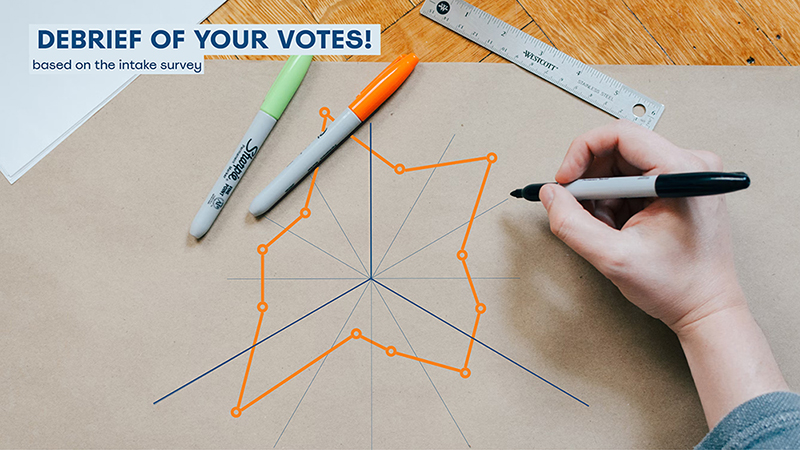
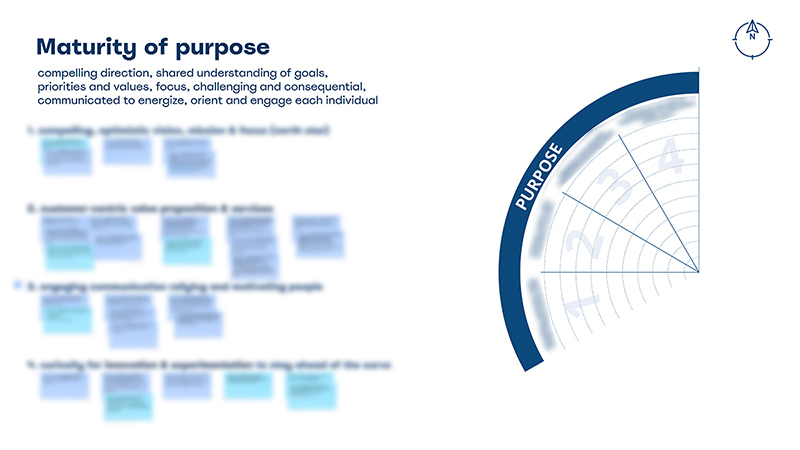
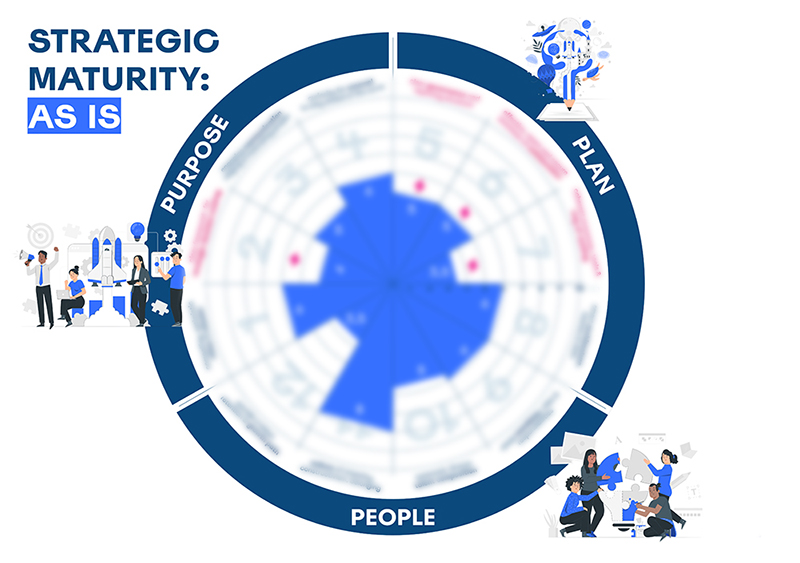
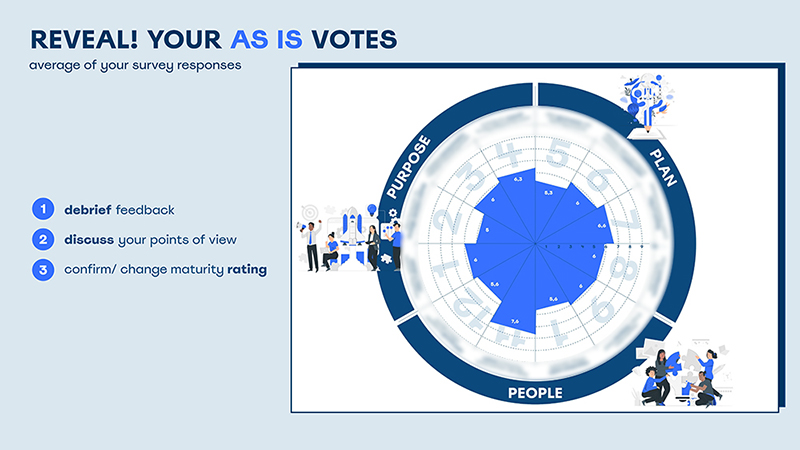
Once completed, the assessments are aggregated into a visual maturity map. Leadership teams review strengths, weaknesses and score discrepancies before discussing the future maturity required to support their ambitions. The result is a strategy conversation grounded in evidence rather than opinion.


step-by-step guide:
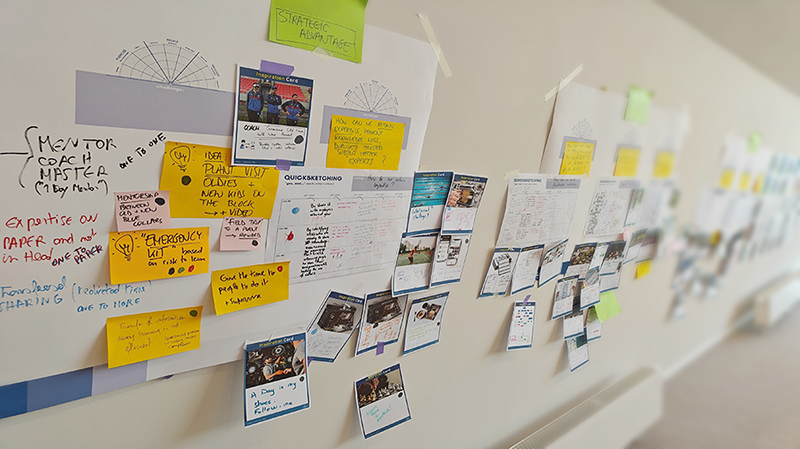
Strategy Scan provides an evidence-based way to identify strengths to build on, weaknesses to address and concrete initiatives to increase maturity:
advice for practitioners:
- complete the assessment individually before the workshop: independent scoring reveals more than group discussions alone
- focus on patterns and discrepancies: large differences often highlight hidden assumptions and valuable conversations
- challenge whether every capability truly needs to become a strength: Strategic maturity is about fitness for purpose, not excellence everywhere
- connect maturity gaps to strategic ambitions, growth plans and transformation objectives (prioritise low-scoring capabilities that will create the greatest strategic impact and high-scoring ones to maintain to keep a strategic edge)
- finish with clear ownership, actions and next steps so insights translate into progress
- revisit the assessment annually to track organisational evolution and changing priorities
curious?