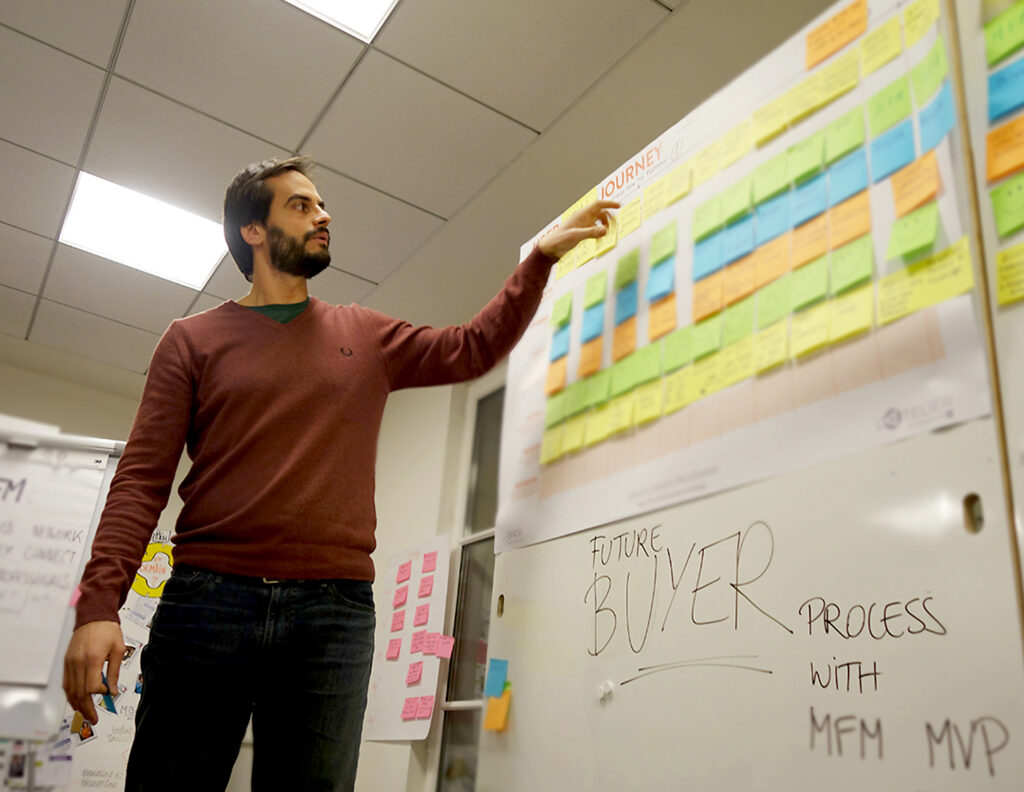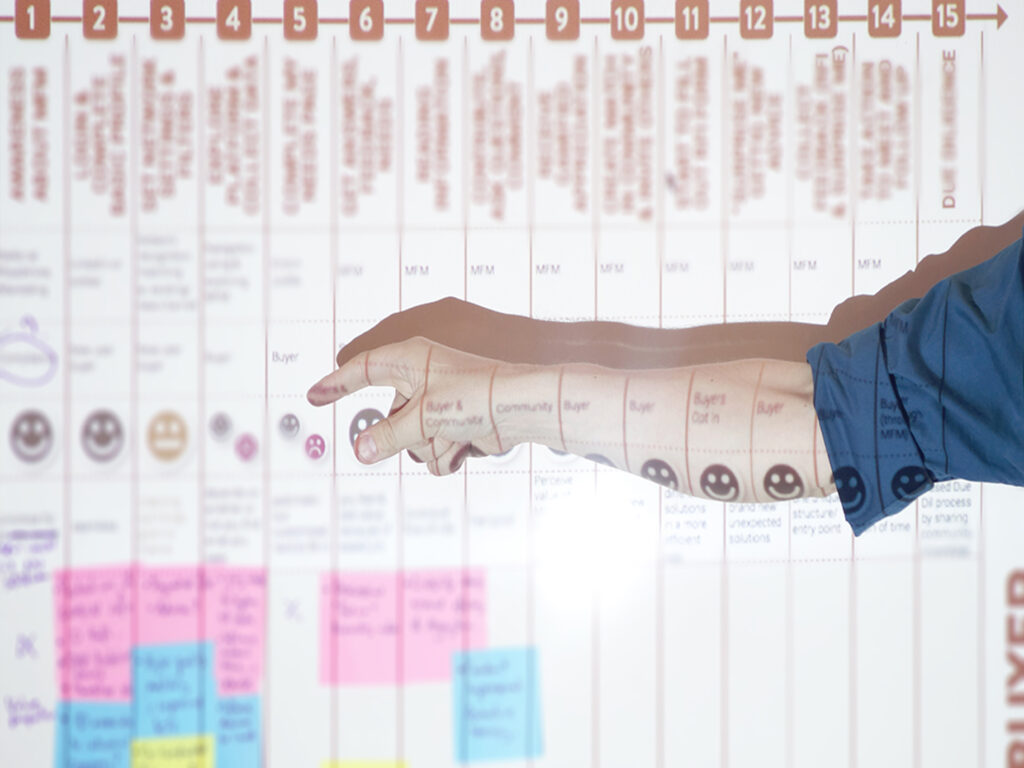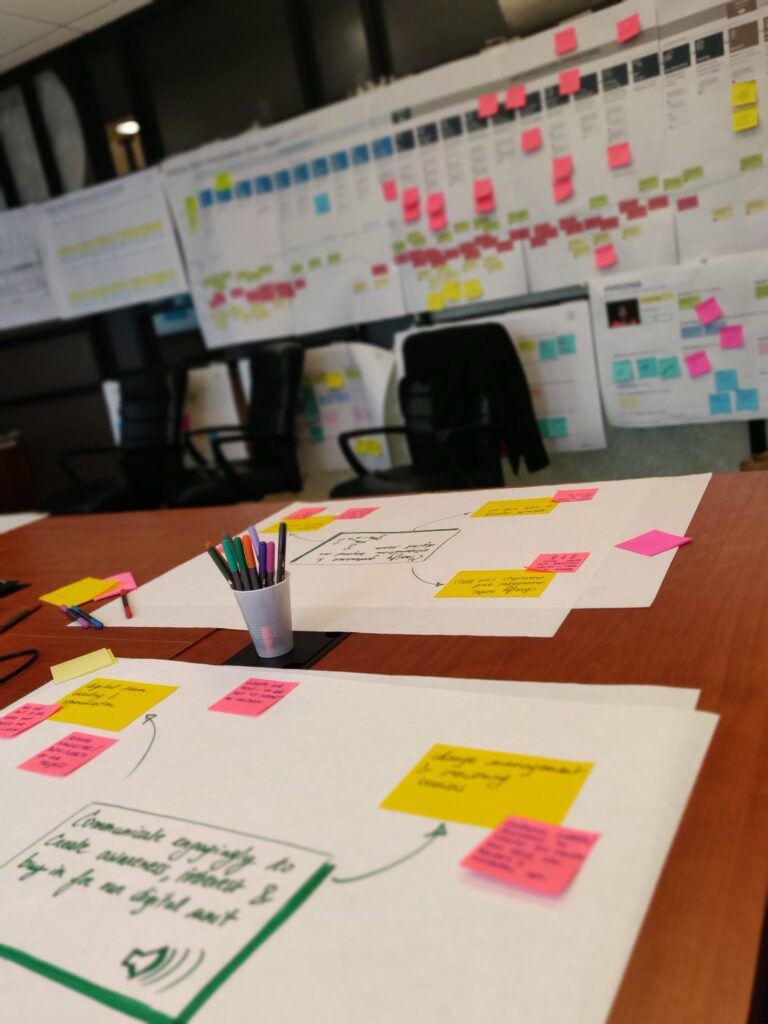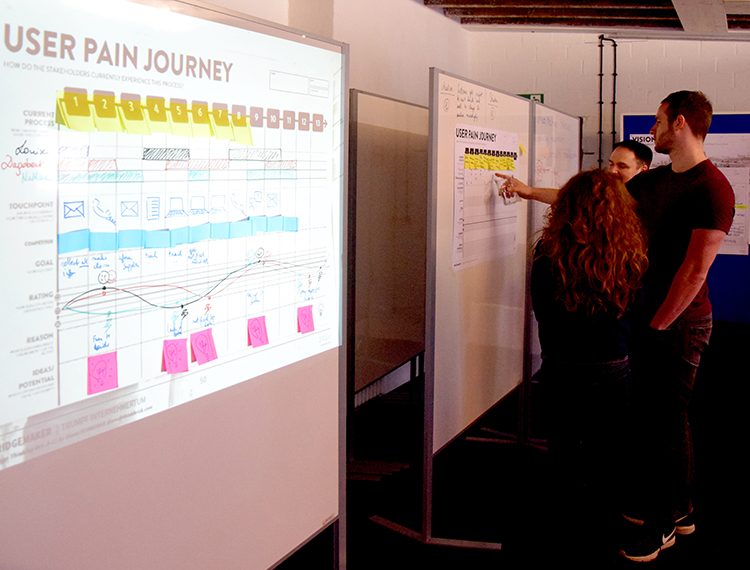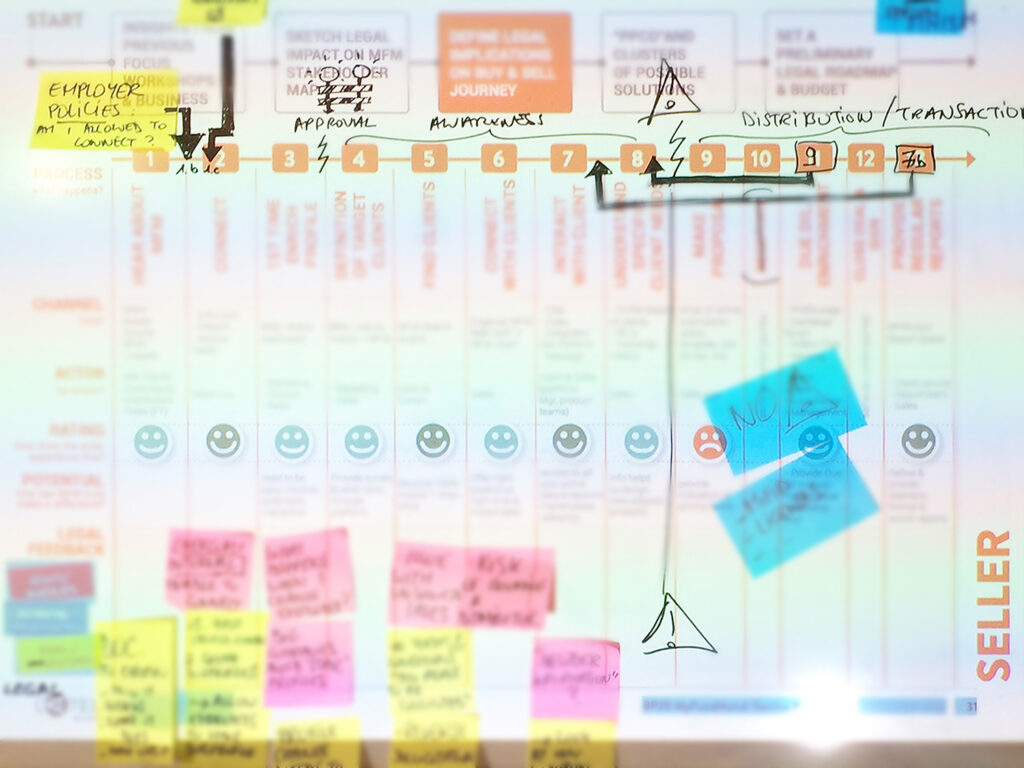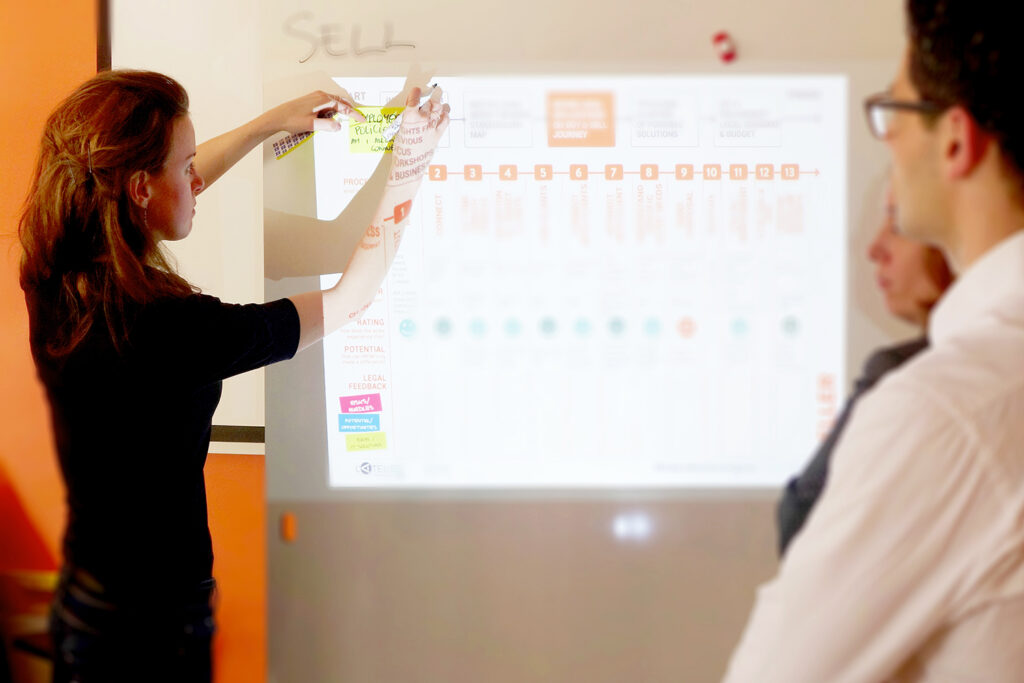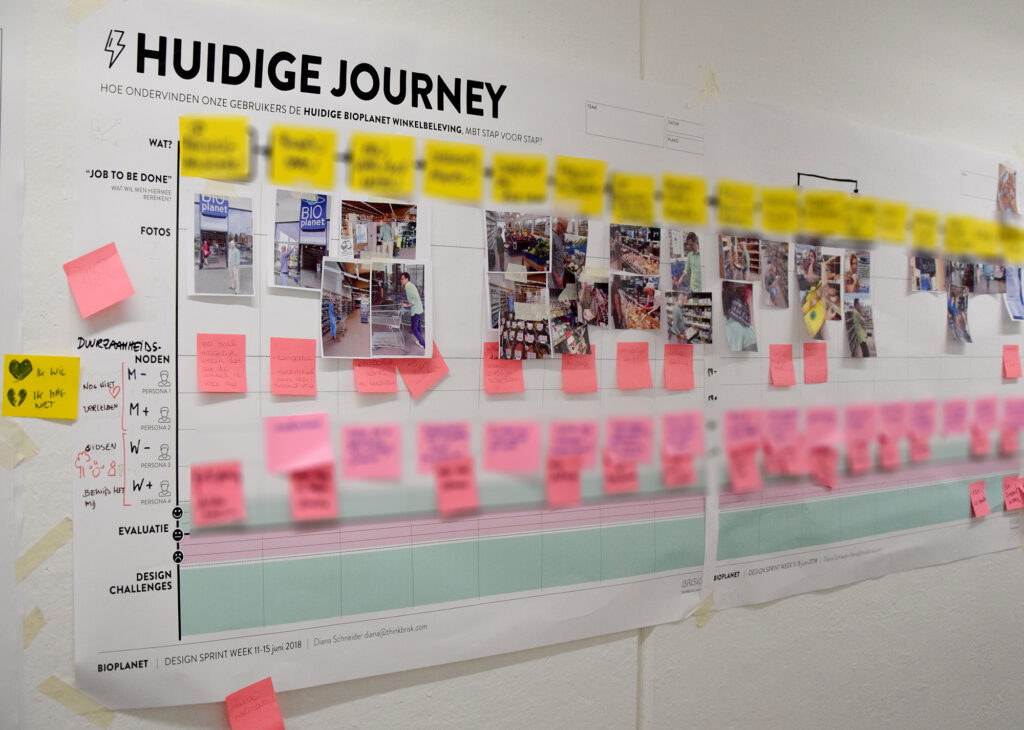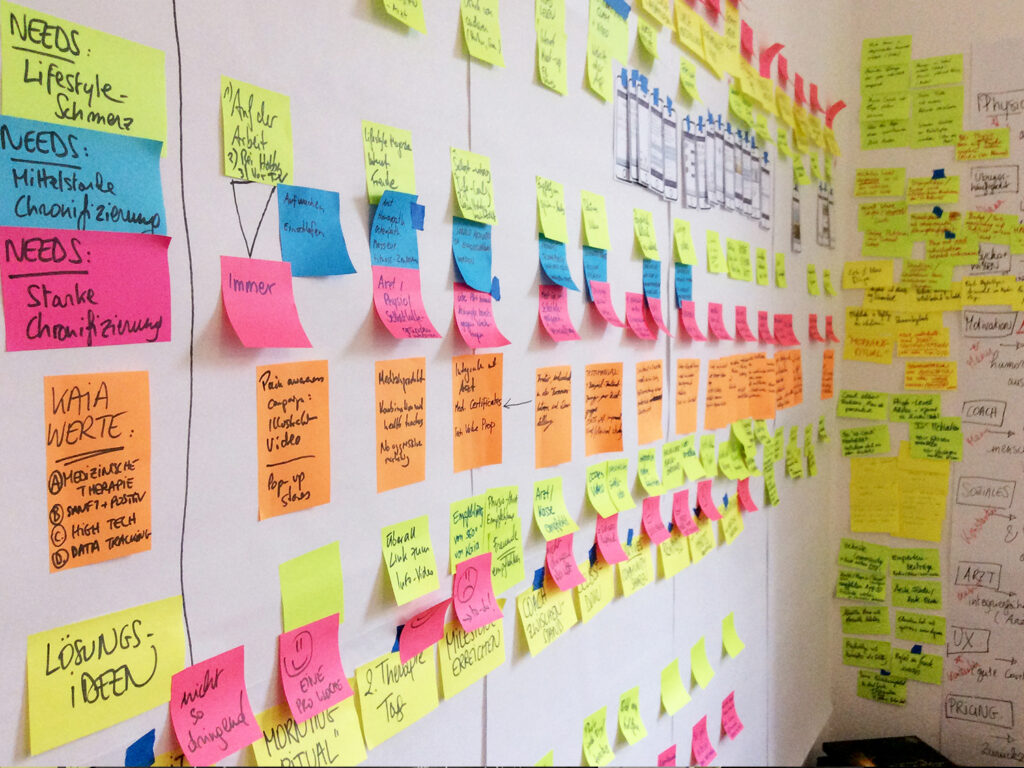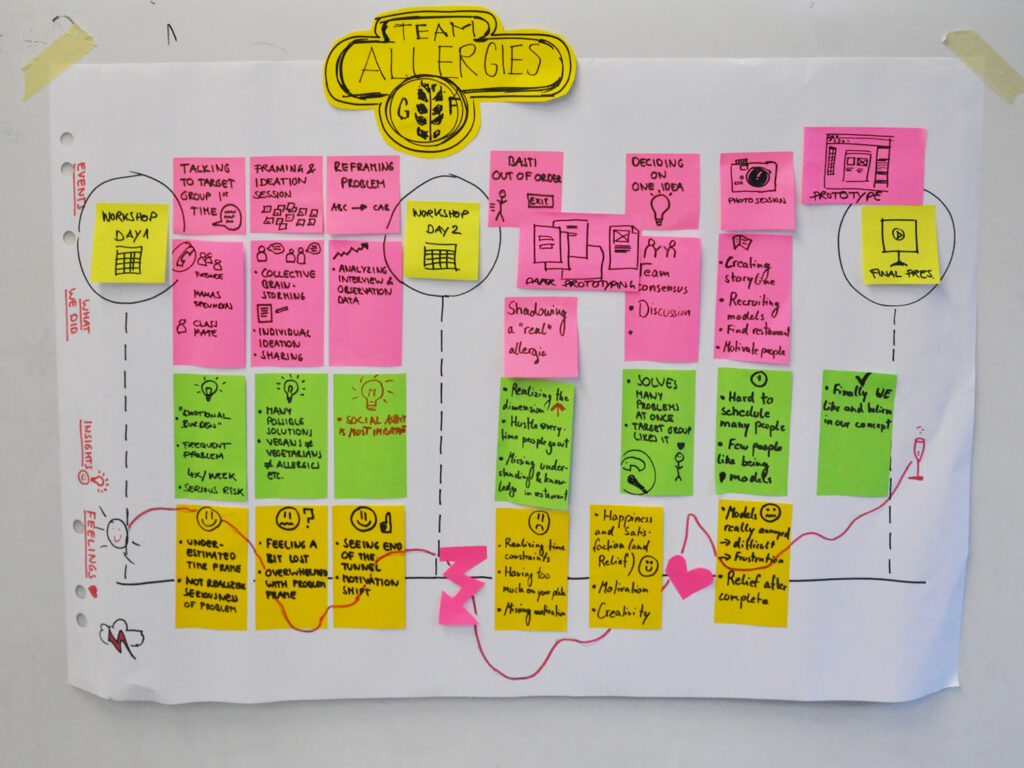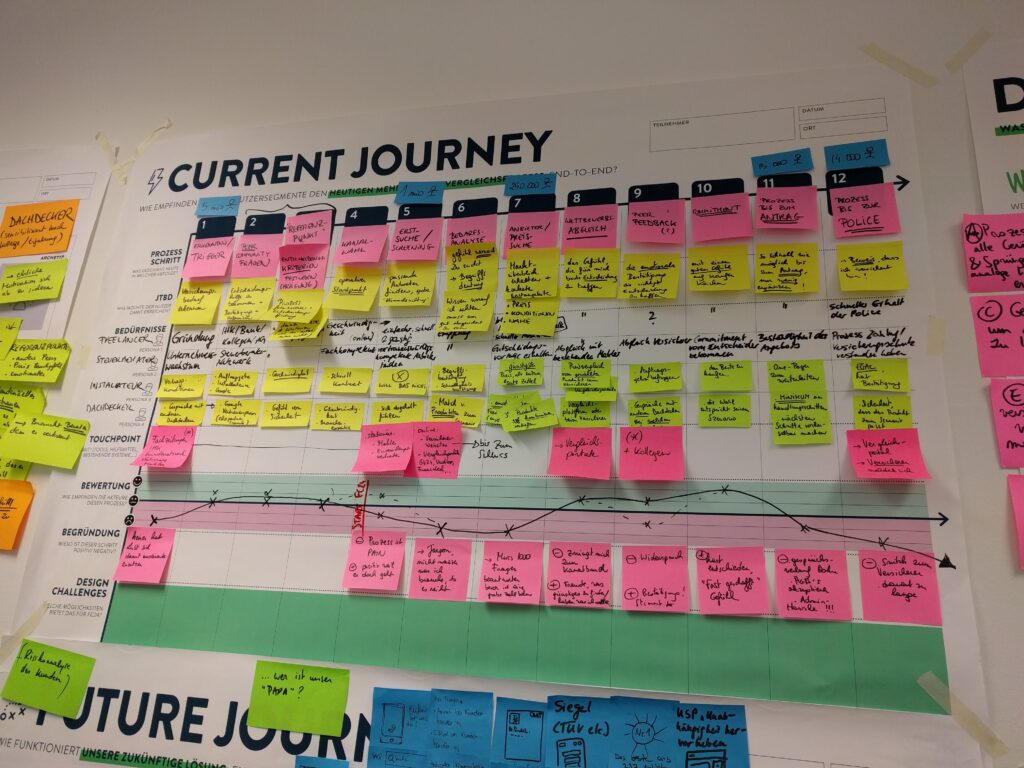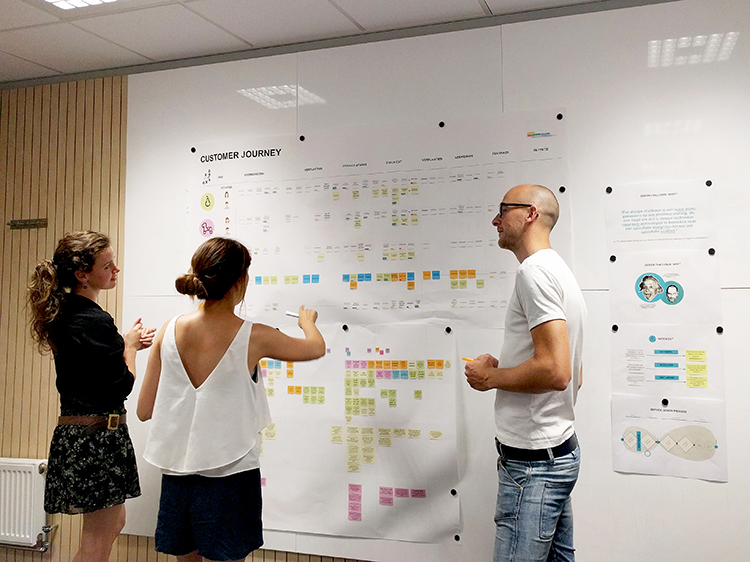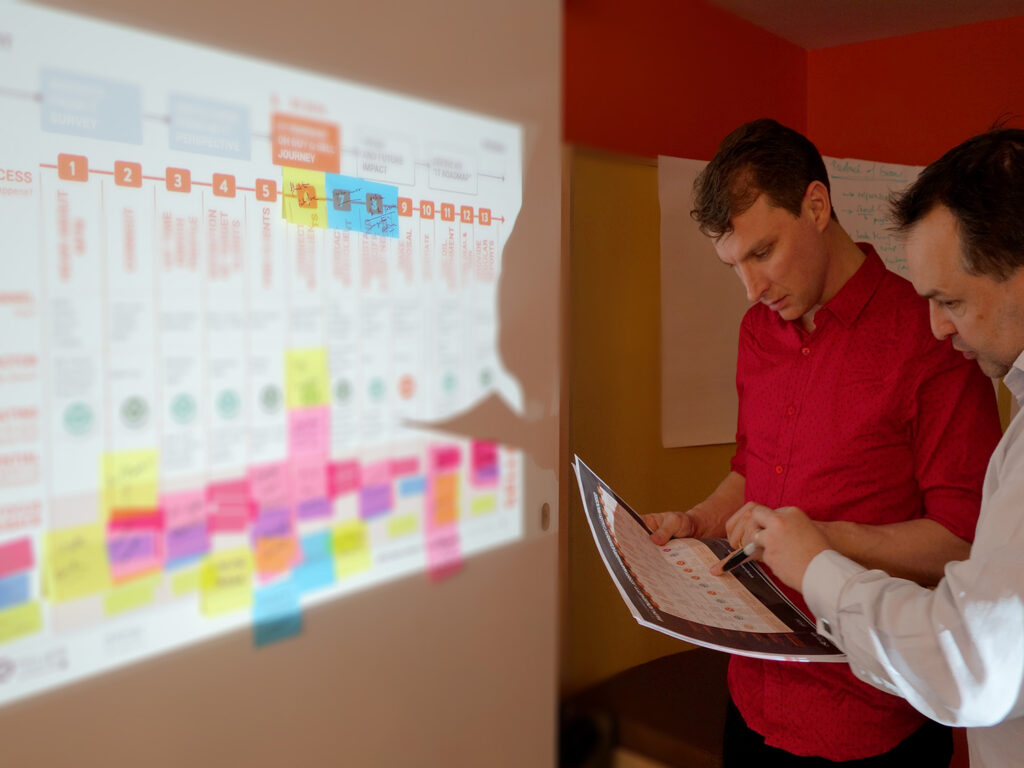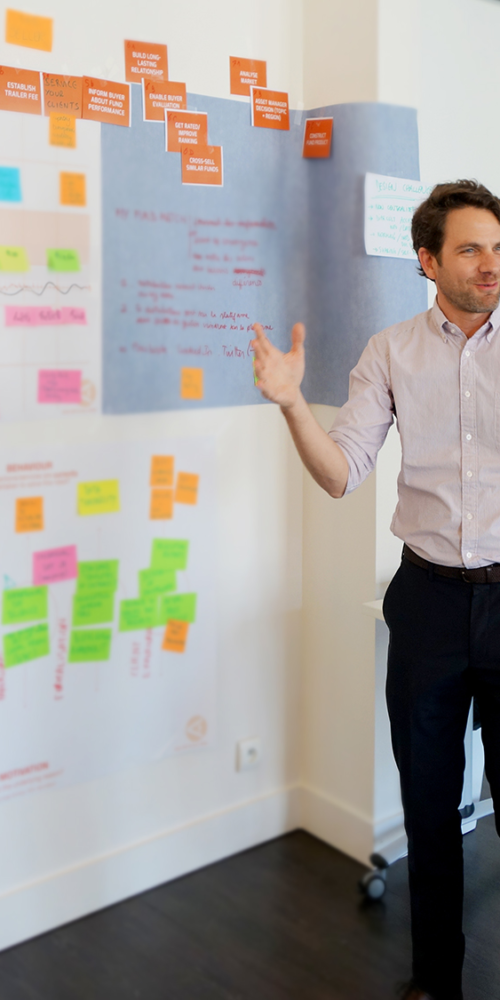
see your organisation through the eyes of the people who experience it:

understand how customers, employees, suppliers or citizens experience your product, service or process across every touchpoint and interaction: reveal opportunities to improve services, streamline operations, accelerate digital transformation and identify automation or AI opportunities.

how Customer Journeys create value:

  • establish a shared view of the end-to-end experience
  • reveal and prioritise pain points and unmet needs
  • align stakeholders around improvement priorities
  • highlight process inefficiencies and decision bottlenecks
  • identify opportunities for digitisation, automation and AI
diagnose
define
design
decide
deliver

map the journey. improve the experience. transform the operation. 

whether you’re redesigning a service, optimising a process, leading a transformation program or exploring AI opportunities: Customer Journey Mapping provides the visual clarity and evidence needed to focus your strategy, where it creates the greatest user impact:
Stakeholder Experience

customer onboarding, omnichannel journeys, retention, patient/citizen experiences

Core Business Processes
order-to-cash, procure-to-pay, HR services, IT support, knowledge management
Digital Transformation

ERP migration, workflow mapping, system integration, AI/ automation opportunities

Field Operations

technical support, maintenance, manufacturing/ construction processes, 3rd party integrations

why it works:

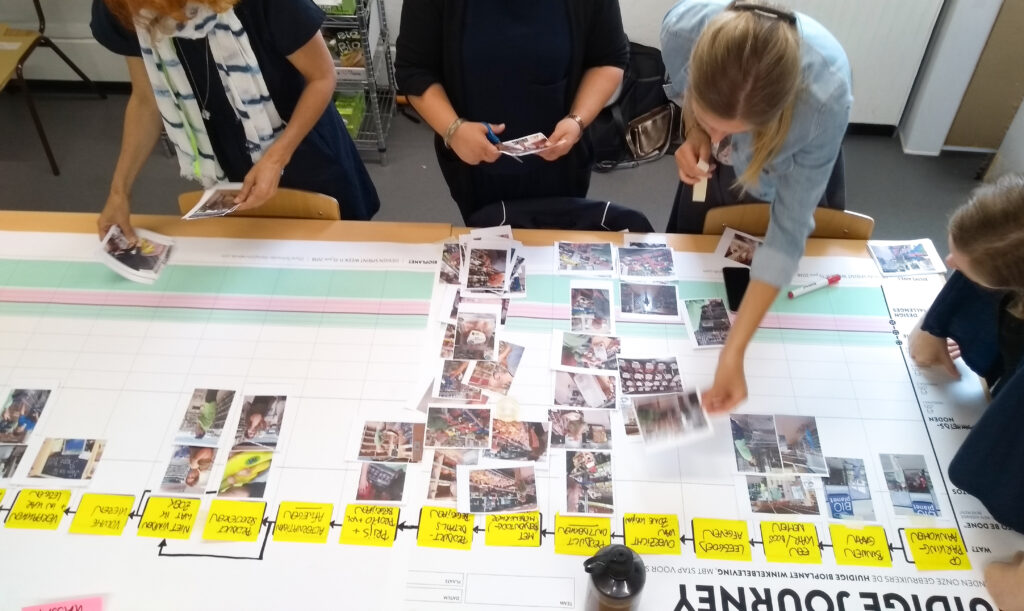
Customer Journey Mapping helps organisations understand the complete experience people have when interacting with their products and services, from the first touchpoint to the resolution of their need. By making chronological (inter)actions, stakeholder roles and information hand-overs visible, it provides a clear picture of what matters most to users, where experiences fall short and where improvements can deliver the greatest value.

Rather than focusing on how processes are designed or executed, Journey Mapping focuses on how those processes are experienced by the people moving through them. It reveals the connections between customers, employees, systems and services, bringing to light dependencies and frictions that often remain hidden in traditional process documentation.

Through this approach, organisations can identify customer frustrations and unmet needs, reduce repetitive information requests/ administrative burdens, uncover delays caused by handovers and approvals, and expose communication breakdowns across teams and departments. It also highlights opportunities to simplify processes, expand self-service capabilities, introduce automation and apply AI-driven solutions where they can have the greatest impact.

By visually linking customer experience directly to the underlying ways of working, Journey Mapping becomes a practical foundation for both service innovation and business transformation. This helps organisations bridge the gap between customer expectations and operational realities.

Customer Journey origin story: the long read

Customer Journey Mapping has its roots in Service Design, a discipline that emerged during the 1980s and 1990s as organisations began to recognise that competitive advantage no longer came solely from the products they sold, but increasingly from the experiences they created around them. This shift mirrored a broader economic transition from a product-driven economy to a service and experience economy.
Take coffee as an example of this shift: value and profit margins increase as companies move from selling coffee beans as a commodity, to packaged coffee as a product, to a freshly prepared cup of coffee as a service, and ultimately to a branded, multichannel experience, where customers pay not only for the drink but also for the atmosphere, convenience, digital touchpoints, and sense of belonging.
As businesses realised that customers perceived value across an entire sequence of interactions rather than through individual transactions, Service Design, User Experience Design and Customer Experience Management began developing methods for understanding and orchestrating these end-to-end experiences. Customer Journey Mapping emerged in the late 1990s and early 2000s as a practical tool for visualising how customers interact with organisations over time, revealing needs, emotions, pain points and opportunities for improvement across channels and touchpoints.
Today, it is a foundational method used across industries including banking, transport, healthcare, manufacturing, public services and digital platforms to design more cohesive, valuable and customer-centred experiences.

step-by-step guide:

whether you’re redesigning a patient’s journey through your hospital, optimising how information is handed over between your lab,  procurement, and construction teams, improving the onboarding process for B2B EV-charging customers, or exploring AI/ automation potential in your warehouse: make Customer Journey Mapping work for you:
1

define scope & swimlanes

select the customer group and business challenge to investigate and the elements to map (roles, IT systems, €, time, frictions, initiatives, etc)
2

collect evidence

gather customer qualitative and quantitative insights through interviews, observations, service data, analytics and stakeholder input
3

map the user(s) experience

visualise customer actions, goals, emotions, expectations and pain points across every stage of the journey
4

map interactions & roles

identify customer touchpoints, info handovers, approvals and interactions with people, systems and channels: separate roles in swimlanes
5

identify frictions & opportunities

highlight delays, confusion, duplicate activities, system disconnects and moments where experiences break down or value is lost
6

explore digitisation & AI opportunities

assess where automation, self-service, intelligent workflows or AI-enabled support can improve experiences/ reduce operational effort
7

prioritise actions

evaluate opportunities based on customer value, business impact and implementation feasibility

advice for practitioners:

We’ve crafted our fair share of Customer Journeys and have seen many more while working for our corporate clients over the years: the inherent value of this tool is (just like with most design tools) two-fold: the outcome itself condenses endless meetings and field analyses into an easy-to-digest visual map, that provides a shared understanding of the current, end-to-end service implementation with all key stakeholders and channels.
The often more meaningful value of this tool however, lies in the mindset shift from internal “how we do things” to a more customer-centric “how what we do is experienced” and the often very delightful, cross-hierarchy, cross-silo collaboration and co-creation it takes to build a robust Journey. Therefore the outcome itself isn’t the goal, and it should not become a checkbox, but a living, breathing, continuously consulted and updated monitoring and strategy course-correction tool to truly orchestrate the Customer Journey. 
  • ground findings in qualitative and quantitative evidence: avoid assumptions and anecdotal self-reporting
  • focus on a specific audience & task: if the journey becomes  diluted or you lose yourself in 27 edge cases, focus on the core happy flow & list exceptions 
  • involve stakeholders across functions, ideally all swimlanes of your Journey (customer-facing, Ops, IT, Strategy, etc.)
  • keep the visual simple: use predictable UI codes, reduce the fluff, then print it
  • move beyond diagnostic to directional: link insights to business objectives and actions with ownership and deadlines
  • revisit the journey: schedule recurring quarterly/ yearly check-ins 
  • automate data input, to transform a workshop outcome into a digitally enabled customer-centric dashboard about the health of your user experience

ready to apply it?

find out how customer journeys can help your organisation

get in touch

curious? there's more canvas where that came from:
Strategy Consulting
September 5, 2026

Vision & Voyage

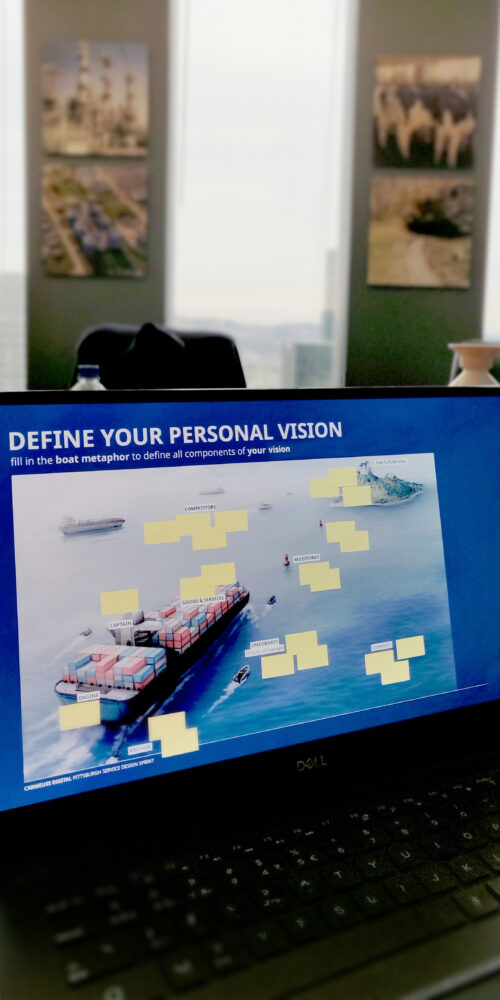
using the metaphor of a container ship navigating towards a distant island, this tool creates a shared language to explore a compelling ambition, assess trajectories and evaluate priorities, opportunities &…
Service Design
August 20, 2026

Customer Journey

understand how customers, employees, suppliers or citizens experience your product, service or process across every touchpoint and interaction: reveal opportunities to improve services, streamline operations, accelerate digital transformation and identify…