navigate individual leadership styles and surface personal differences, strengths and weaknesses
make working styles visible & actionable: DISC Radar doesn’t claim to provide deep (pseudo)scientific personality analysis but a practical, structured conversation about differences in communication, decision & collaboration to reduce assumptions, frustrations and overcome conflict
how DISC Radar creates value:
- creates a shared language for discussing leadership and collaboration
- surfaces hidden assumptions that often drive conflict and inefficiency
- helps teams understand different communication and decision-making preferences
- improves collaboration across functions, cultures and personalities
- strengthens trust through self-awareness and mutual understanding
- translates reflection into practical agreements and behavioural change
understand the individuals. unlock collaboration. amplify performance.
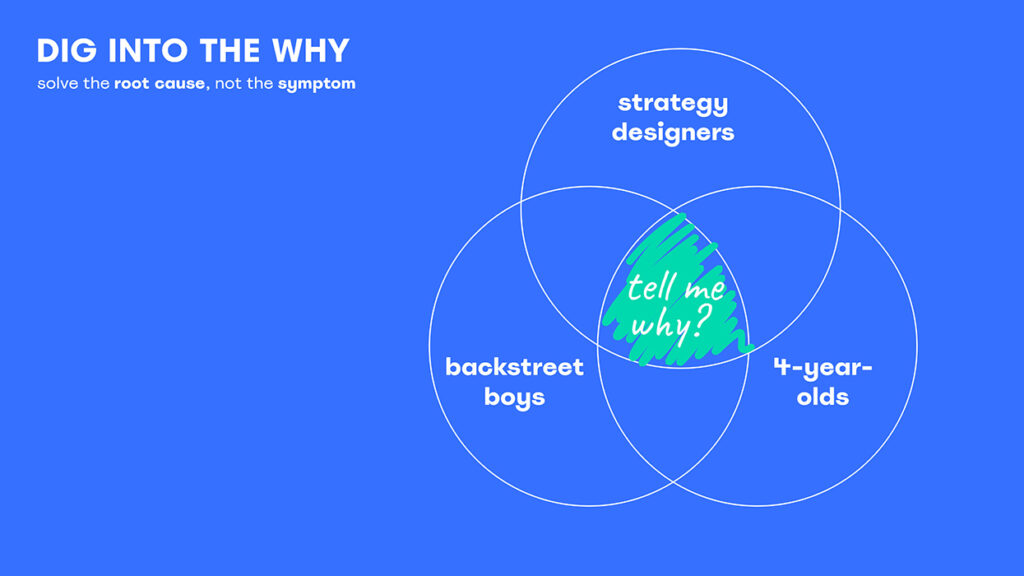
We’re about as sceptical about the scientific validity of personality tests as the Wikipedia article on the method. We don’t believe that a questionnaire can capture the full complexity of leadership or human behaviour, nor do we believe people can be categorised into four coloured boxes. What we do believe is the Industrial Design ethos of unwavering “why”: honestly digging into the underlying root causes of a symptom to create meaningful, relevant and innovative solutions, whether it’s a product, a service or a strategy.
Whether you’re leading a transformation programme, aligning a leadership team or integrating departments following organisational change, DISC Radar helps teams understand how they operate, where assumptions exist and how those differences can become a source of strength rather than friction: to solve a situation of open conflict, or prevent one from occurring:
Leadership & Governance
Strategy & Transformation
Human-Centric Innovation
Culture & Talent Dev.
why it works:
LLM’s convincingly word-guess and AI automates slidedeck-building, but organisations run on humans interacting, delegating, following orders, flagging concerns, influencing change and resolving conflict.
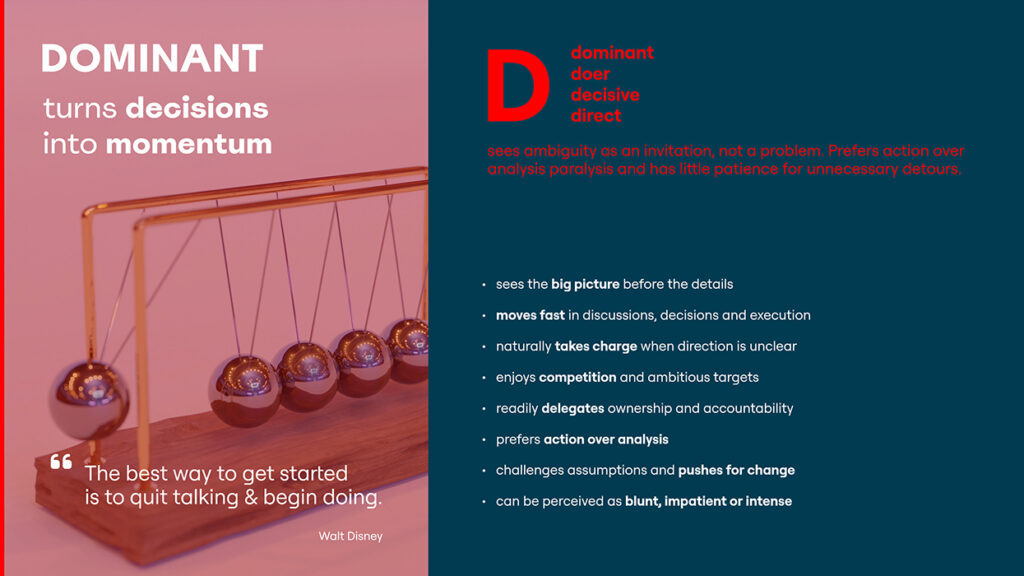
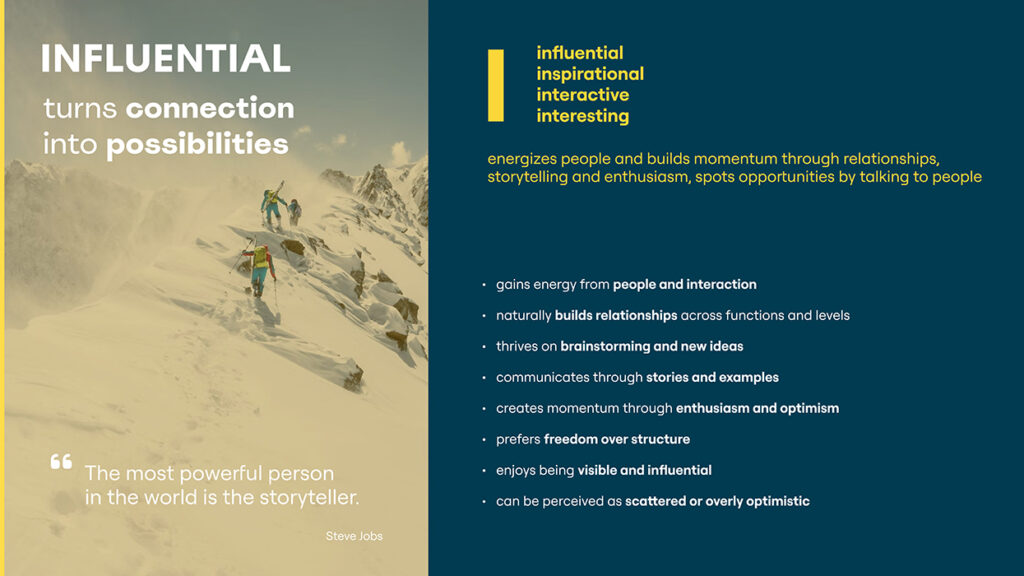
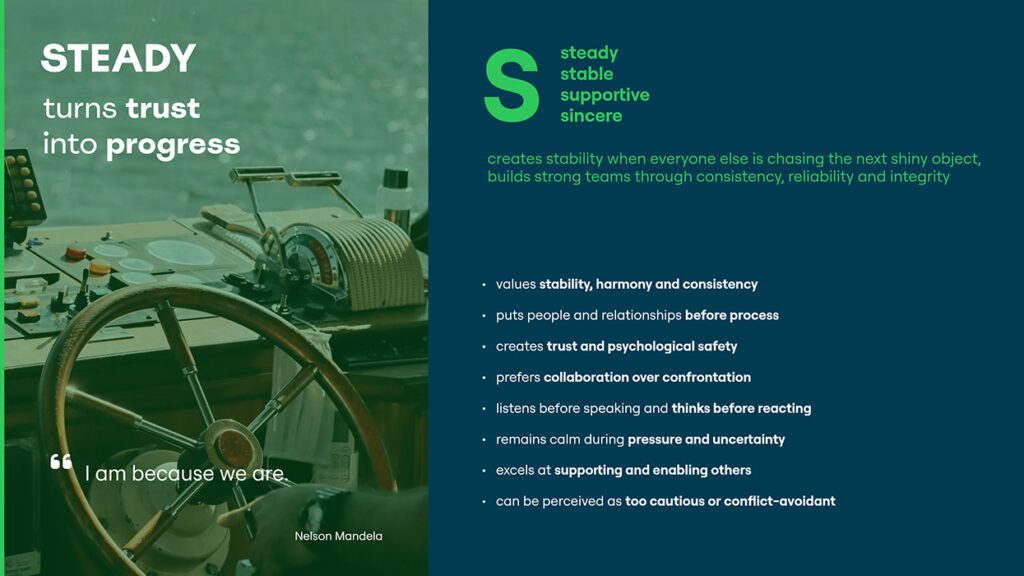
Sometimes we assume that others think, communicate and act in the same way they do. But one leader prefers rapid decisions, another wants more evidence. One enjoys confrontation as a joyous sport, another sees it as an unnecessary direct attack. One thinks out loud, another thinks before speaking. None of these approaches is inherently better, but conflicts arise when individual styles are interpreted as incompetence, resistance or (inter-cultural) affront.
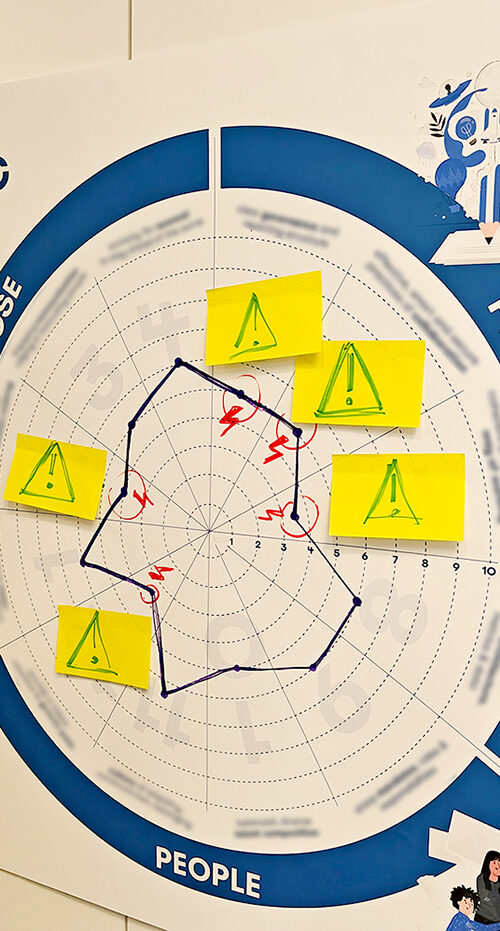
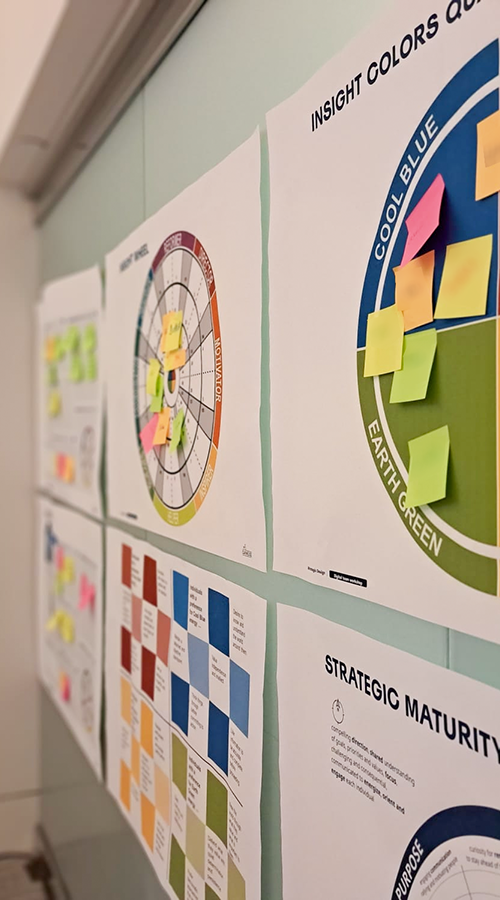
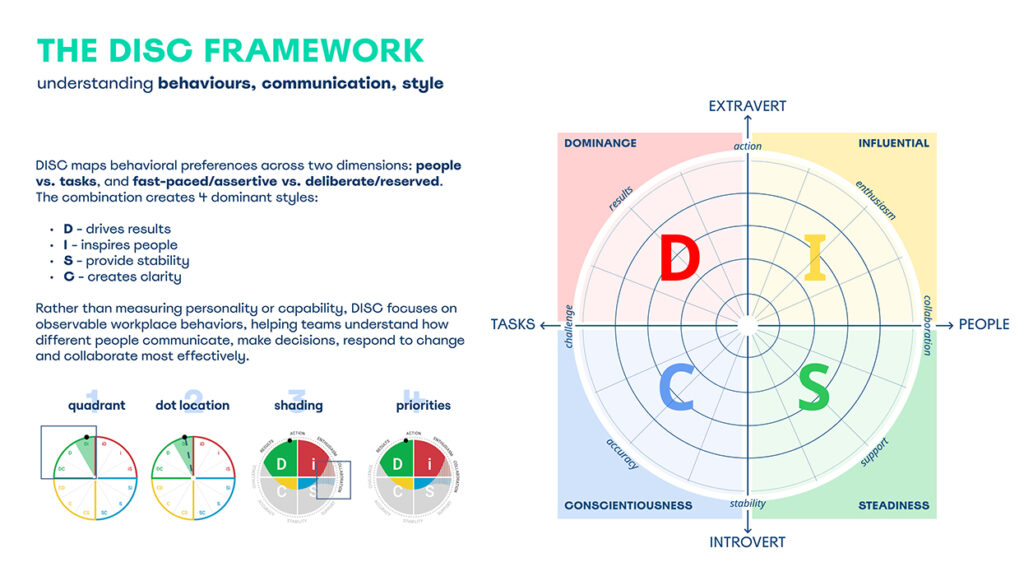
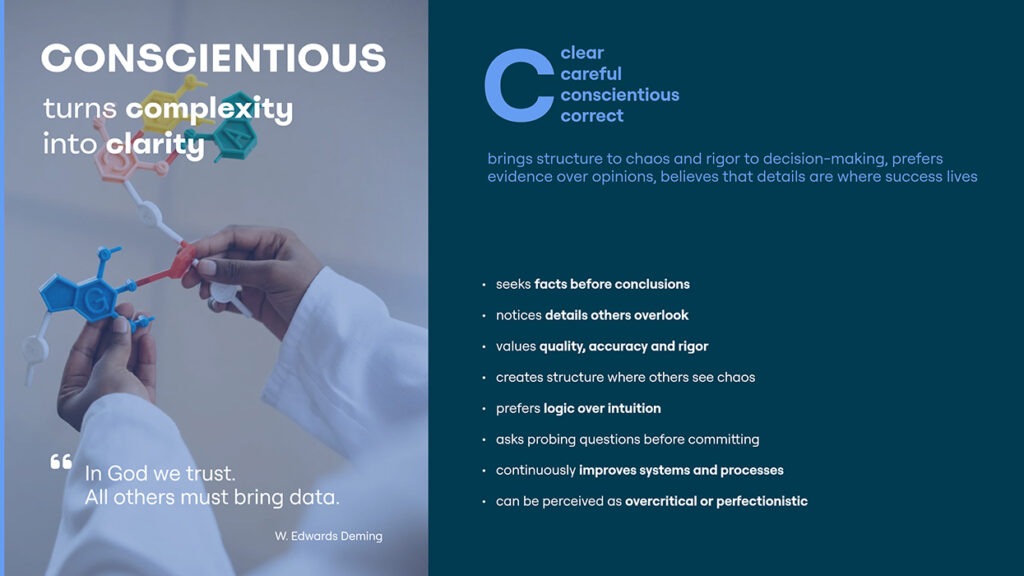
DISC Radar makes these style differences visible and discussable in a structured, specific and safe environment. The framework maps behavioural preferences across two dimensions: people versus tasks, fast-paced versus deliberate. The resulting DISC profiles provide a simple lens through which teams can reflect on how they operate and interact. All 4 core profiles are positive, useful additions to a balanced leadership team: each personality strength adds value, each weakness can be named, addressed and worked with. Not as scientific truth or personality diagnosis, but as a useful, fast, safe starting point for meaningful conversations about collaboration. In our experience, those conversations are often where the real value lies.
DISC radar origin story: the long read
The DISC framework originates from psychologist William Moulton Marston 100 years ago and has evolved into a behavioural assessment model. However, the assessment also attracted criticism regarding the reliability, validity and scientific robustness of personality test and their use in HR. And that’s a healthy discussion, because the tension between creativity and scepticism is where true innovation lies (to quote Harvard’s Carl Sagan) and because we built our canvasses to manage uncertainty, not to pretend there is certainty.
For us, DISC isn’t valuable because it claims to deeply know each leader’s style, but as a facilitation tool that gives diverse teams concrete metaphors, language and safety to discuss: how do I communicate? what motivates me? what will create friction? how de we solve that? By combining introspection and dialogue, participants explore their preferences, compare perspectives and identify practical ways to improve communication, decision-making and collaboration.
Not to discover who people are, but how they work optimally, together.

step-by-step guide:
DISC Radar is a helpful and accessible starting point for team-buildings or conflict resolution workshops to externalise underlying differences and turn individual styles into an asset, rather than a liability:
advice for practitioners:
- use profiles as conversation starters, not labels: the objective is to understand people better, not reduce them to a letter, colour or stereotype
- focus on observed behaviours and concrete examples not assumed personalities: discuss what people do, how they communicate and how they make decisions
- explore differences before solving problems: misalignment is often rooted in contrasting expectations, not conflicting objectives
- look for complementary strengths, not flaws. Strong teams rarely consist of similar people; they consist of people who understand how their differences create value
- translate insights into practical agreements
curious?