from high-level north star to concrete project balancing
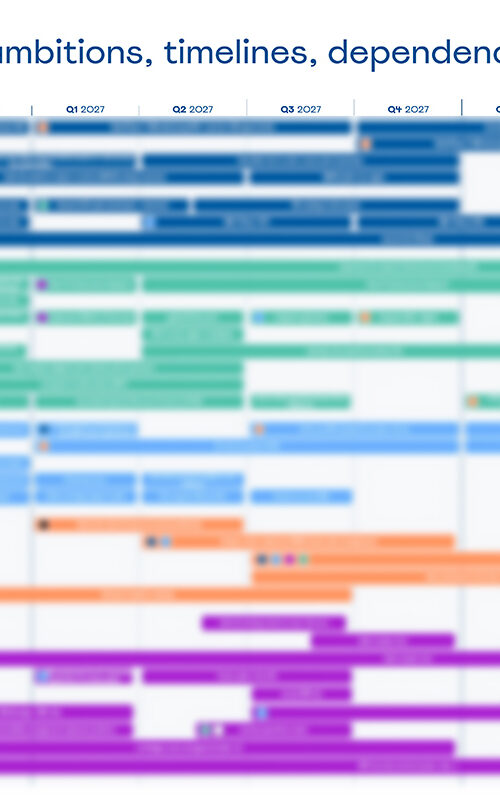
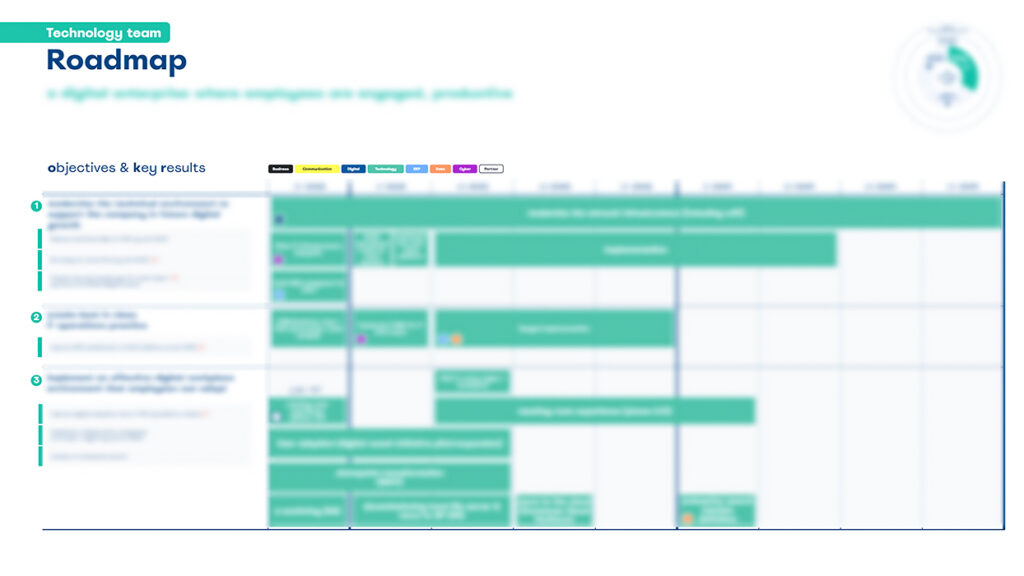
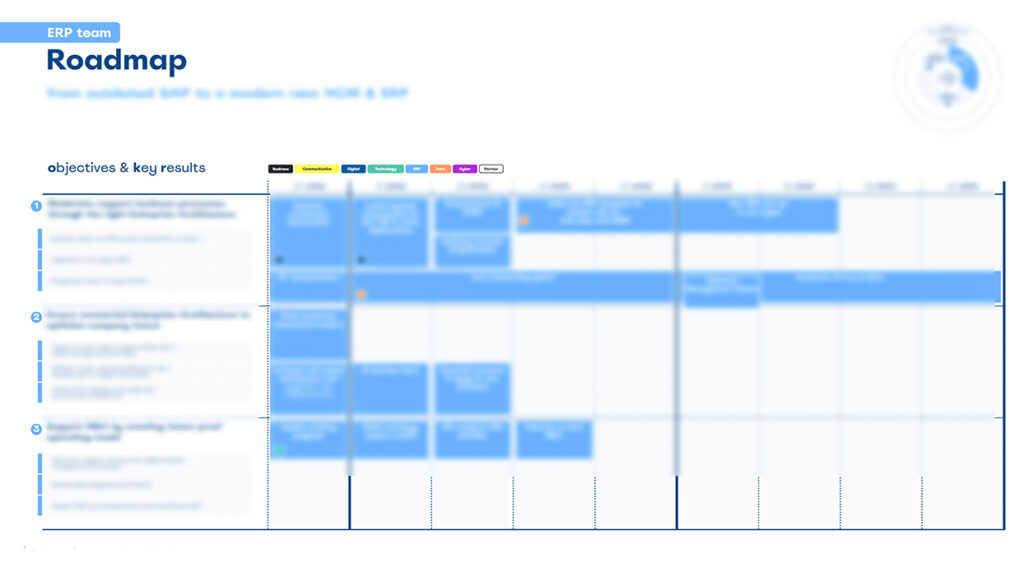
translate vision into action by combining the strategic logic of OKRs with the practicality of roadmap planning: create a shared visual of where the organisation wants to go, how success will be measured and what needs to happen, by whom, by when. The result is clarity of priorities and fewer well-intended projects wandering off into the wilderness
how OKRoadmap creates value:
- creates a direct line of sight from vision to execution
- turns strategic ambitions into measurable outcomes
- aligns teams and departments around a shared roadmap
- makes dependencies, bottlenecks and conflicts visible early
- forces difficult prioritisation decisions before resources are committed
- helps organisations focus on what matters most, and consciously stop what doesn’t
construct the vision. focus the effort. deliver the outcome.
Organisations sometimes don’t suffer from a lack of strategy, but a lack of translation: the vision statement exists, there is a mission, strategic priorities, and somewhere further down the organisation, dozens of programmes, projects and workstreams, per silo. The challenge is often connecting all these pieces into one coherent picture, so that leadership can steer on outcome and keep an overview, while every department gets guidance and context on how their specific initiative clicks into the overall purpose.
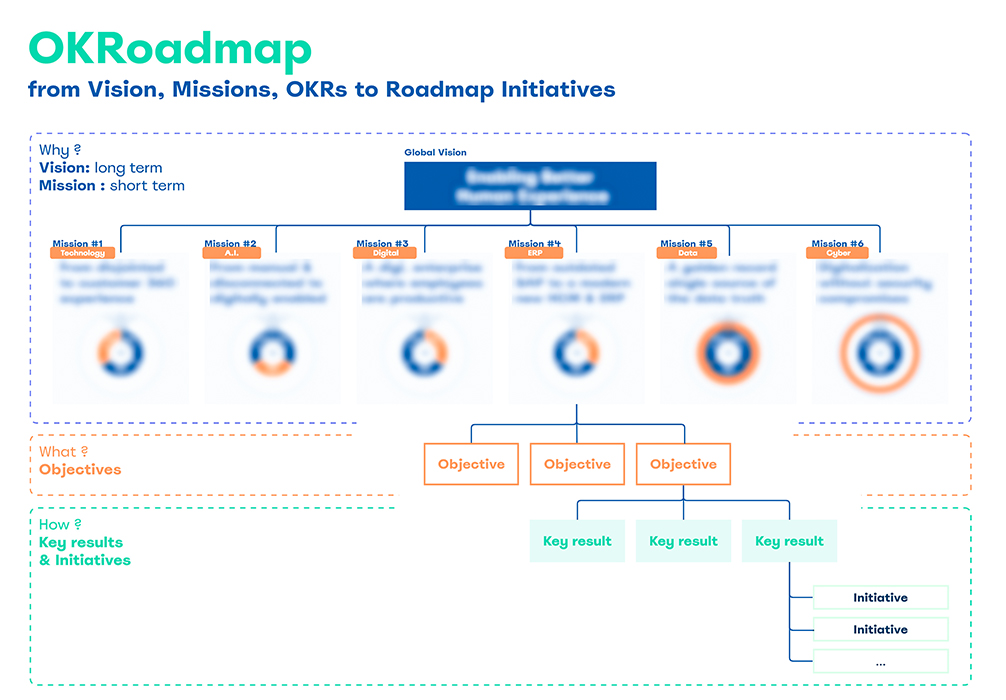
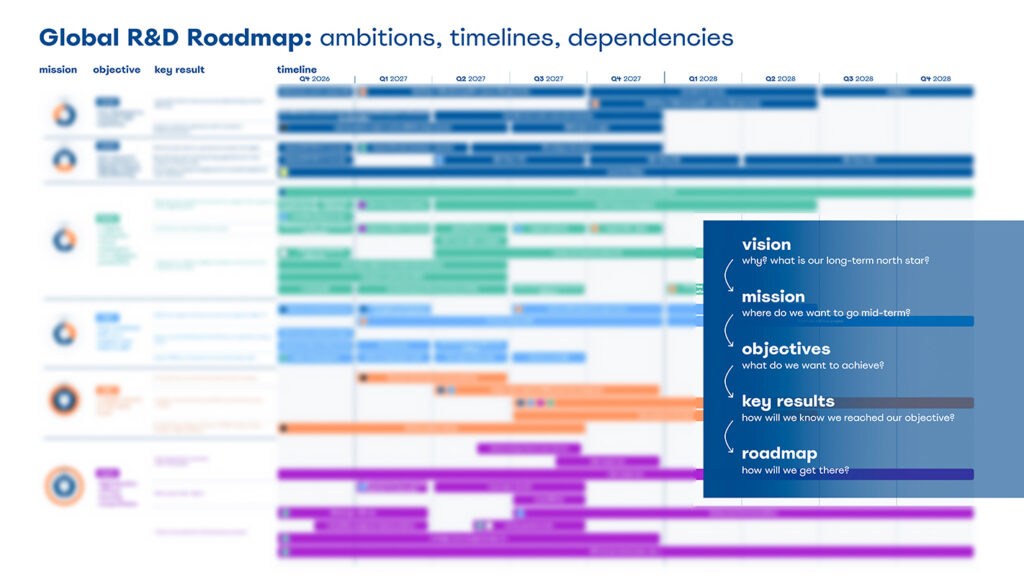
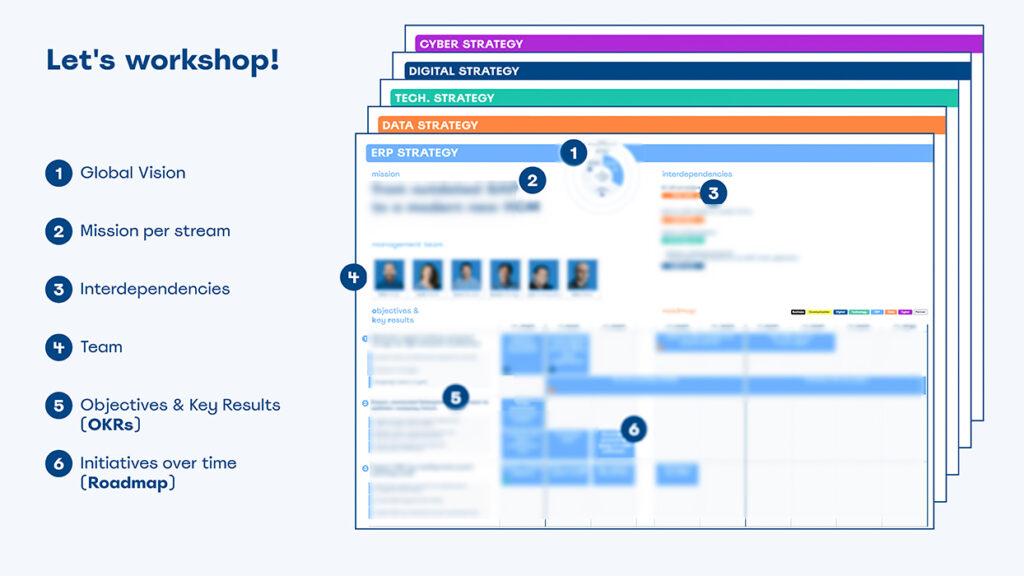
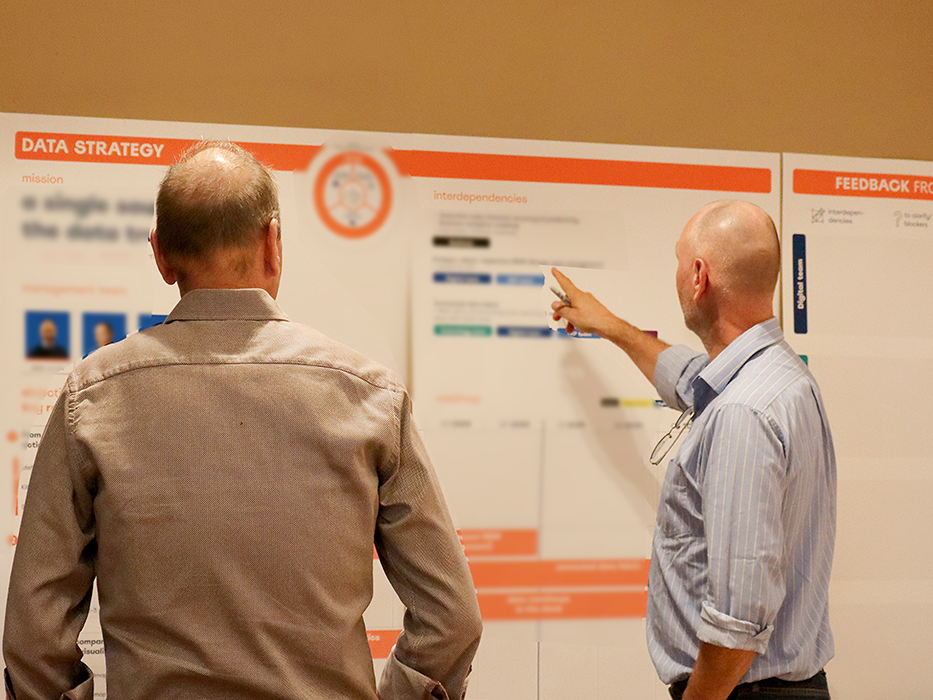
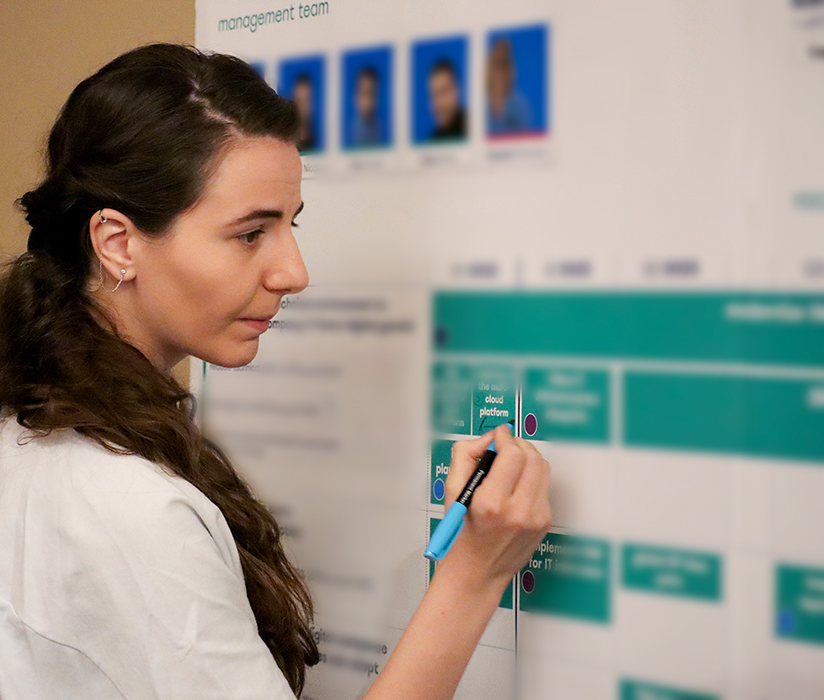
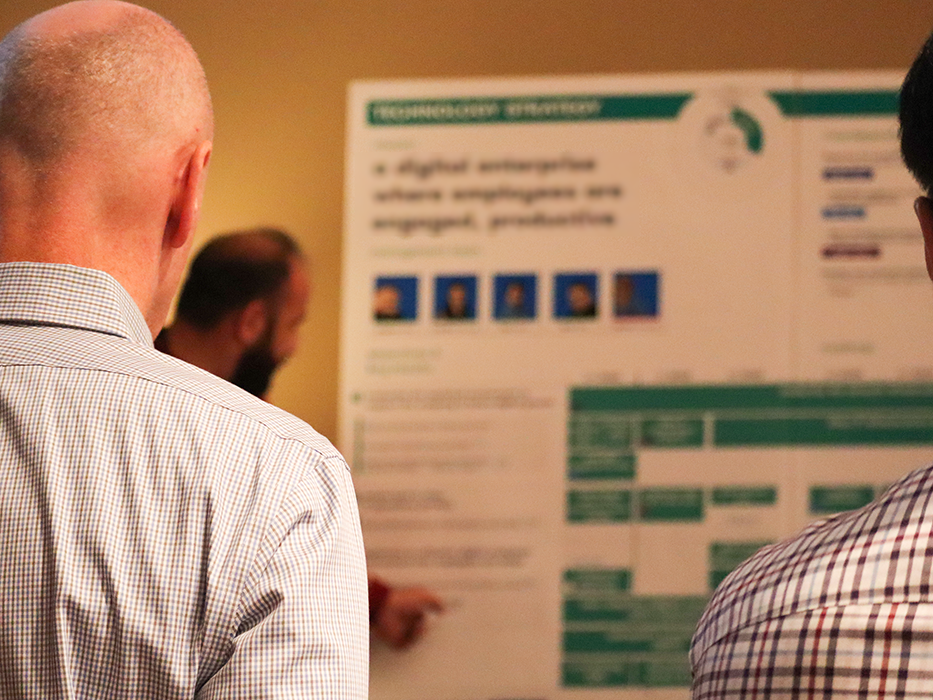
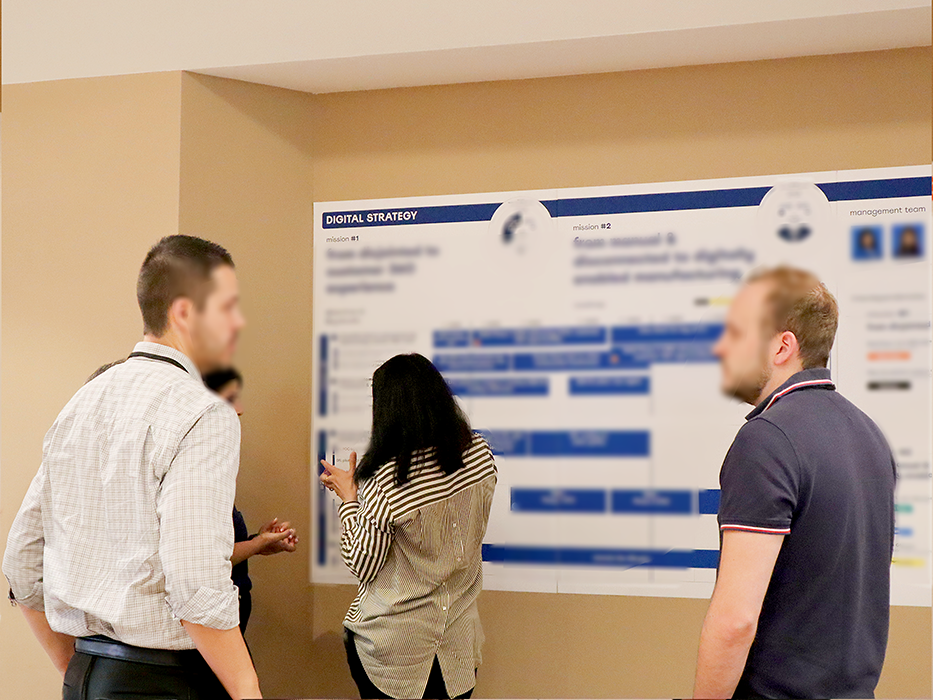
How does each initiative contribute to core objectives? Which objectives support which mission? Which activities actually move the needle? What happens when priorities compete for the same people, budget or timeline? OKRoadmap helps leadership teams answer those questions. Through a structured workshop process, participants move from vision and mission to objectives, key results and concrete initiatives, all visualised on a single roadmap. The result is a pragmatic bridge between strategic thinking and operational reality.
Strategic Planning
connect strategic ambitions to tangible delivery programmes
(Digital) Transformation
R&D Balancing
Make it Measurable
why it works:
Strategy conversations often start at 30,000 feet and stay high-level. Roadmaps often start at ground level and never look up. The former creates inspiring narratives without execution, the latter activity without direction.
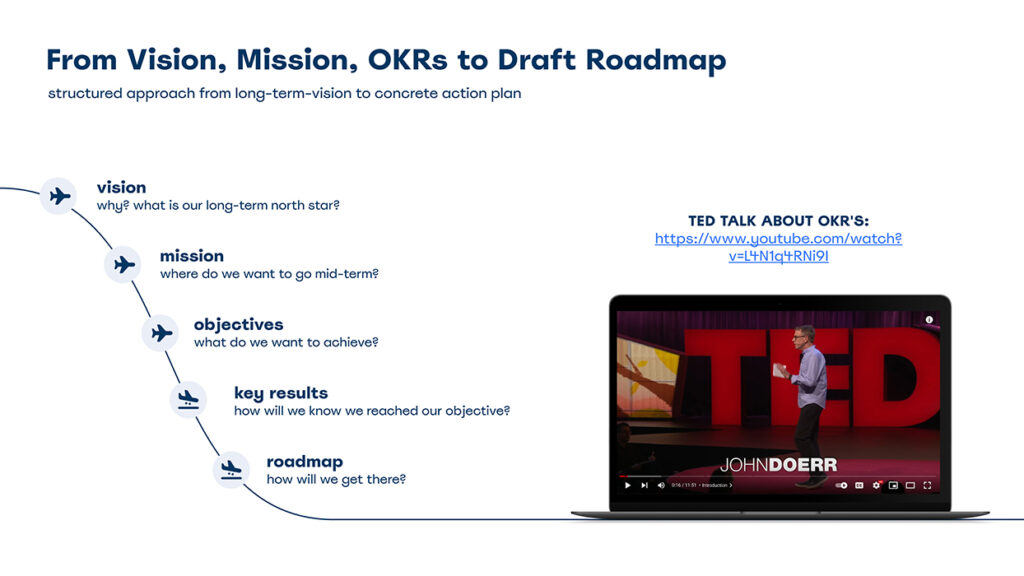
OKRoadmap deliberately combines both perspectives, in a structured framework that “lands the plane“: from vision, to mission, to quantifiable Objectives and Key Results (OKR – watch the TED talk here) to a visual roadmap, that connects the dots between all streams, silos, business units.
Simple enough to fit on one page. Visual enough to help all layers in the organisation grasp how each initiative clicks into the big picture. Powerful enough to align an organisation.
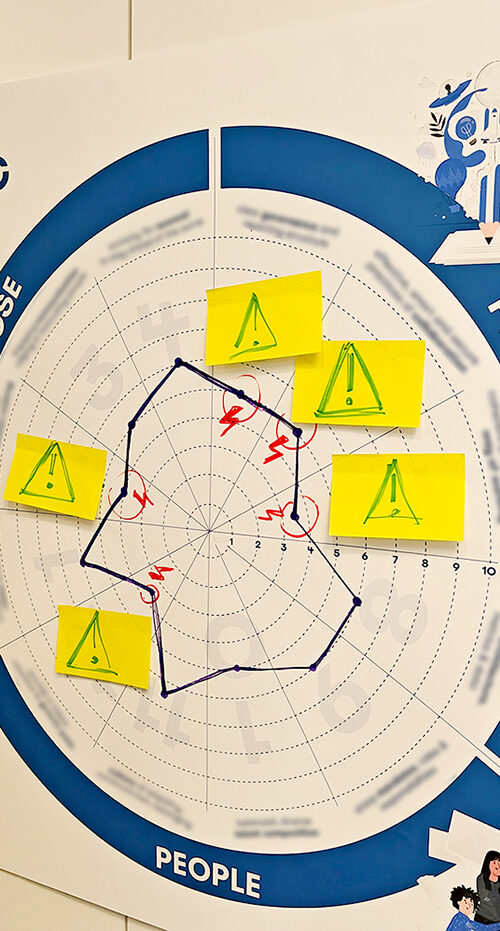
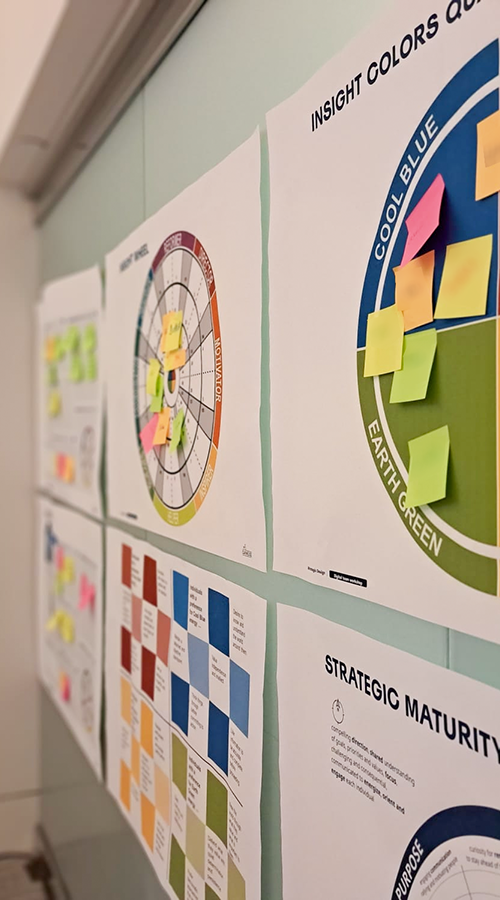
The magic is not in the roadmap itself, but the facilitated and iterative process of guiding leaders and their teams to have constructive conversations about ambitions, dependencies, capacity bottlenecks, priorities and measurability of success.
OKRoadmap origin story: the long read
Product Roadmaps have long been used in Industrial Design, Product Management and R&D environments to coordinate complex programmes or releases of work over time. At their best, they provide a shared view of ambitions, dependencies, sequencing and resource allocation. At their worst, they’re colourful Gantt charts documenting a future that nobody actually believes will happen.
Similarly, OKRs (Objectives and Key Results) have become a popular strategic execution framework: developed at Intel and popularised at Google, the methodology helps organisations translate ambitions into measurable outcomes.
We’re fans of both, but have seen the pitfalls: OKR’s without a roadmap often remain an aspiration, while roadmaps without strategic logic can become a project catalogue of initiatives.


That’s why we created “OKRoadmap” (we may be aging ourselves here, but quick nod to Radiohead’s OK Computer, for the fellow 1980’s kids). We wanted to have a structured framework combining the strengths of both methods, whilst avoiding some of their common pitfalls so that leaders would have a tool to inspire on vision, while making tough calls on project priorities.
The objective is not to create the perfect, static roadmap to frame on the wall, but to create a culture of aligning priorities, dependencies and strategic intent. The method works best as an iterative process rather than a one-off planning exercise. The first version is rarely right: real value emerges through successive rounds of discussion, challenge and refinement, where assumptions are tested, priorities are clarified and dependencies become visible. The roadmap becomes more robust when teams are forced to confront the realities, trade-offs and constraints that strategy inevitably creates.
Aside from the cyclical process of aligning, iterating and deciding, one of the framework’s strengths lies in its ability to create a single visual narrative across the organisation.
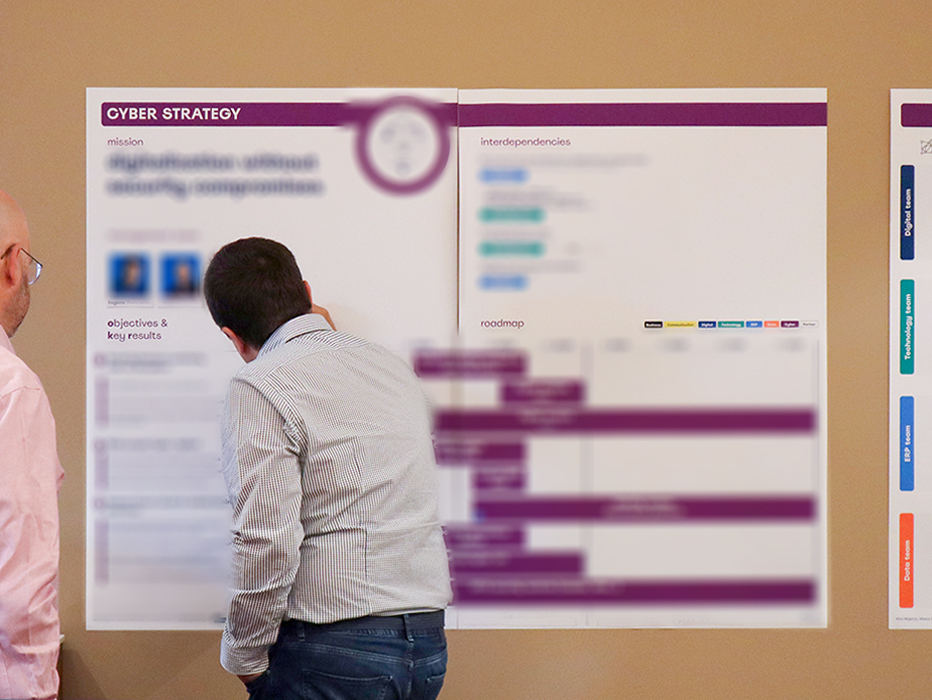
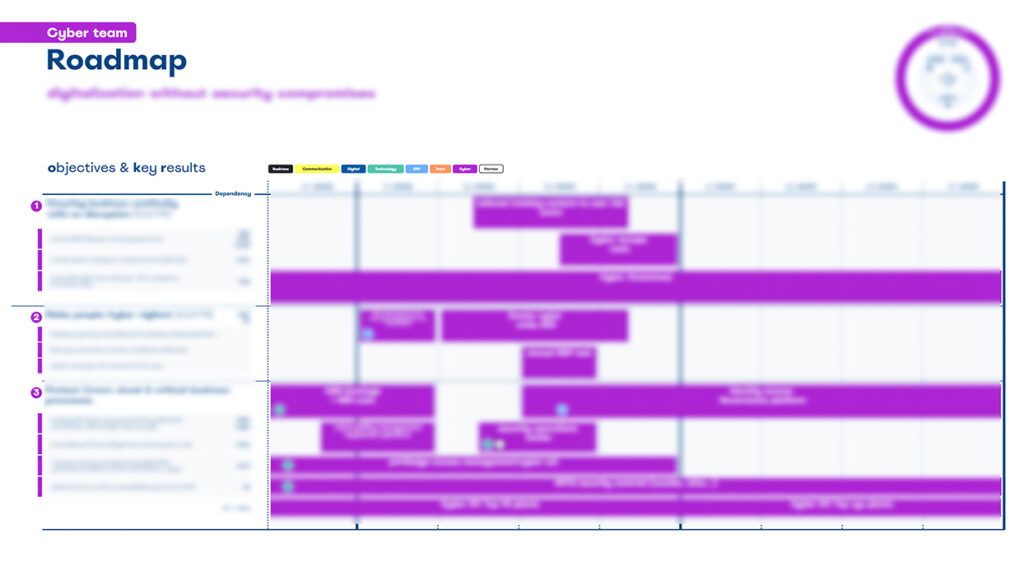
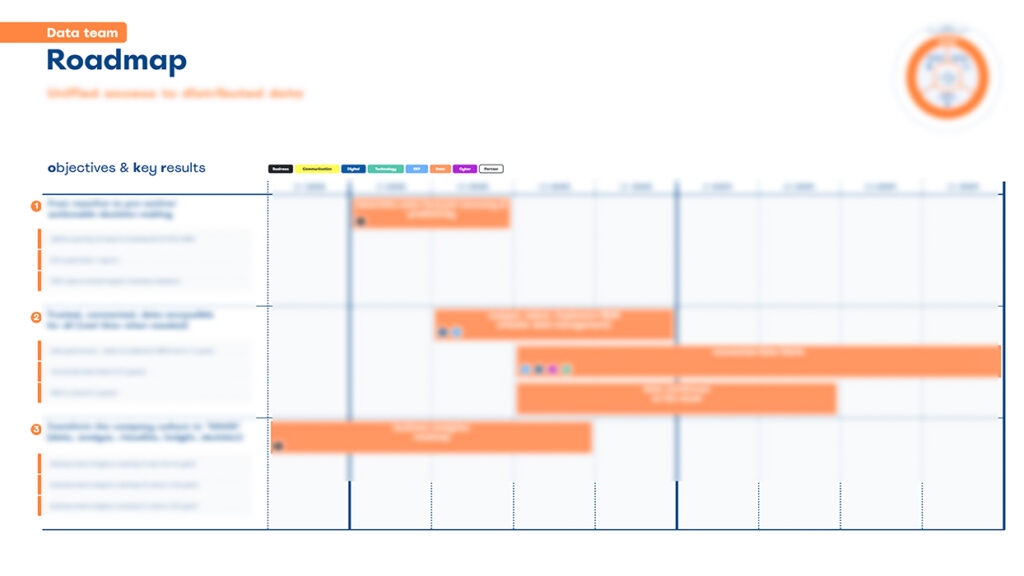
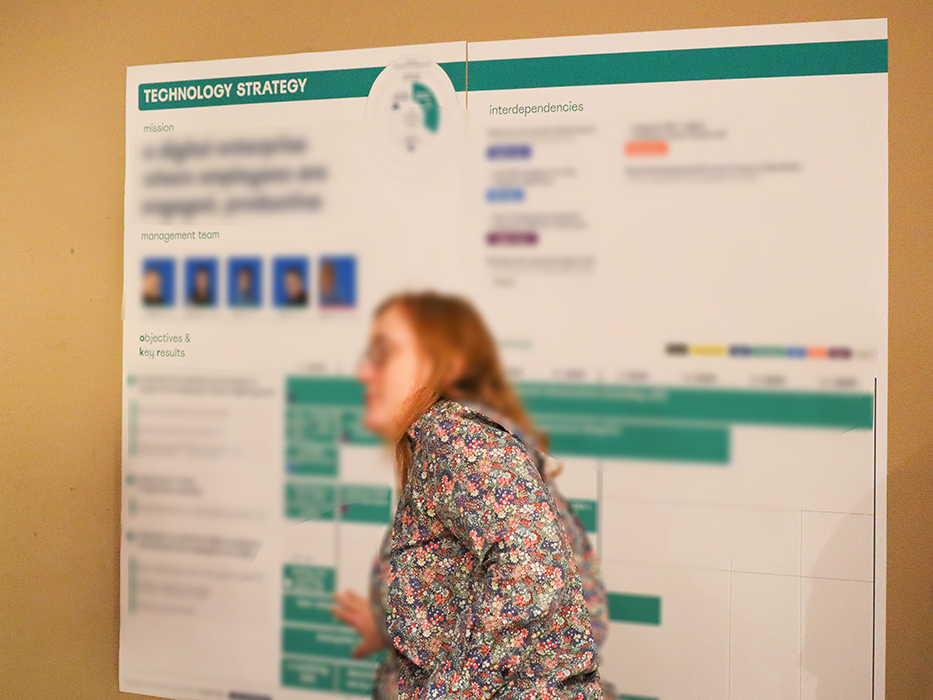
Leadership teams build an overarching roadmap that connects vision, missions, objectives, key results and initiatives into one coherent strategic story. Then individual departments, functions and programmes develop their own colour-coded roadmaps beneath it. This creates local ownership without losing strategic coherence. Everyone can see both their contribution and how it connects to the bigger picture.


We also appreciate the layered nature of the approach: at the top sit a concise vision and a handful of strategic missions that fit on a single page. Beneath lies the nitty-gritty reality of objectives, key results, projects, dependencies, milestones and timelines. The OKRoadmap creates a direct line of sight between the inspirational long-term one-liner and the meeting in six months’ time where someone needs to explain why a milestone slipped.
Most importantly, OKRoadmap forces selectivity: once initiatives are explicitly linked to objectives, key results and strategic intent, prioritisation becomes organic. The roadmap exposes activities that consume scarce resources without clearly contributing to the mission, often leading to the sometimes uncomfortable but healthy conclusion: the organisation should probably do less, more.
step-by-step guide:
Whether you’re defining corporate strategy, launching a transformation programme, aligning an R&D portfolio or building a technology roadmap, OKRoadmap helps leadership teams connect ambition to execution through a clear, structured and actionable plan. Because strategy should not end with a vision statement: it should end with people knowing exactly what happens next. And here’s how:
advice for practitioners:
To paraphrase Antoine de St-Exupéry and Dieter Rams: Design isn’t done, when there is nothing left to add, Design is done, when there is nothing left to remove.
This Industrial Design ethos is also applicable to Strategy planning. We created OKRoadmap to help leadership teams make this iterative, cyclical process of deciding, aligning and balancing consciously, collectively and with a clear understanding of why each initiative deserves a place on the journey from vision to execution.
Ultimately, OKRoadmap doesn’t just help organisations plan more work. It helps them focus their energy on the work that genuinely matters: Less by design. Because the strongest roadmaps are not the ones with the most initiatives, but the ones with the most deliberate omissions. And because strategy is ultimately not about deciding what to do, it’s about deciding what not to do.
- start with strategy, not projects: roadmaps fail when the conversation jumps straight into solutions before agreement exists on the destination
- limit the number of objectives: if everything is strategic, nothing is
- focus key results on outcomes, not activities: “implementing a system” is an initiative, “reducing lead time by 30%” is a result
- treat OKRoadmap as a decision-making/ team facilitation, not a reporting tool: the purpose is to clarify priorities & trade-offs
- accept that no roadmap survives first contact with reality (hello, Mike Tyson): review regularly and adjust confidently
curious?