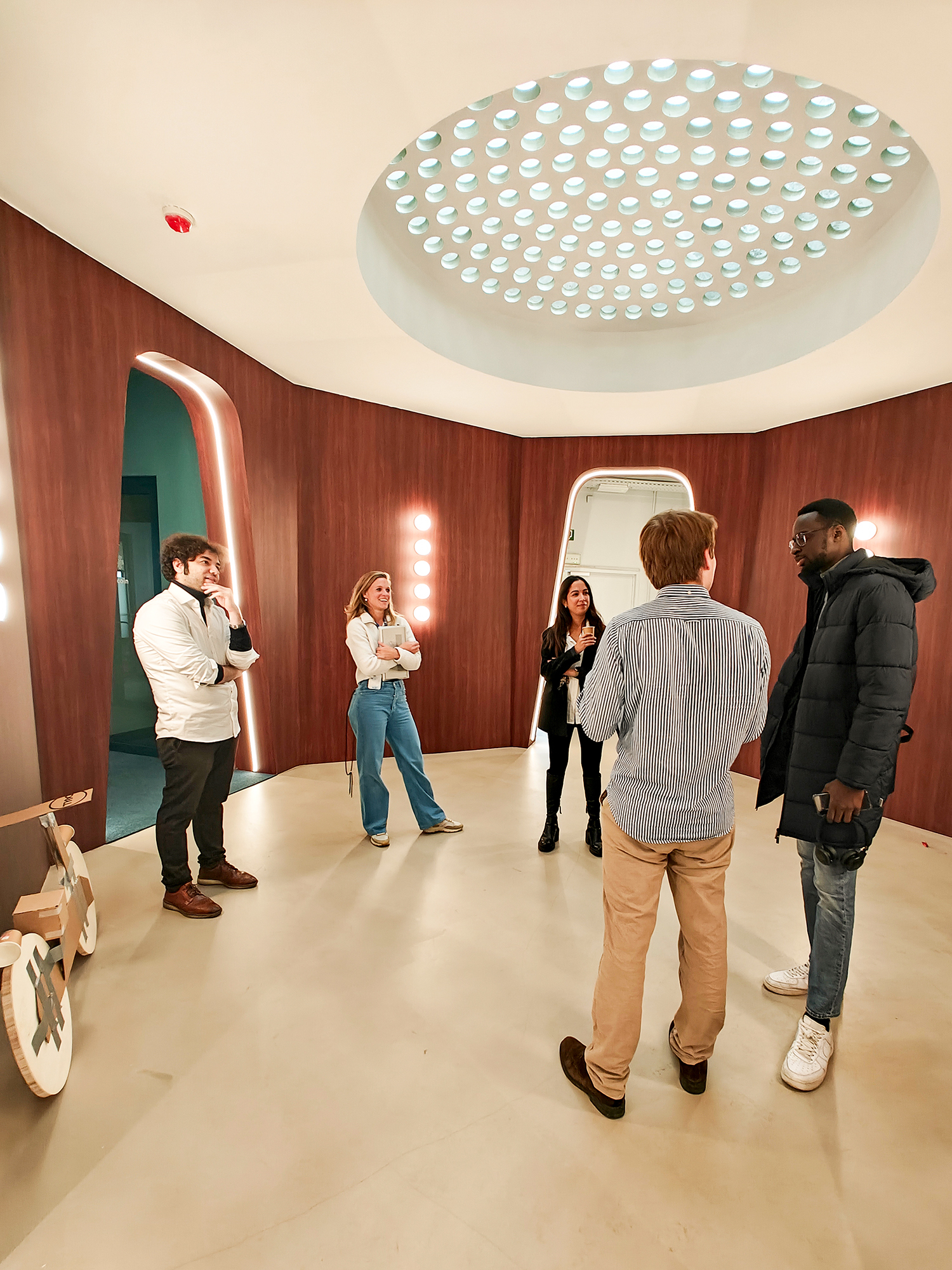
citizen co-creation on design requirements and ethics of A.I. urban robots
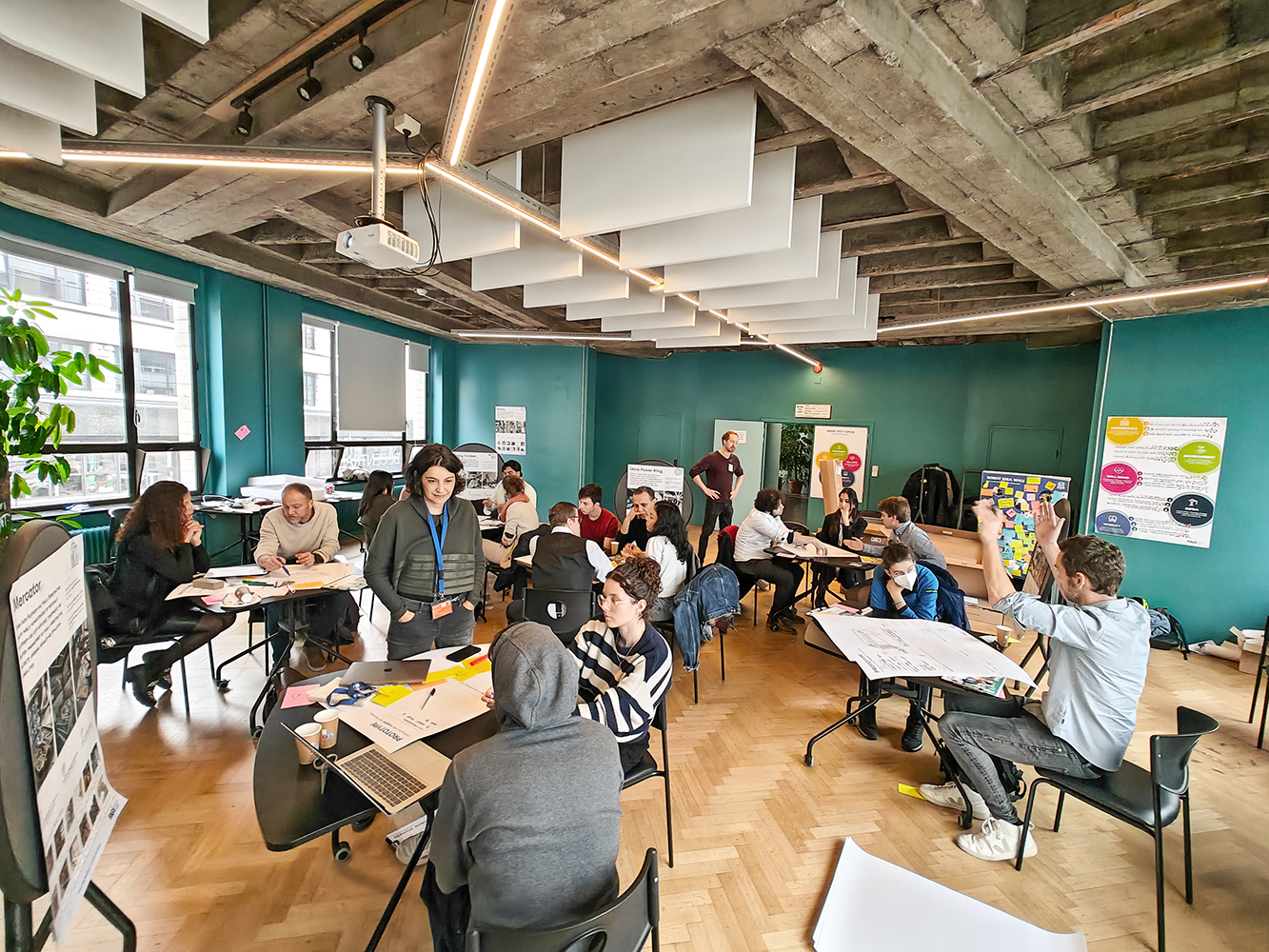
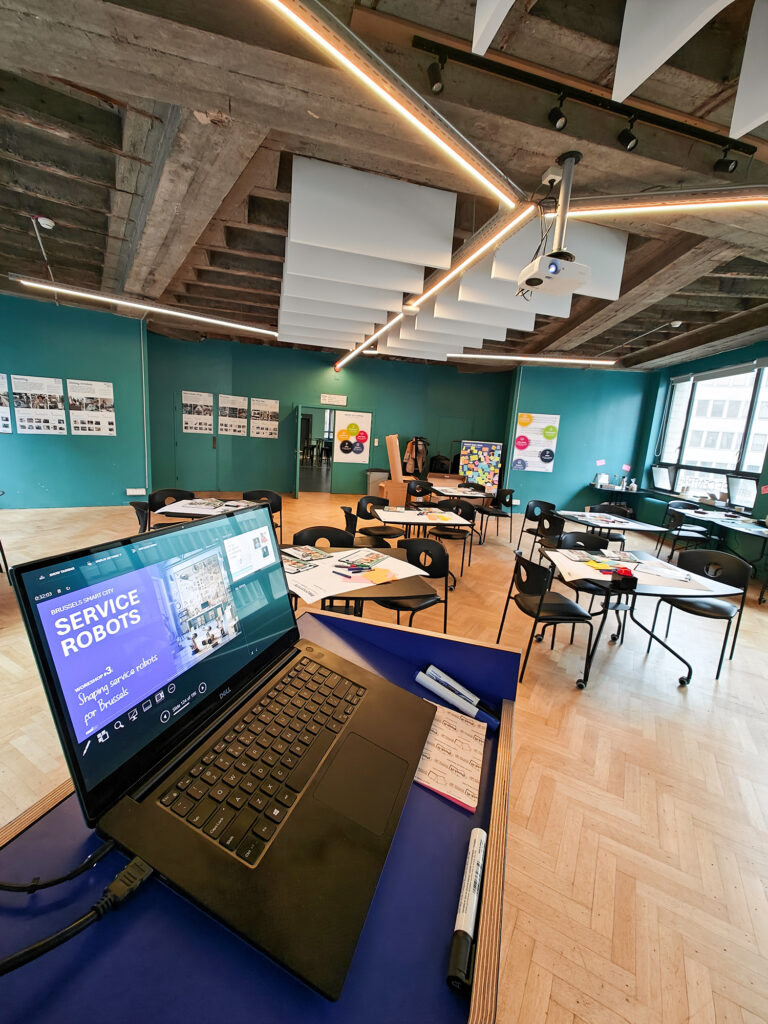
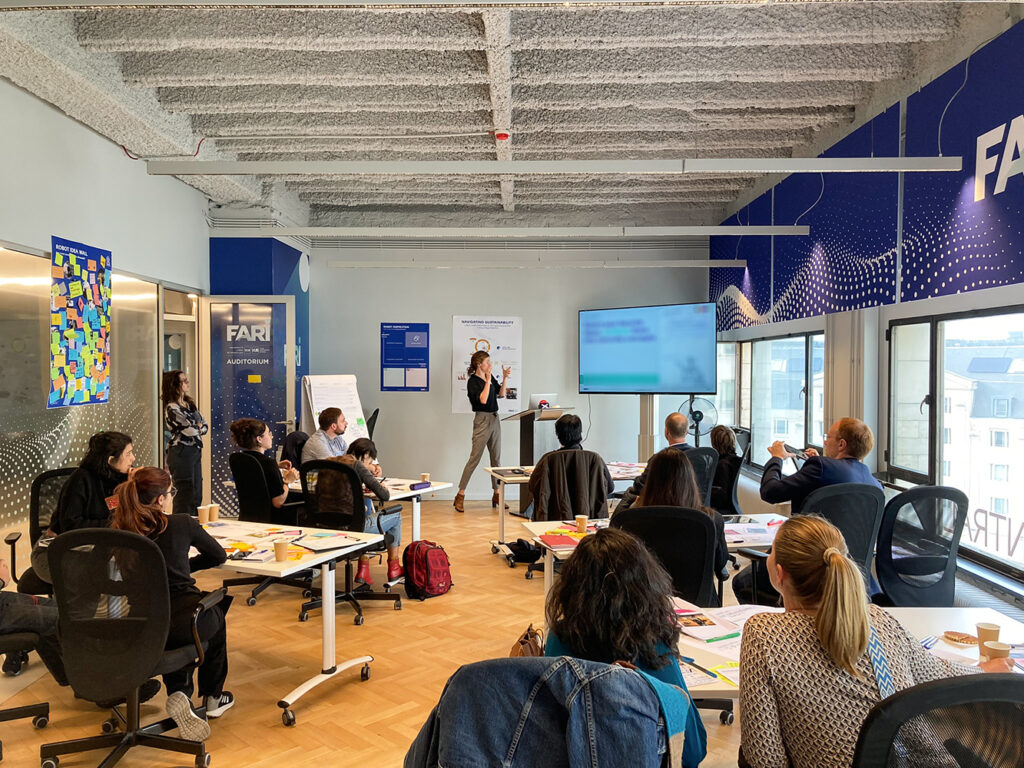
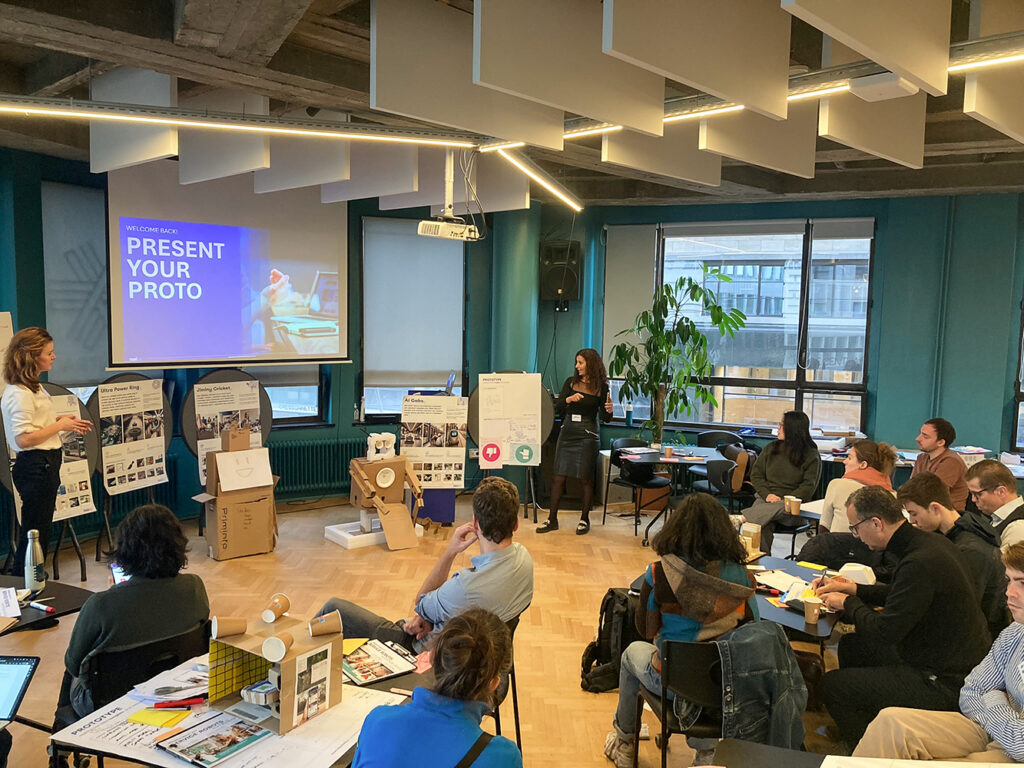
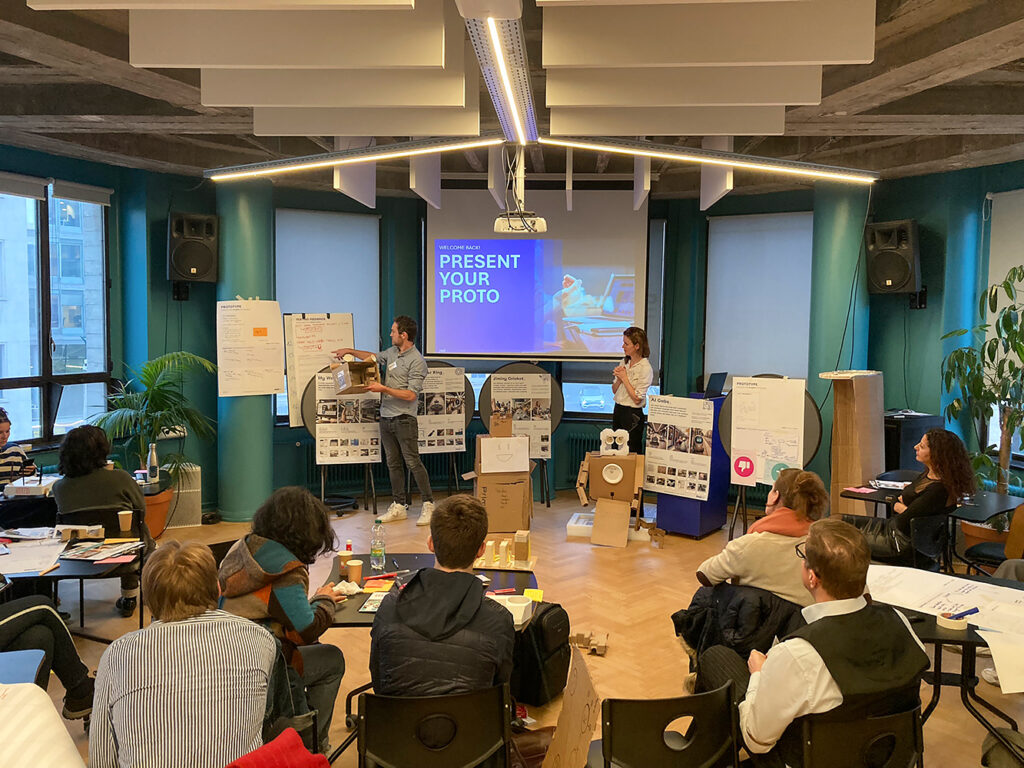
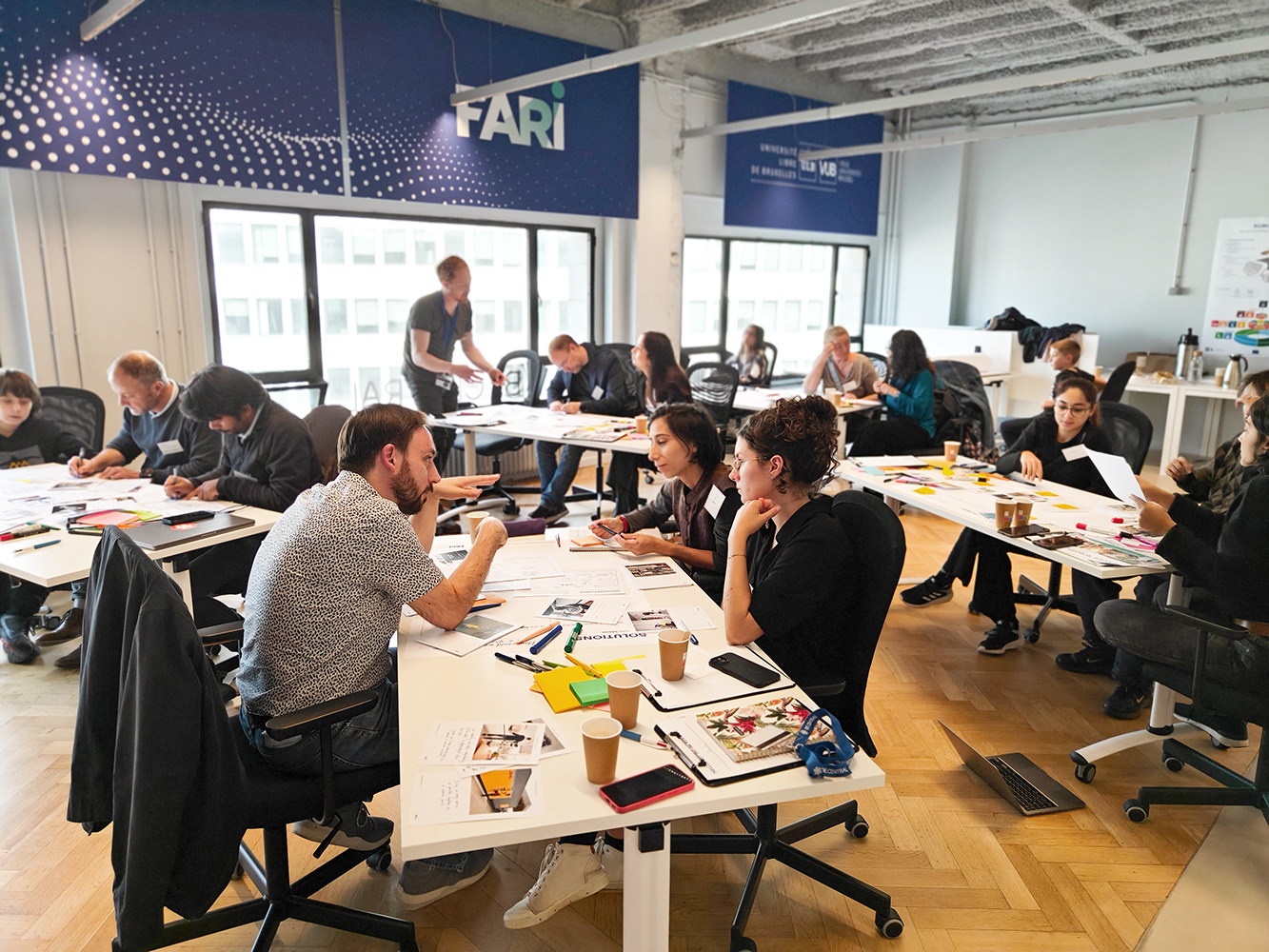
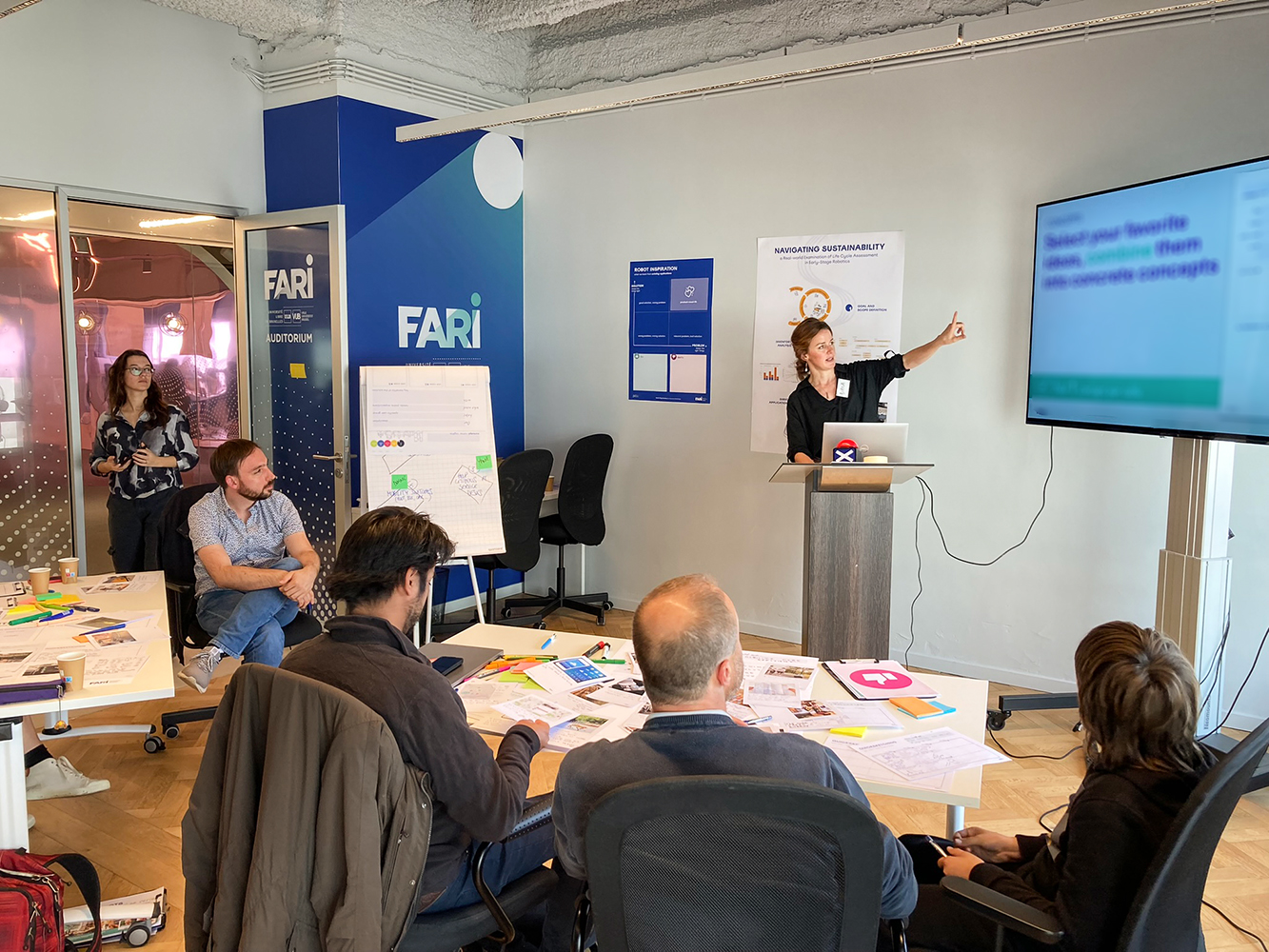
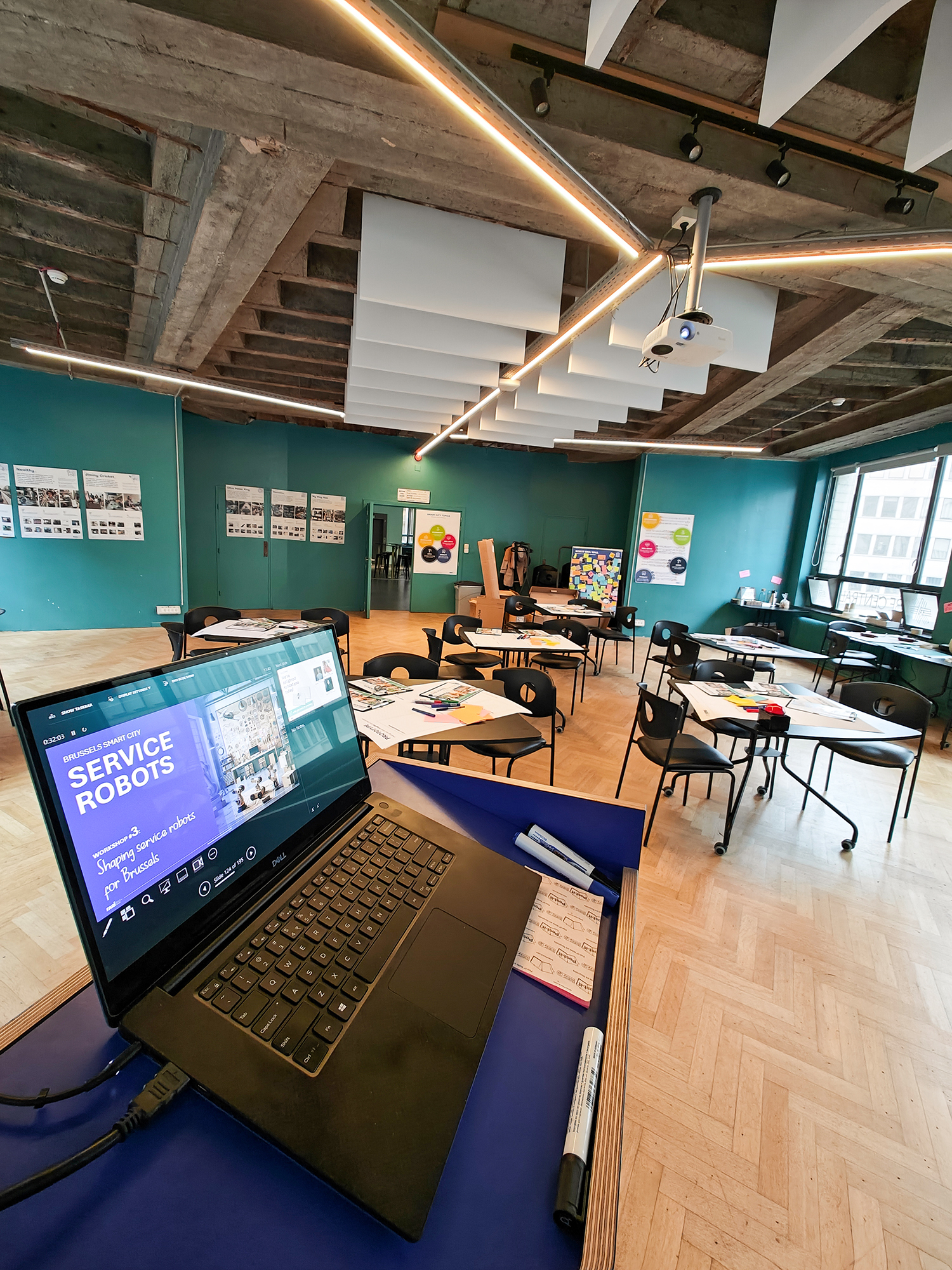
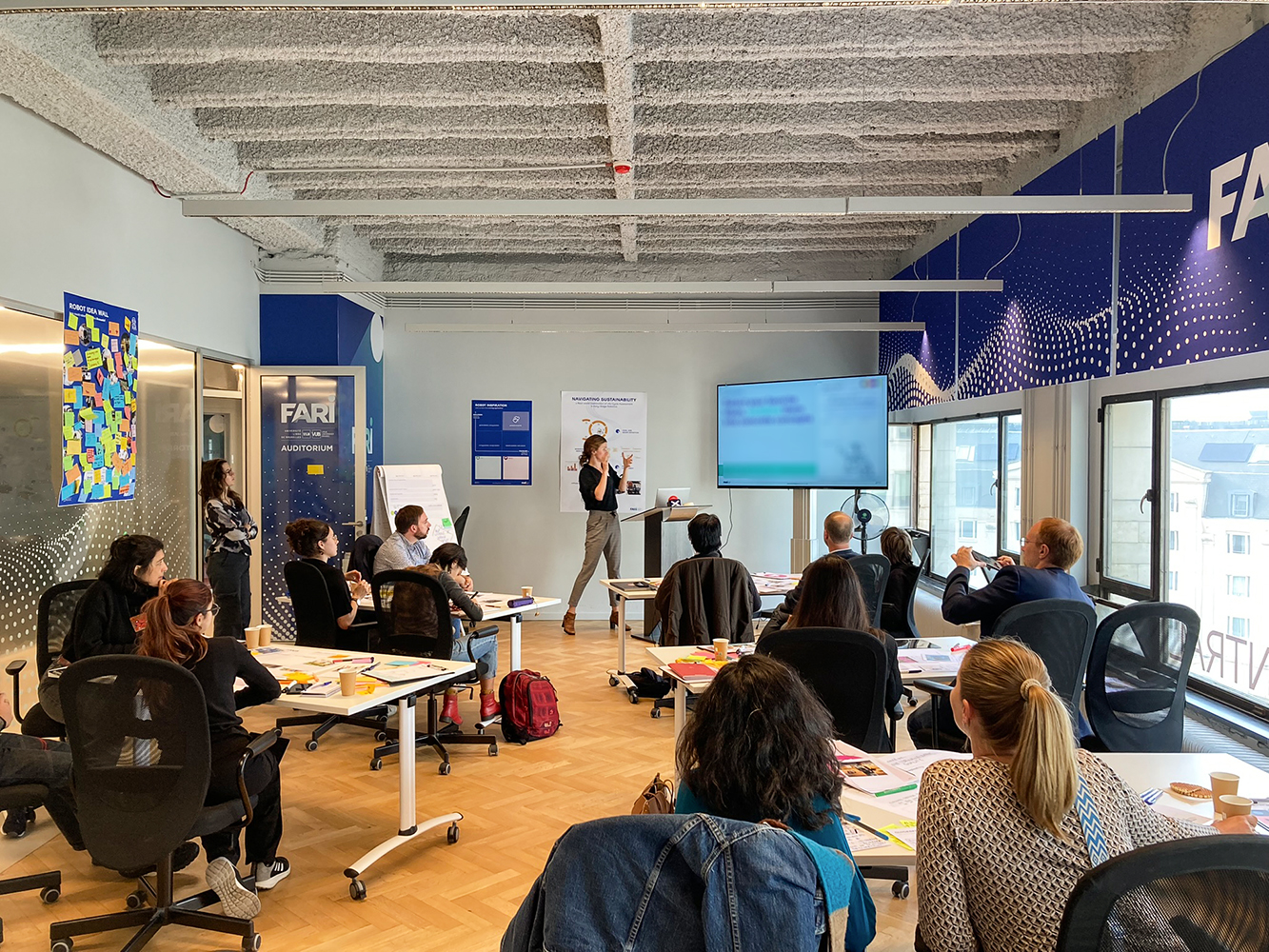
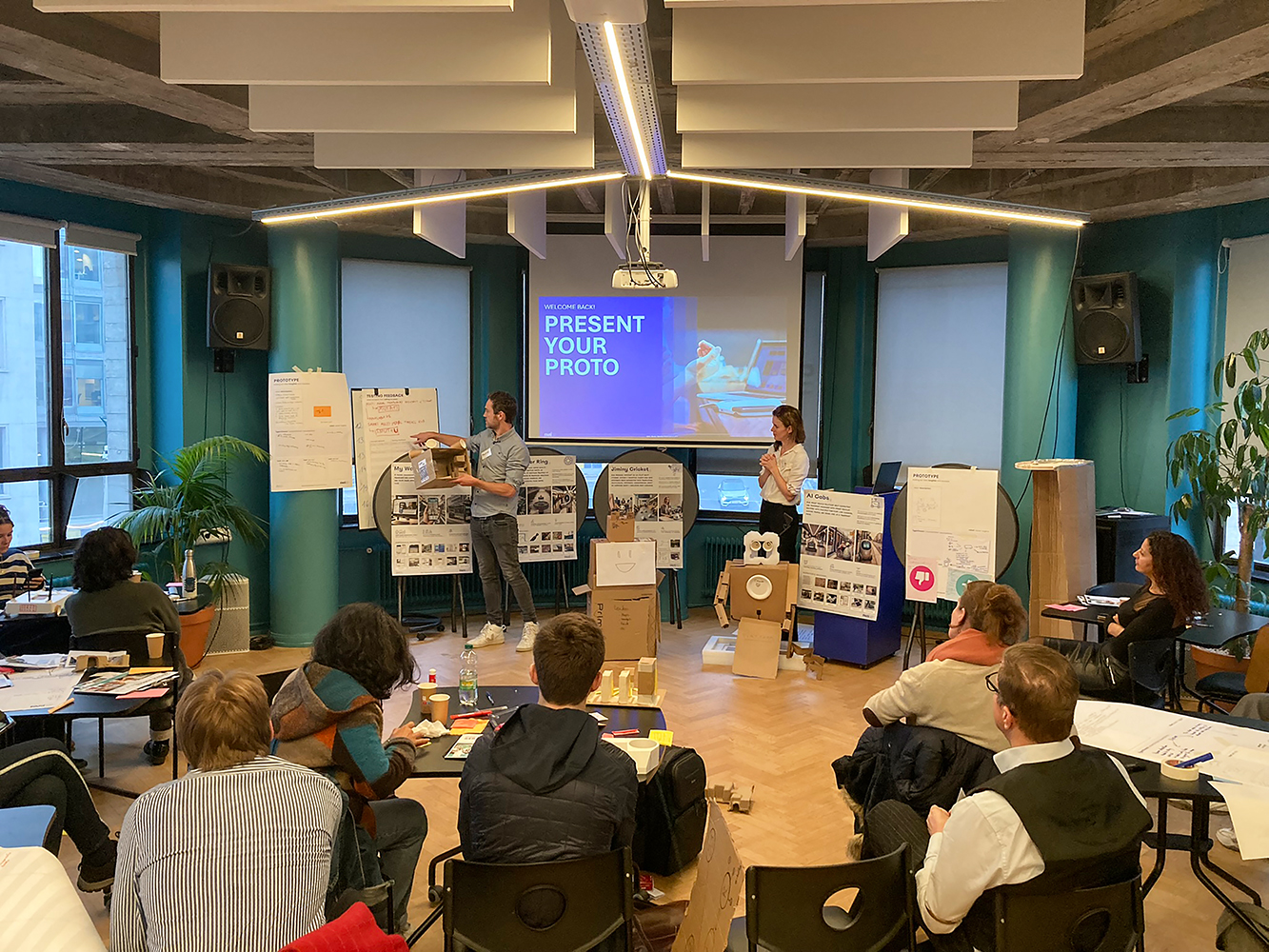
we designed and co-facilitated a workshop series for FARI and the City of Brussels, enabling civil servants and citizens to explore future applications of Artificial Intelligence (AI) enabled service robots in urban environments, requirements and form factors. Through methodology selection, facilitation, and visual storytelling, we helped transform complex abstract topics into structured, actionable citizen dialogue.

scope
WORKSHOP FACILITATION
PUBLIC SECTOR
ROBOTICS
location











approach
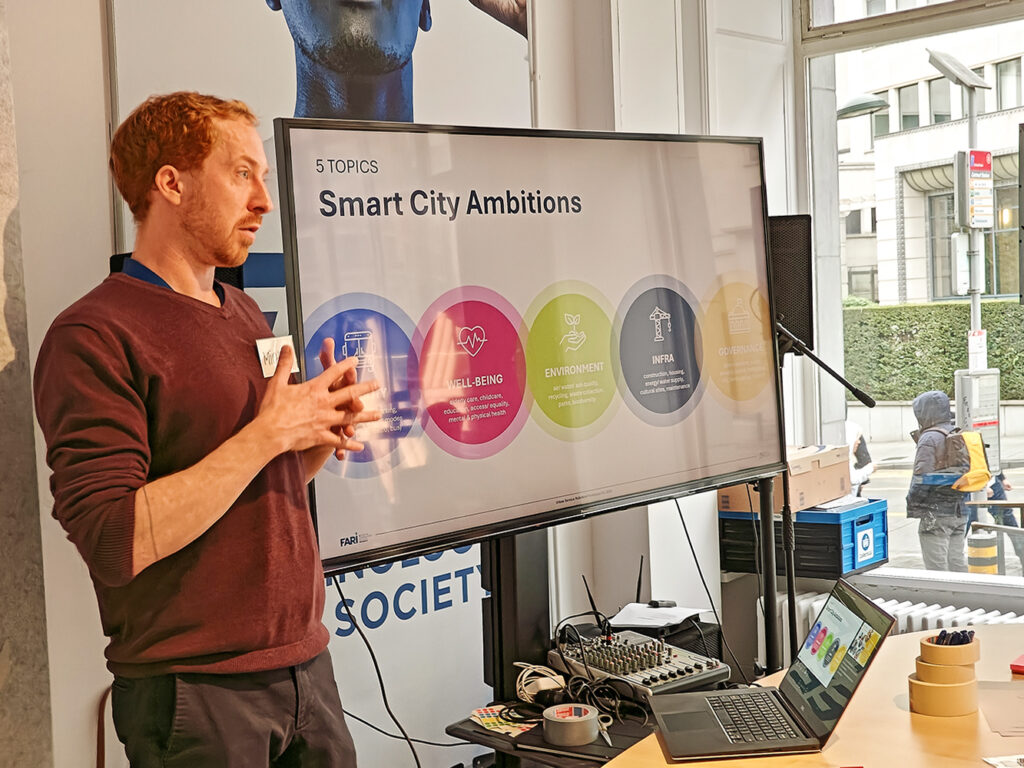
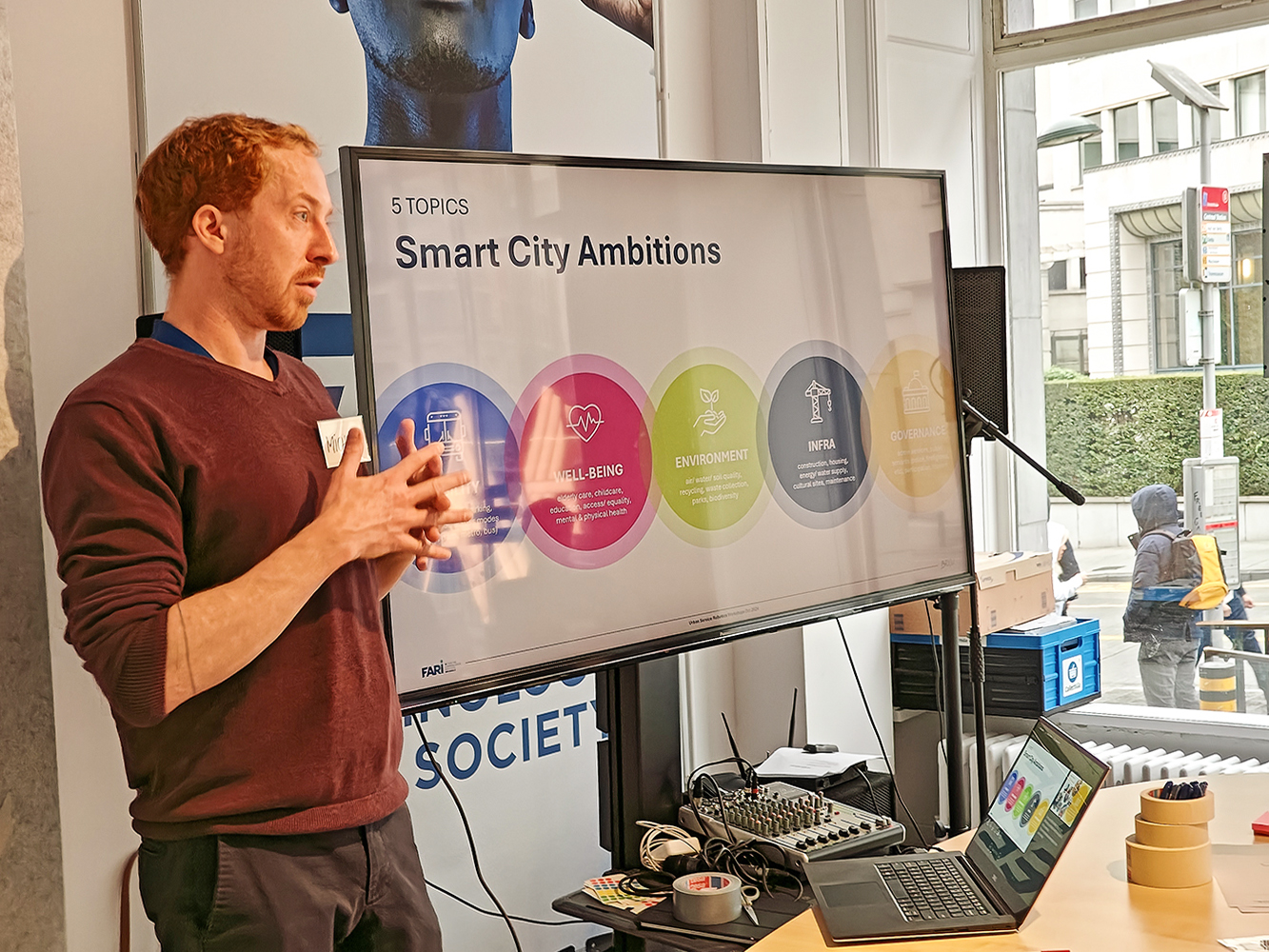
combining Brussels smart city ambitions, prototyping and robotics research
citizen engagement
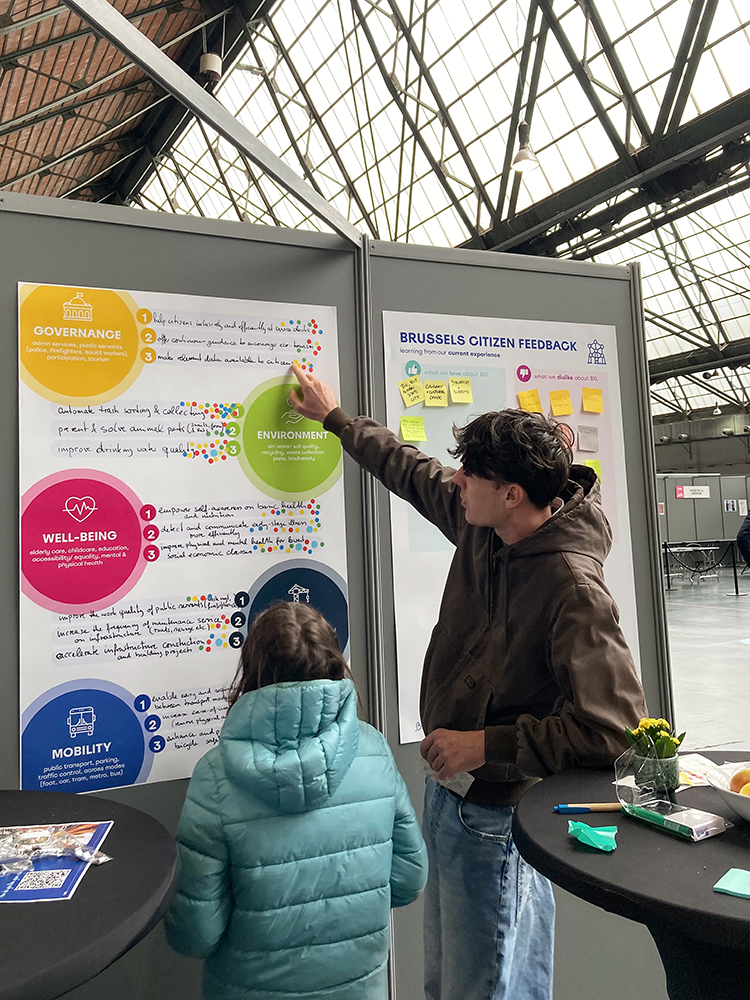
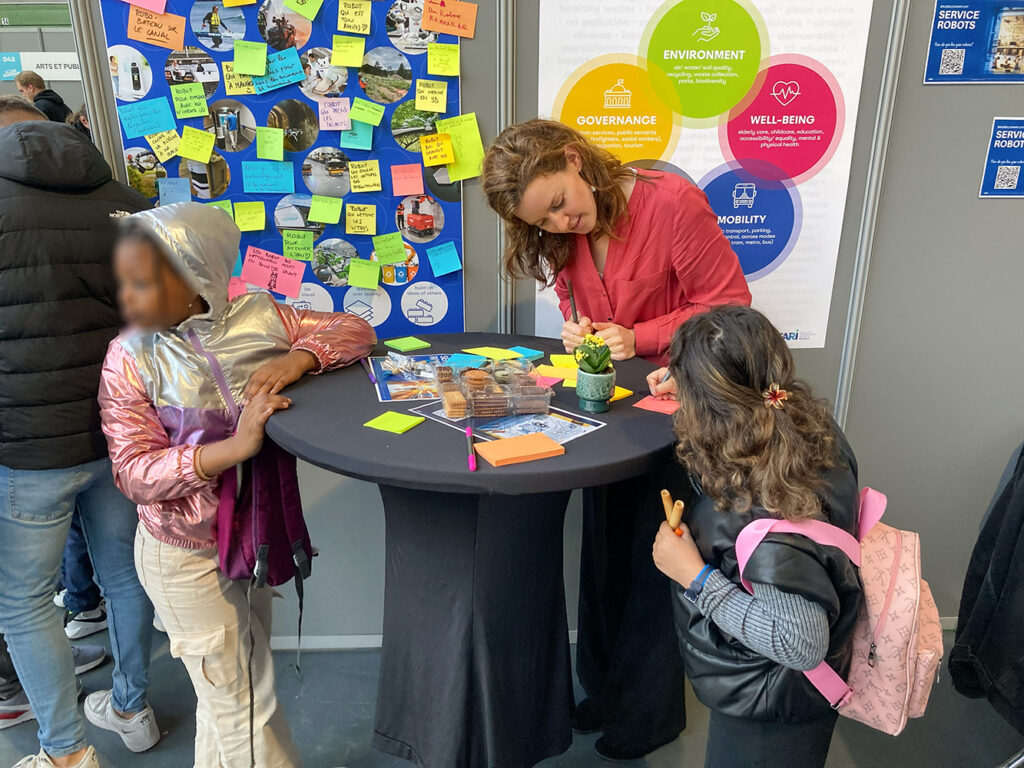
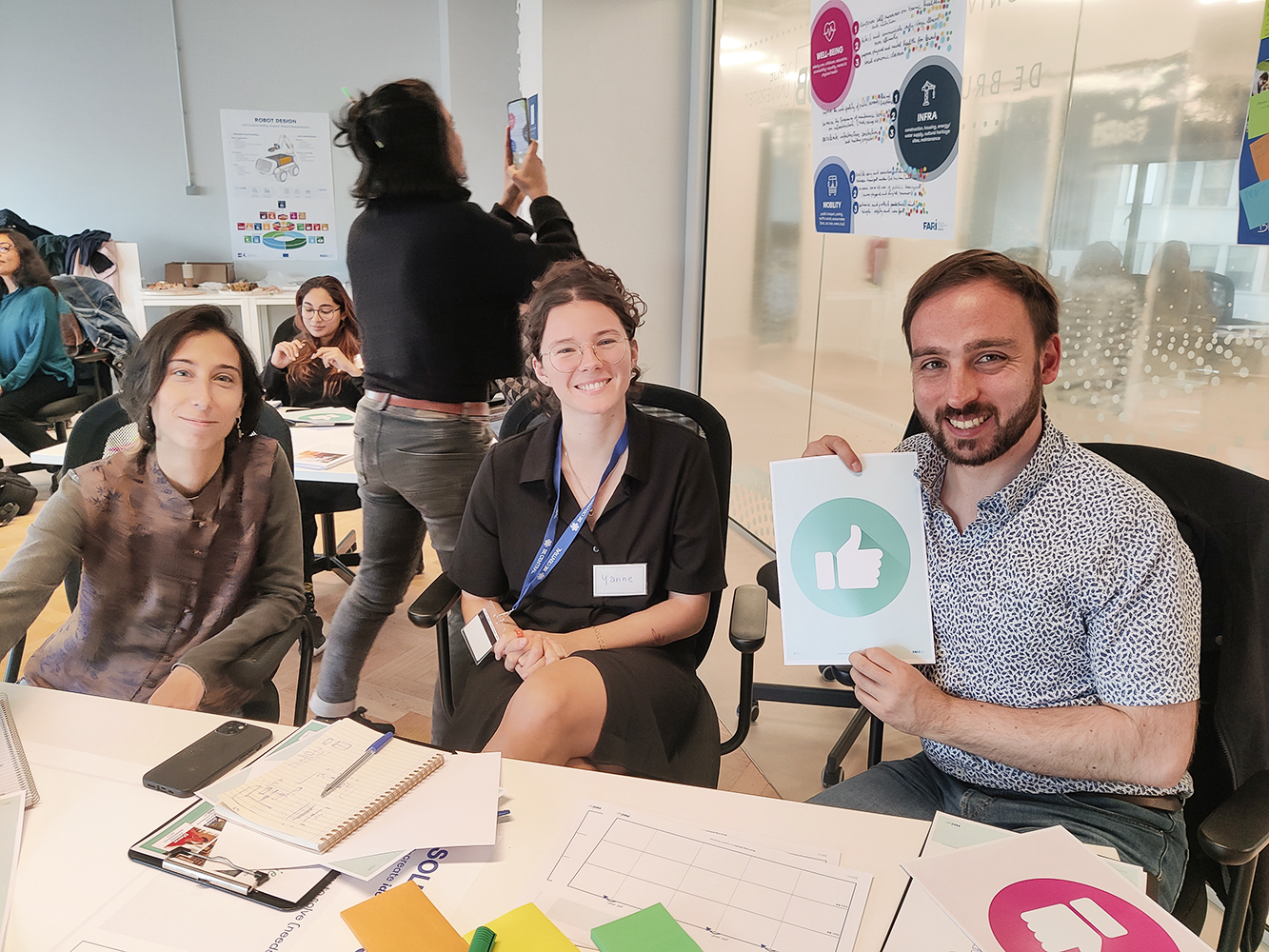
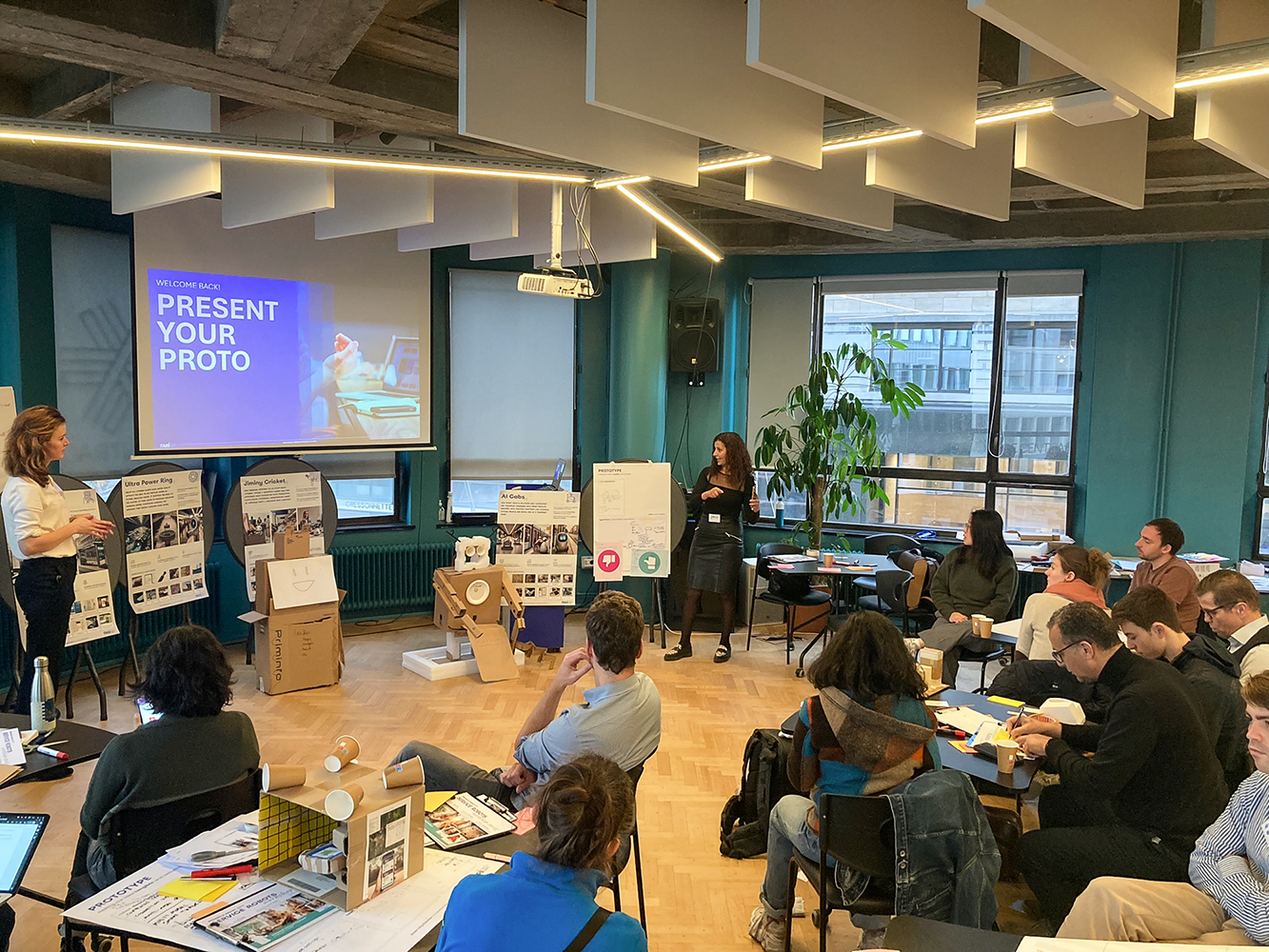
we selected participatory formats that captured perspectives from civil servants/ citizens, grounding future robotics concepts in real-world needs and enabling dialogue between researchers and the people that will be impacted by the products emerging from this research
design doing
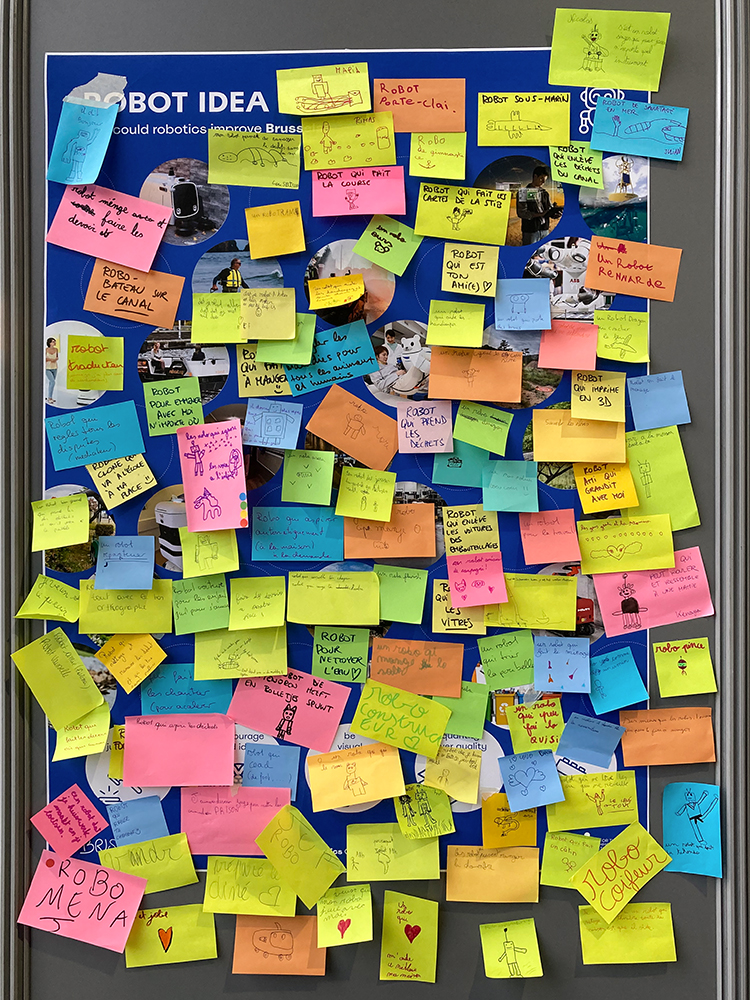
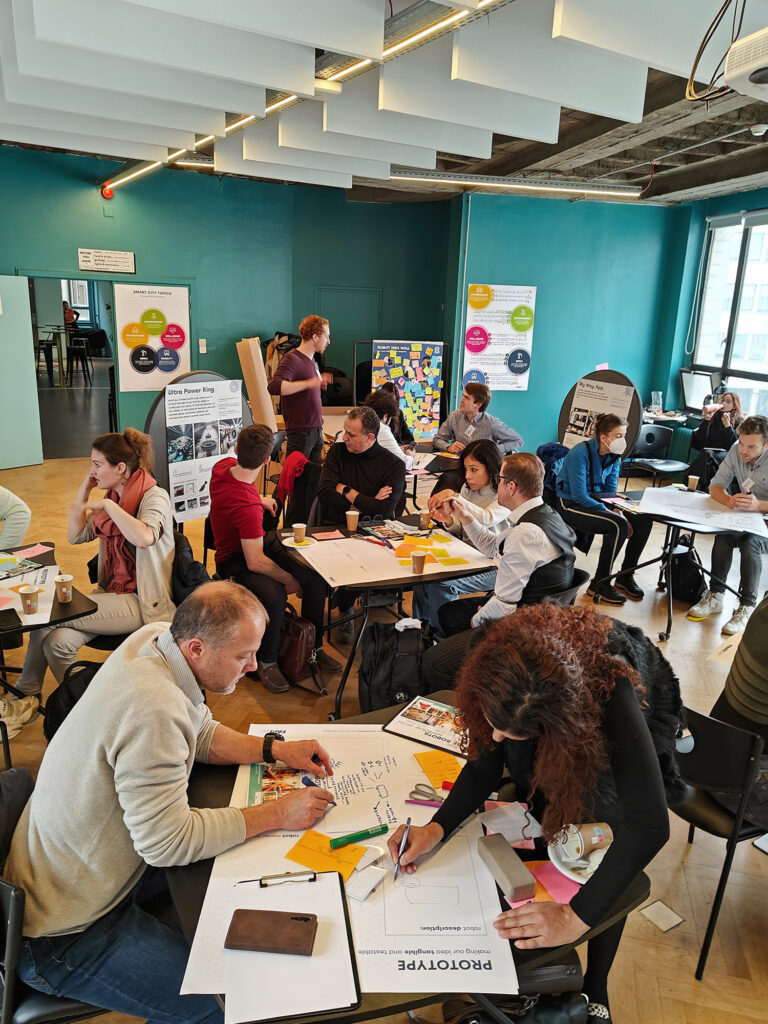
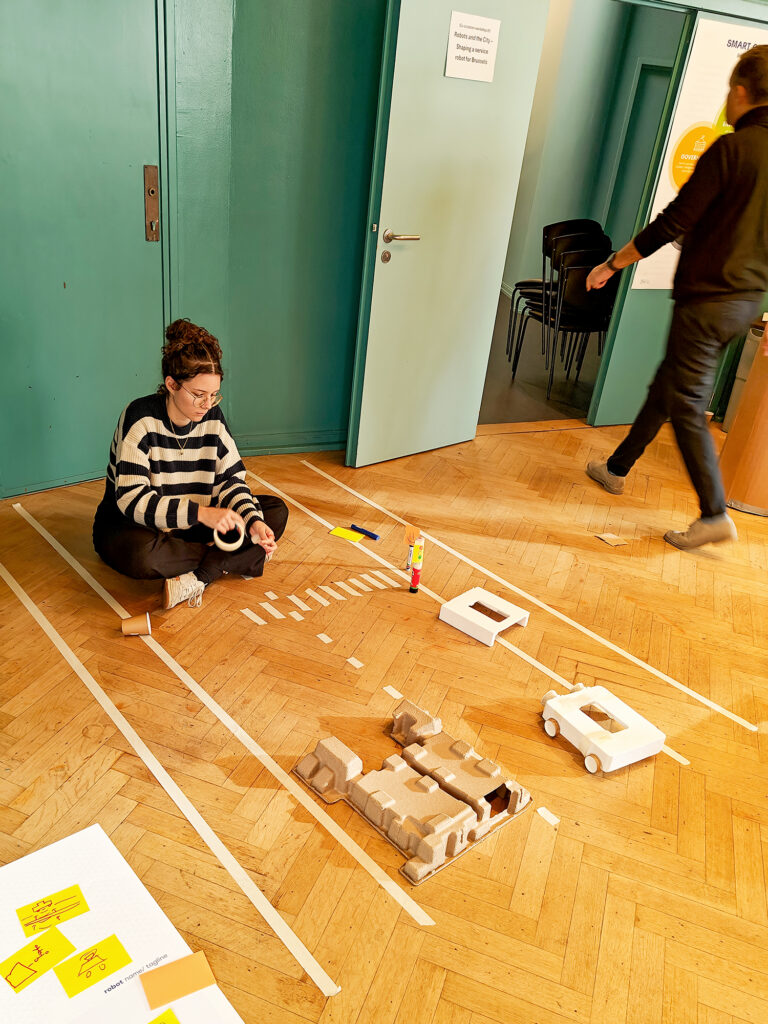
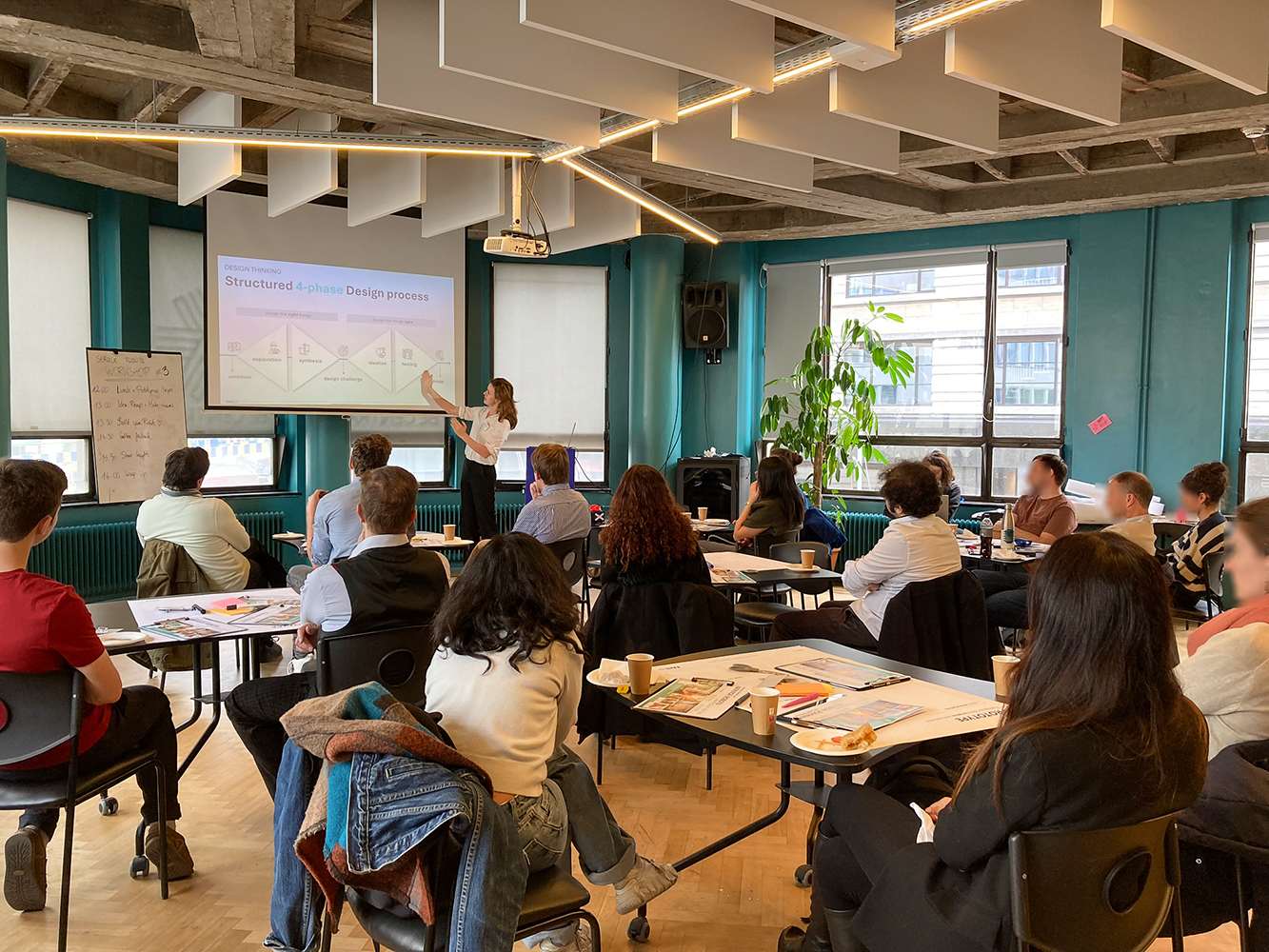
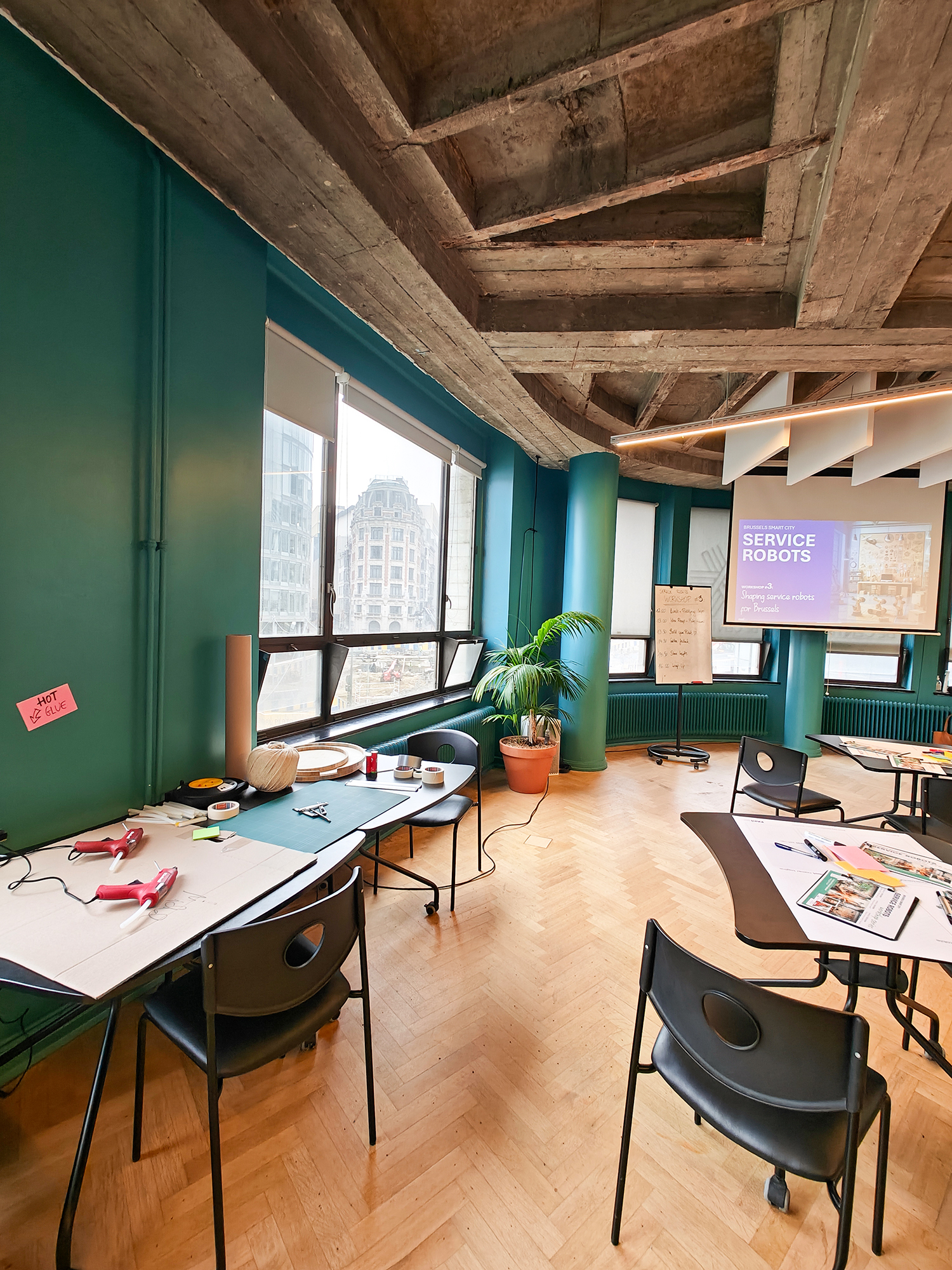
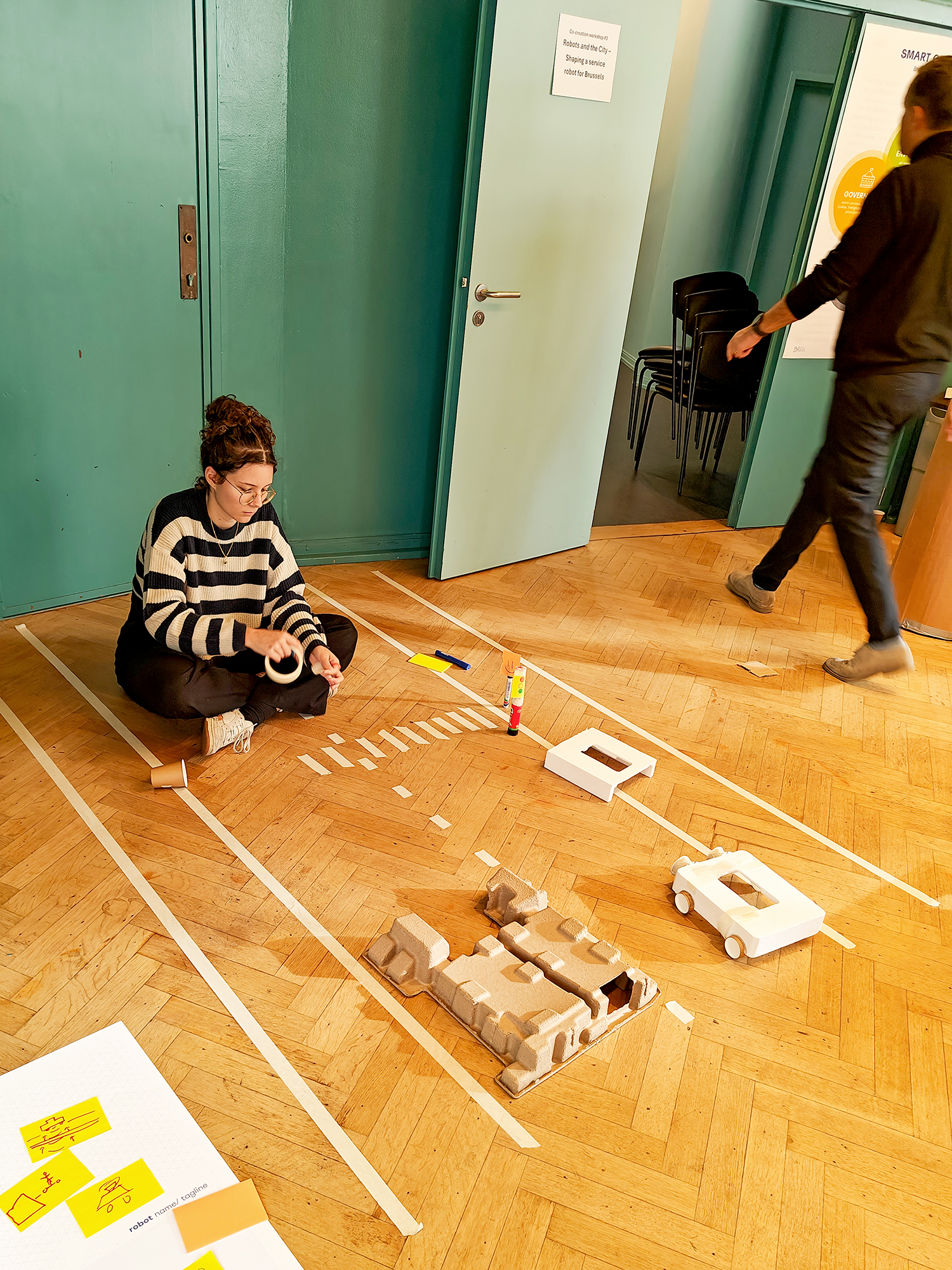
we applied methods from Design Thinking, Product Development and Industrial Design to enable “learning by doing”, combining urban robot research insights with citizen needs discovery, ideation and rapid prototyping
robotics trends
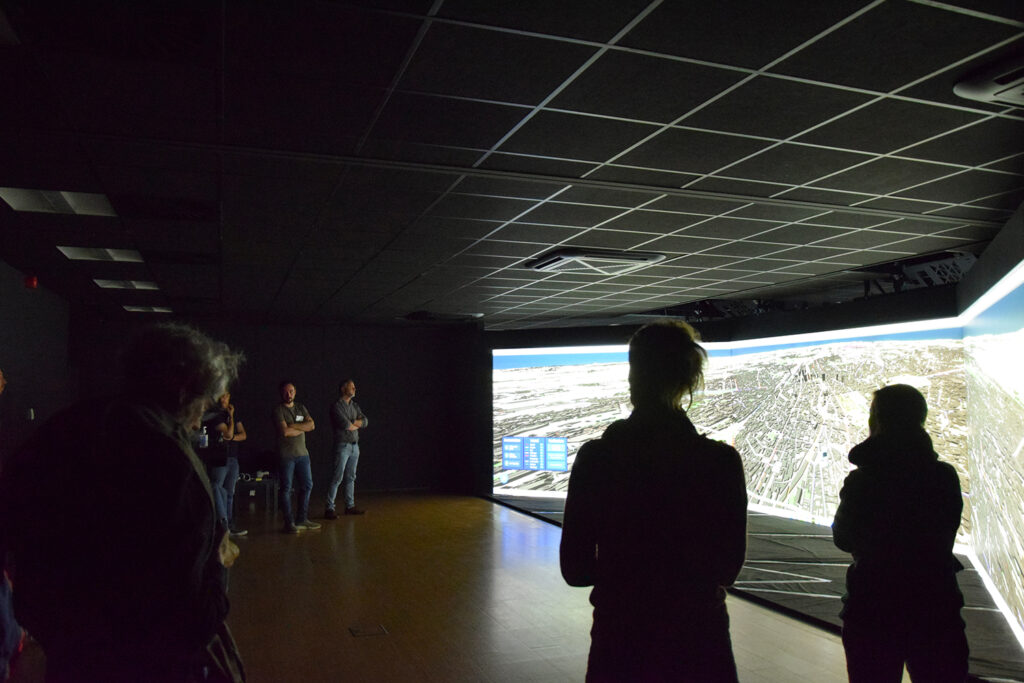
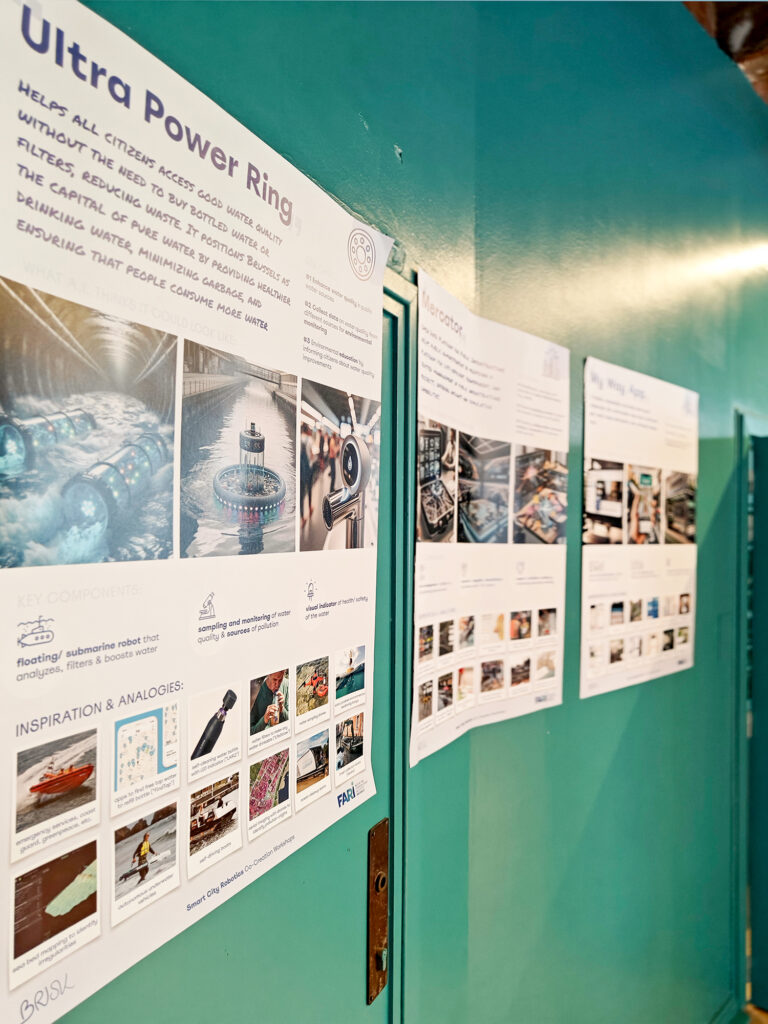
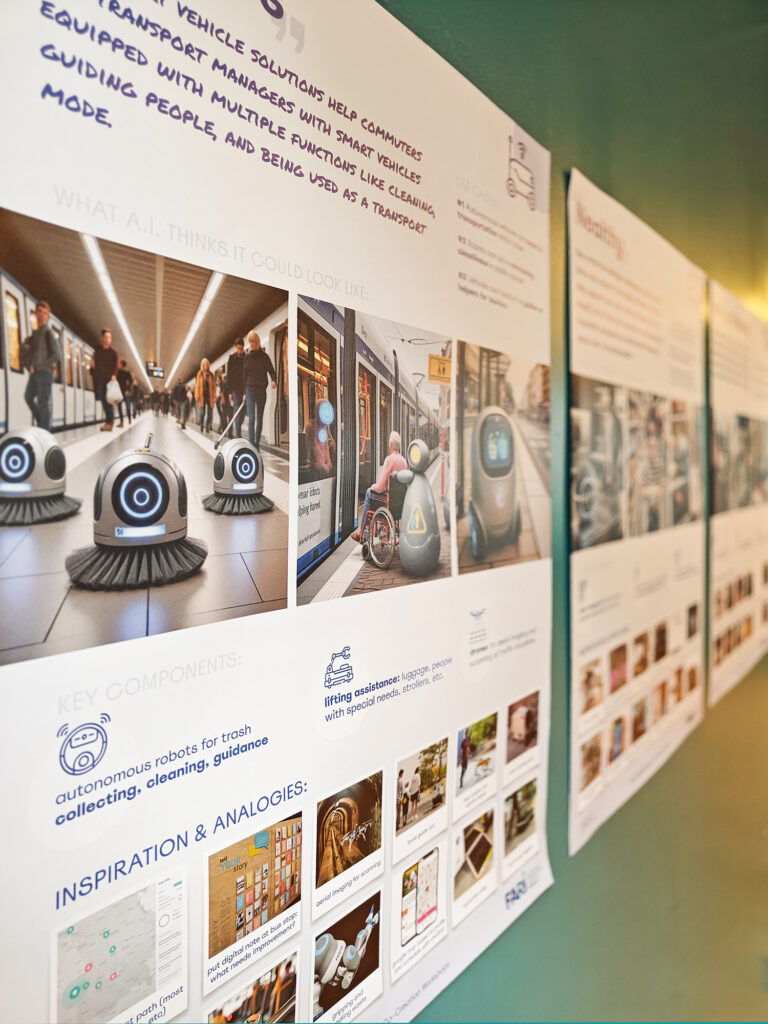
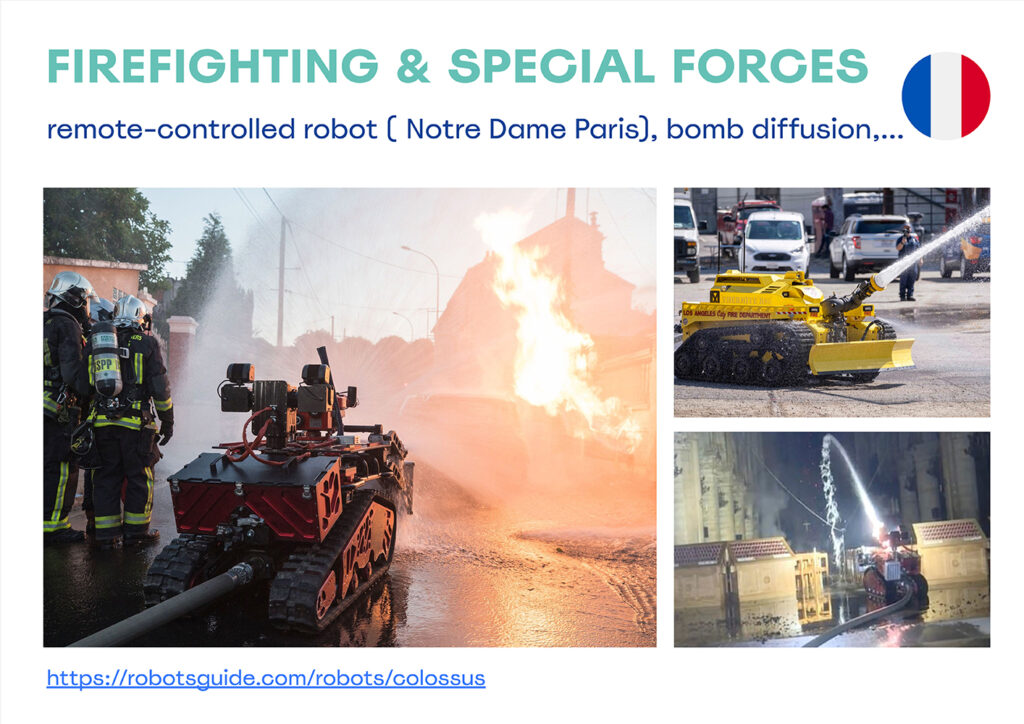
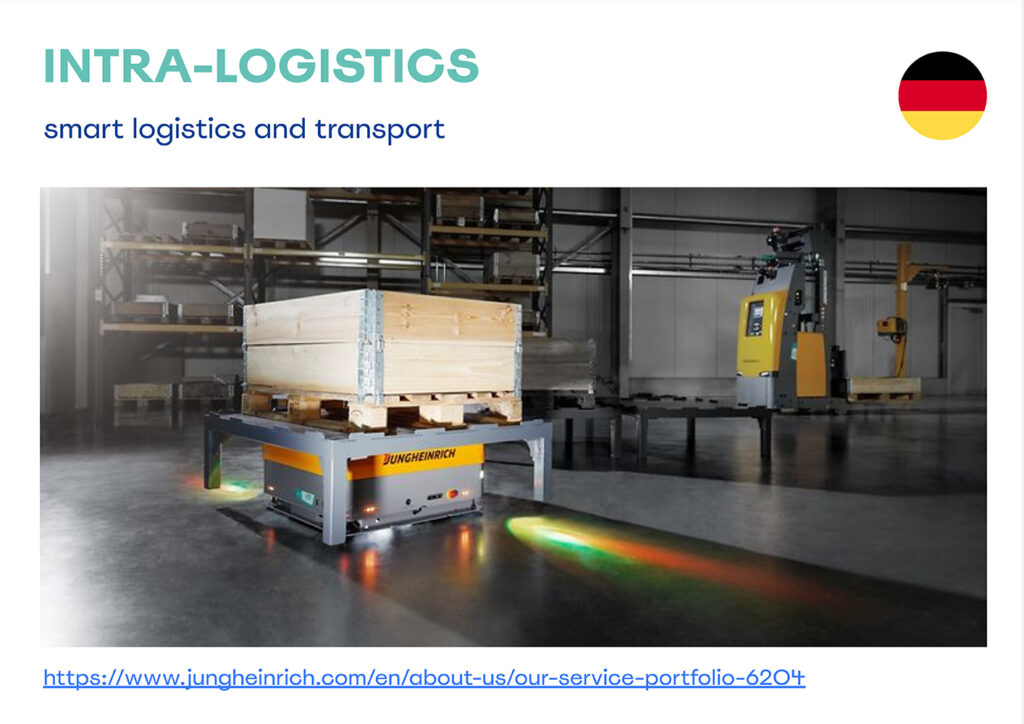
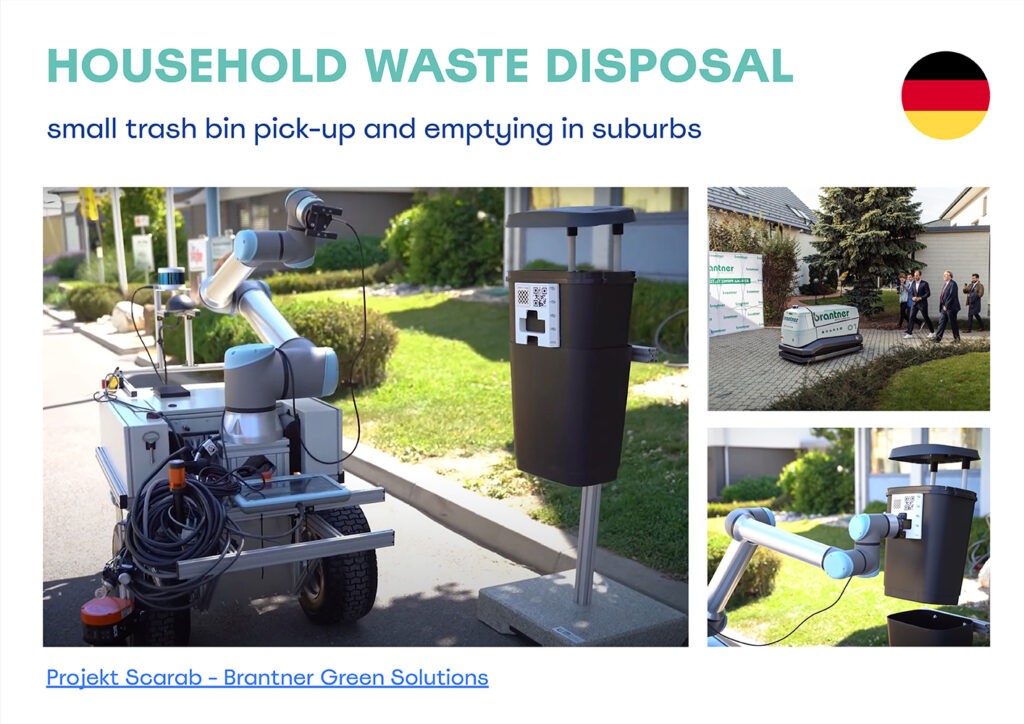
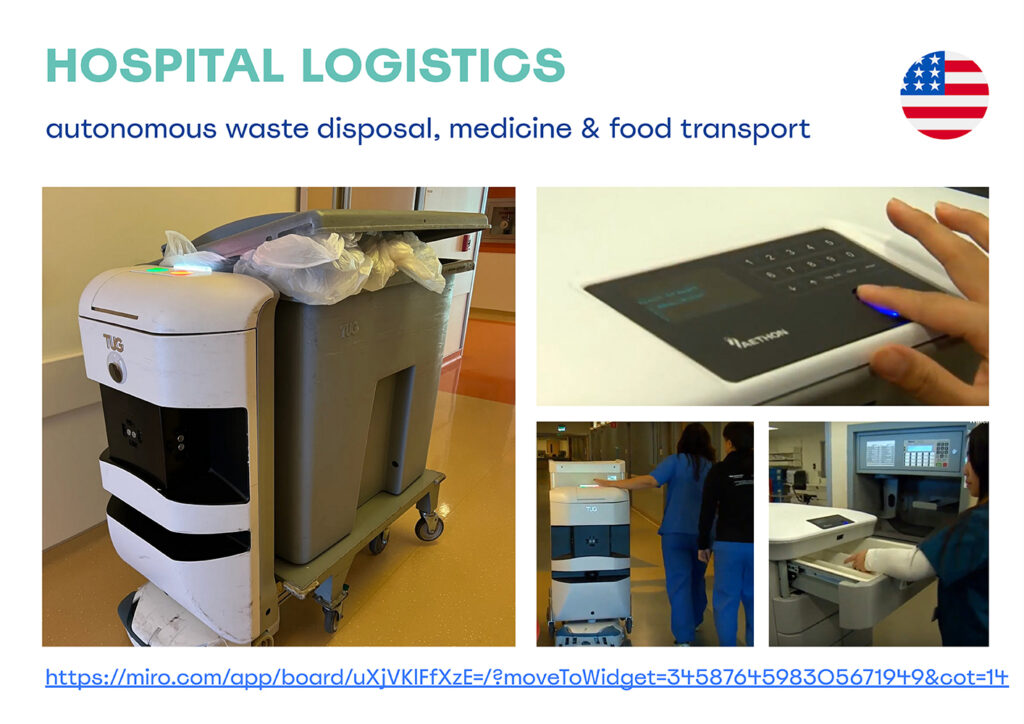
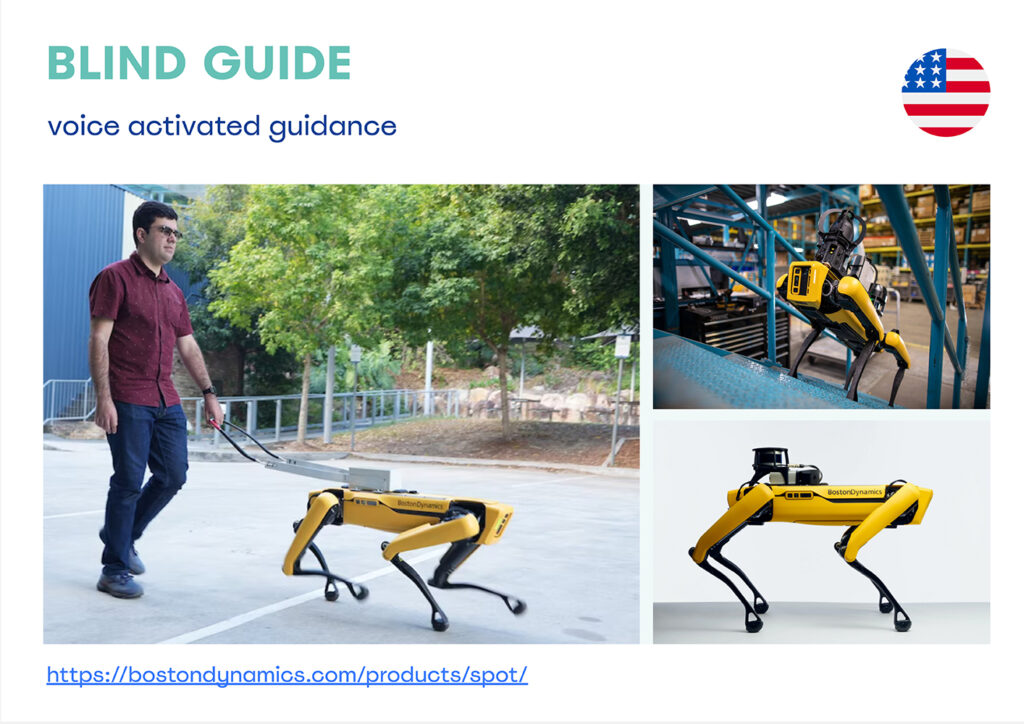
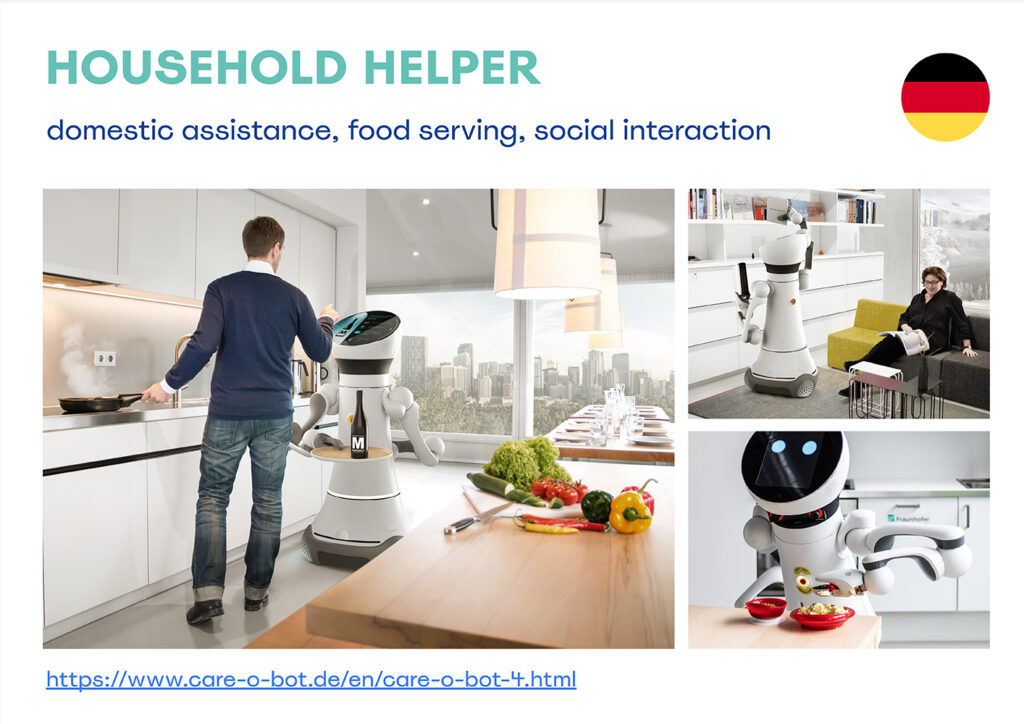
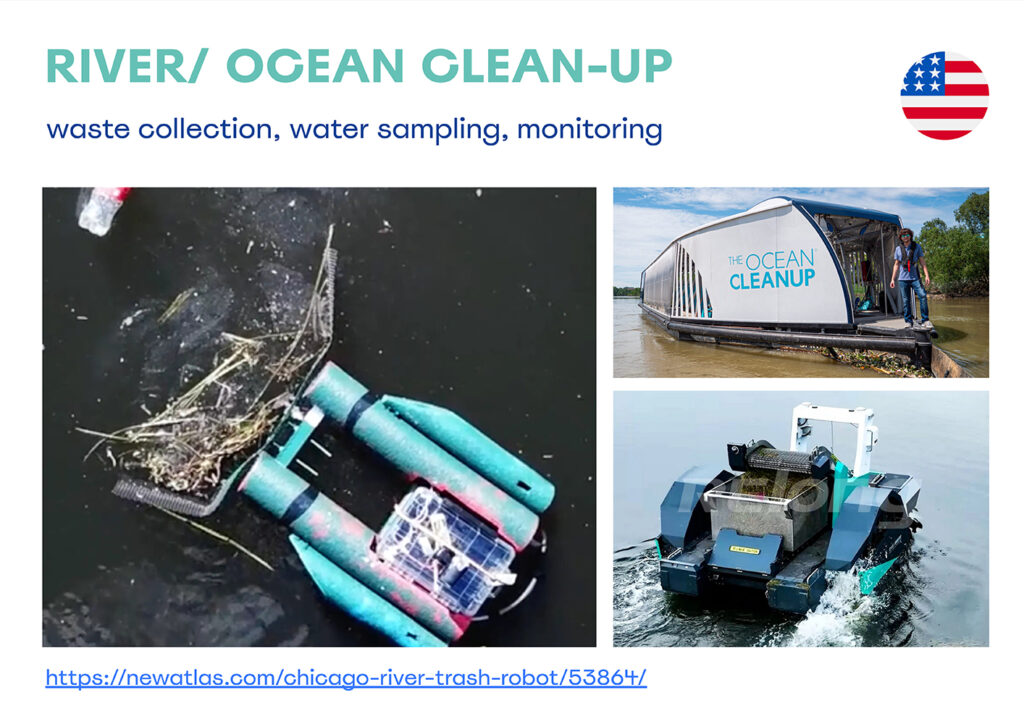
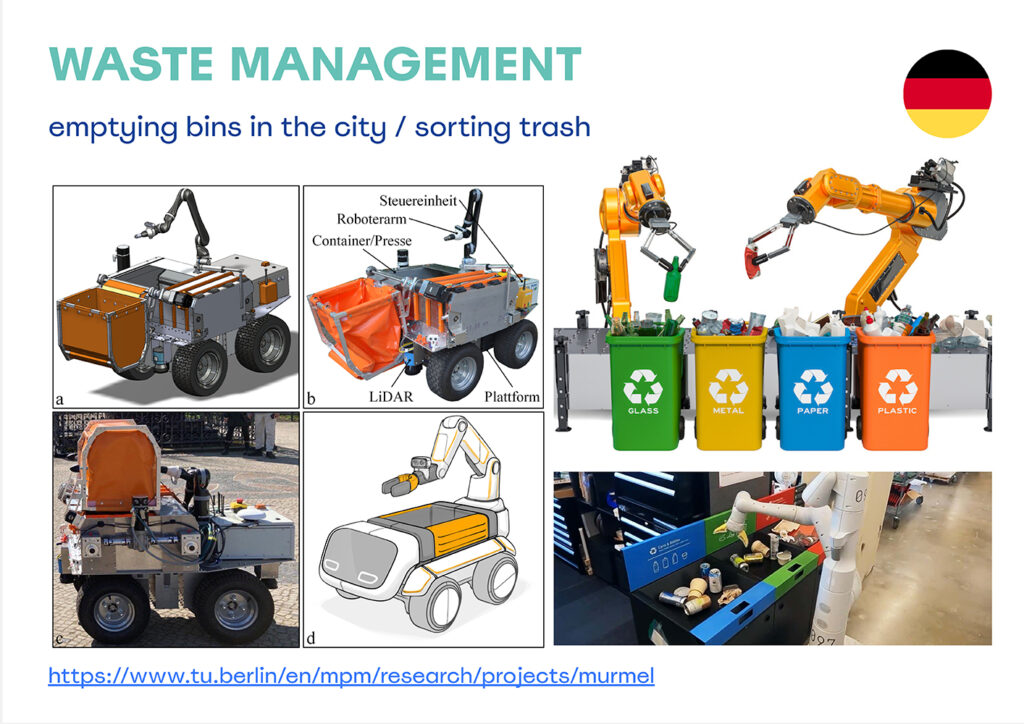
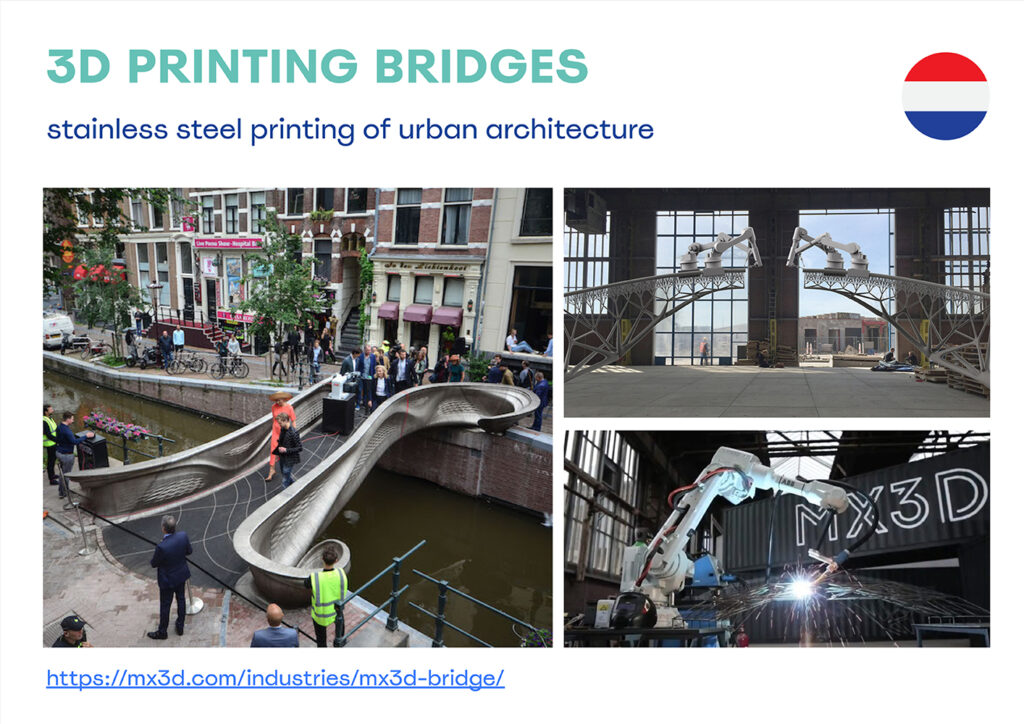
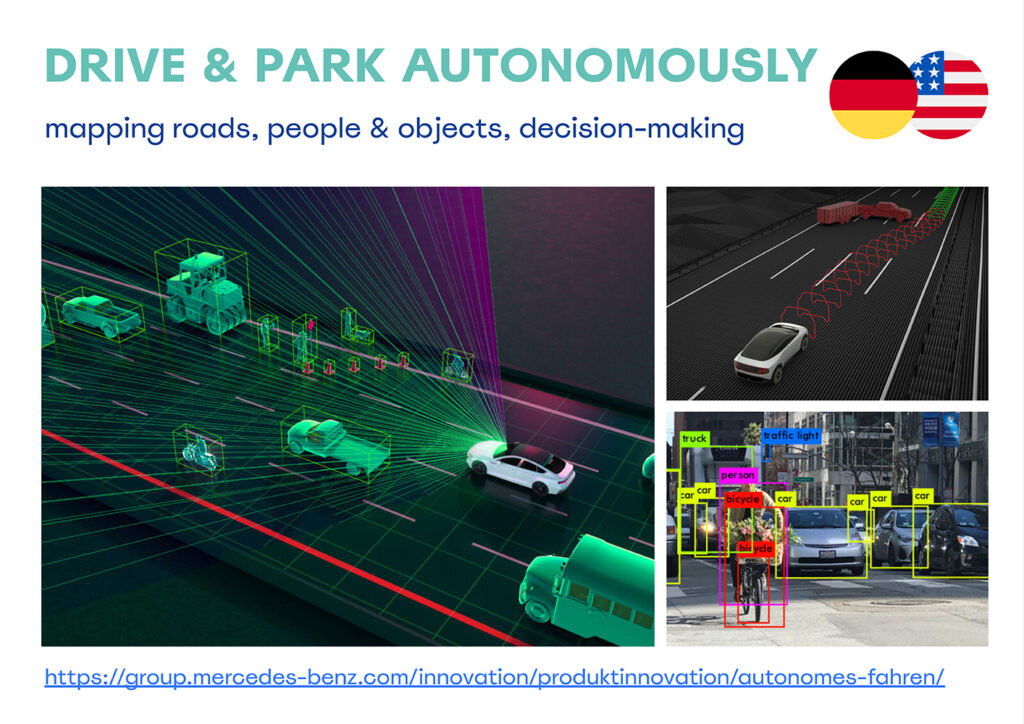
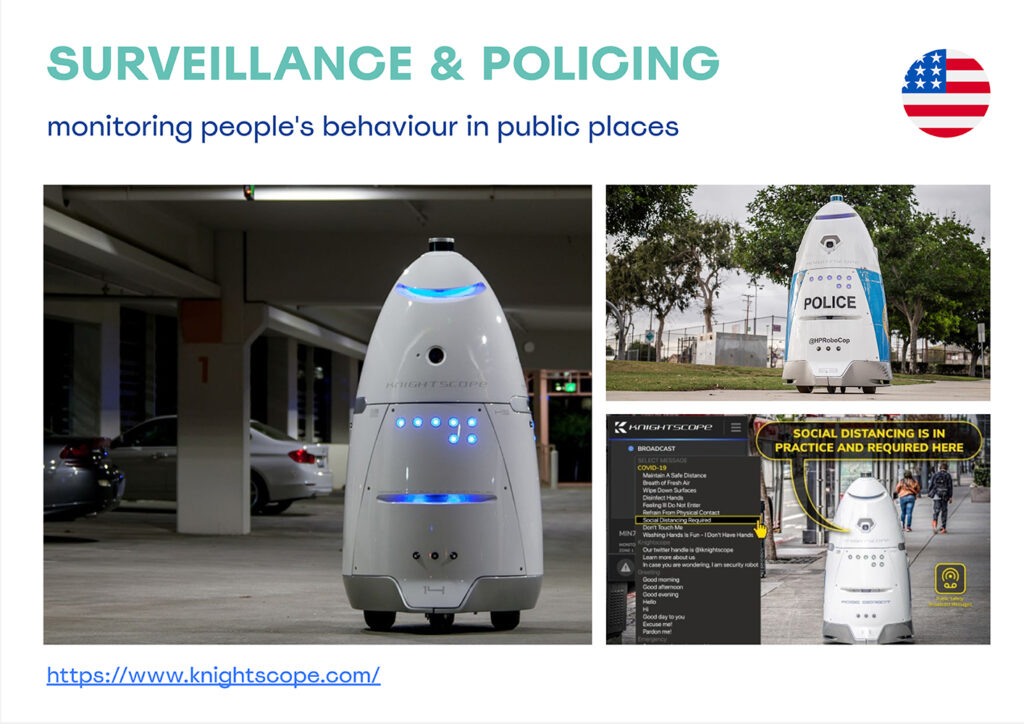
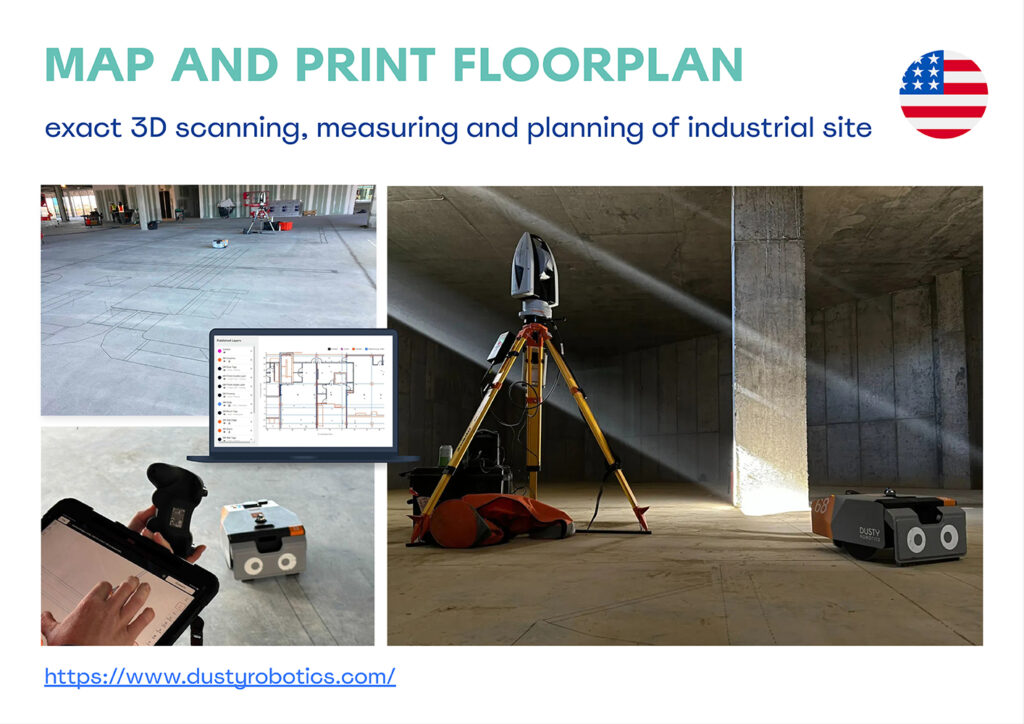
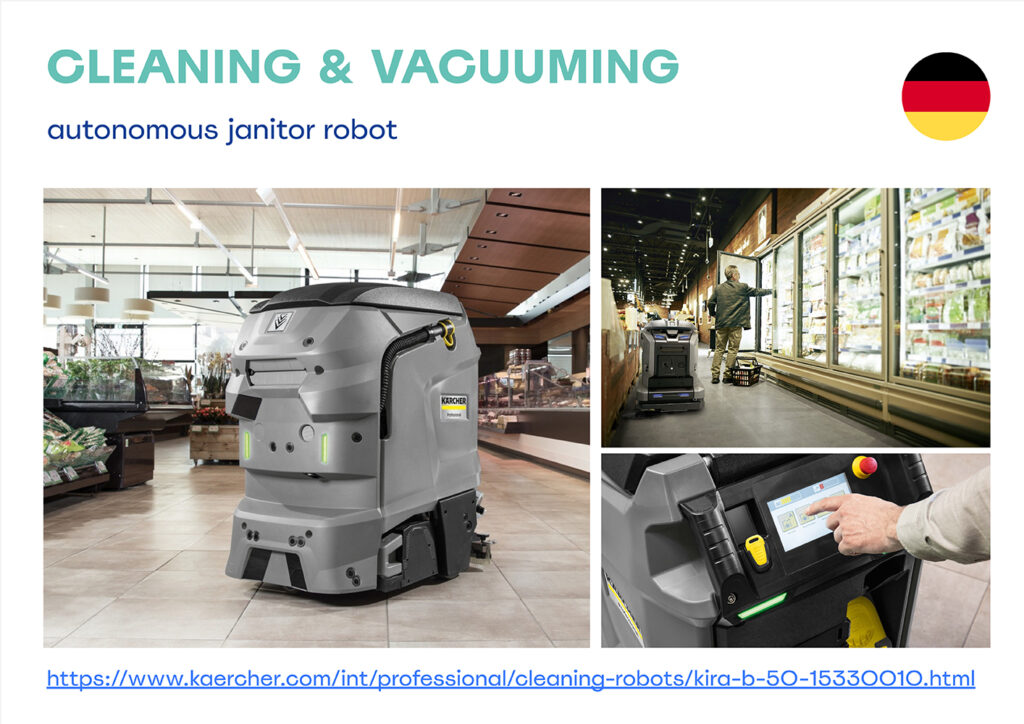
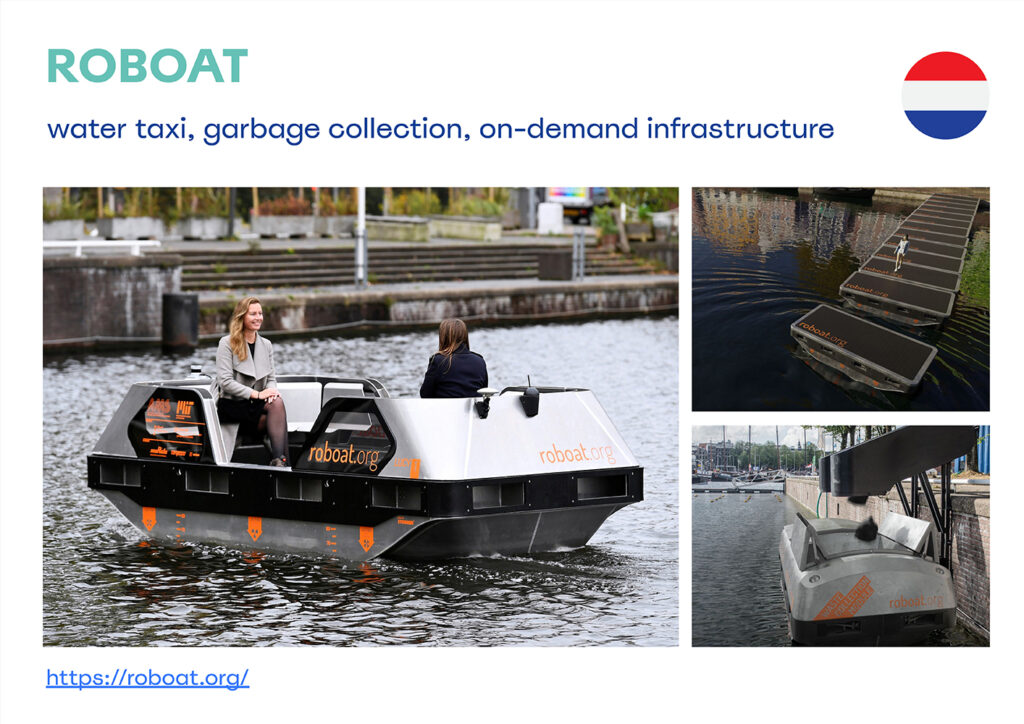
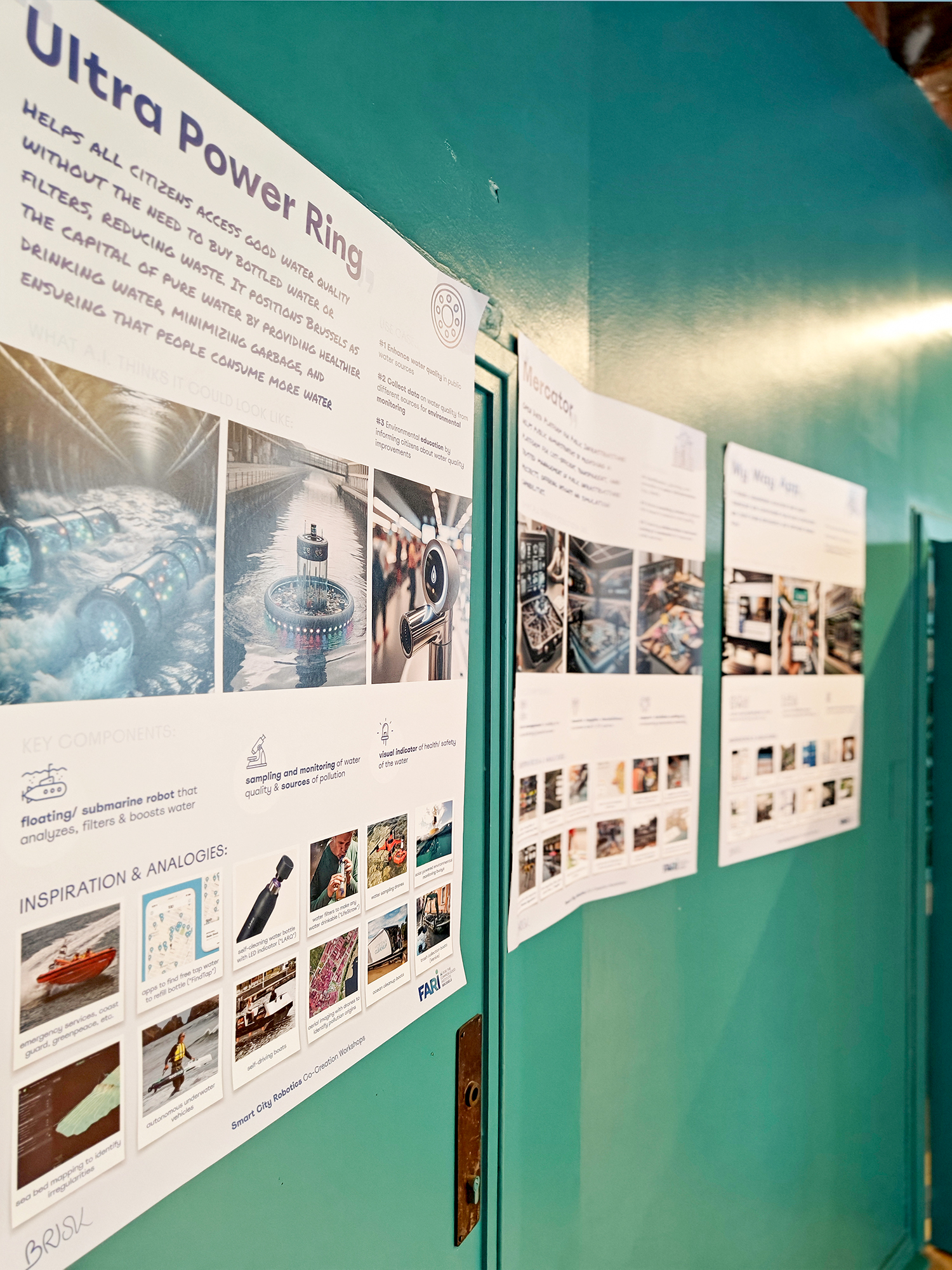
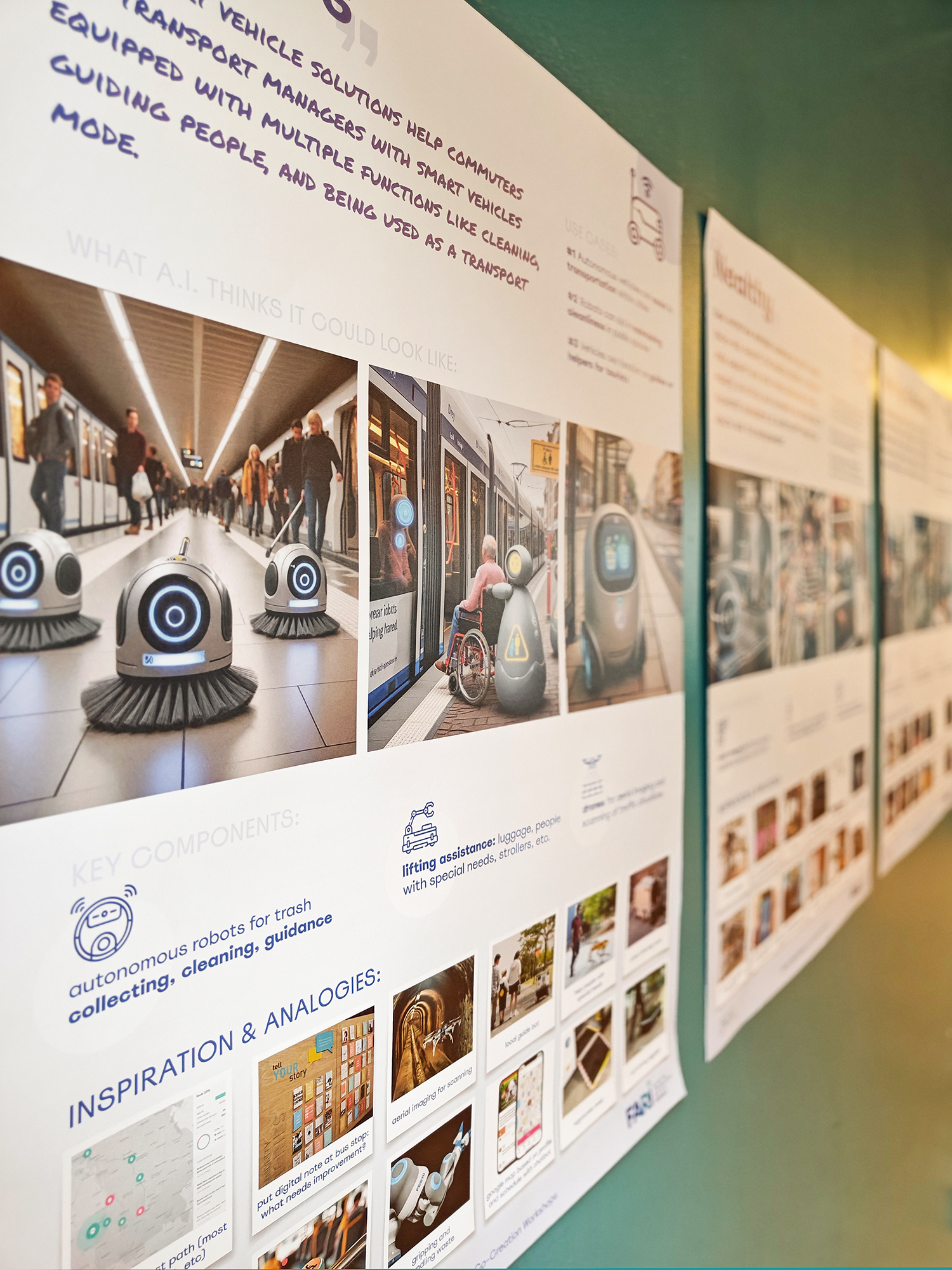
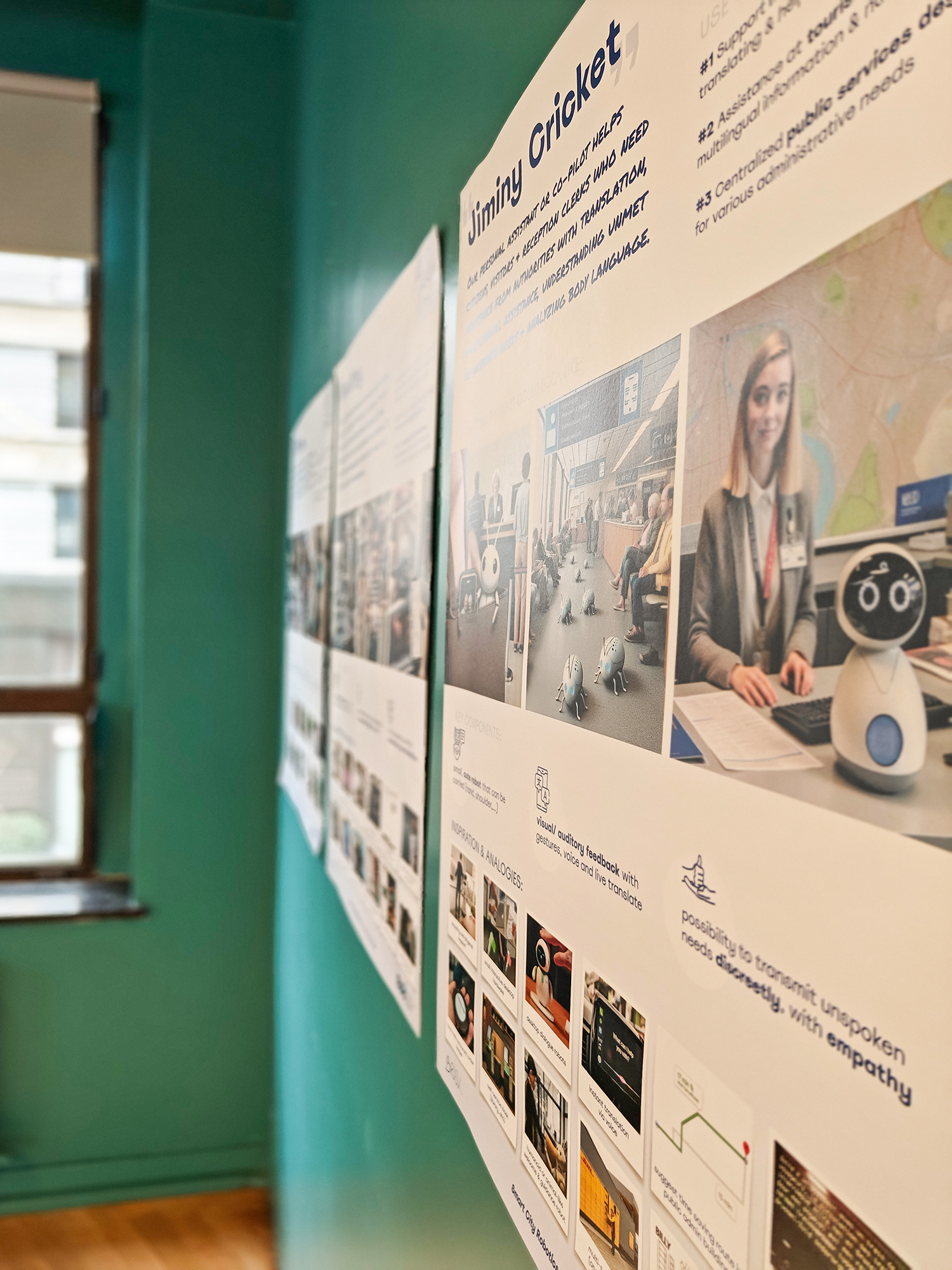
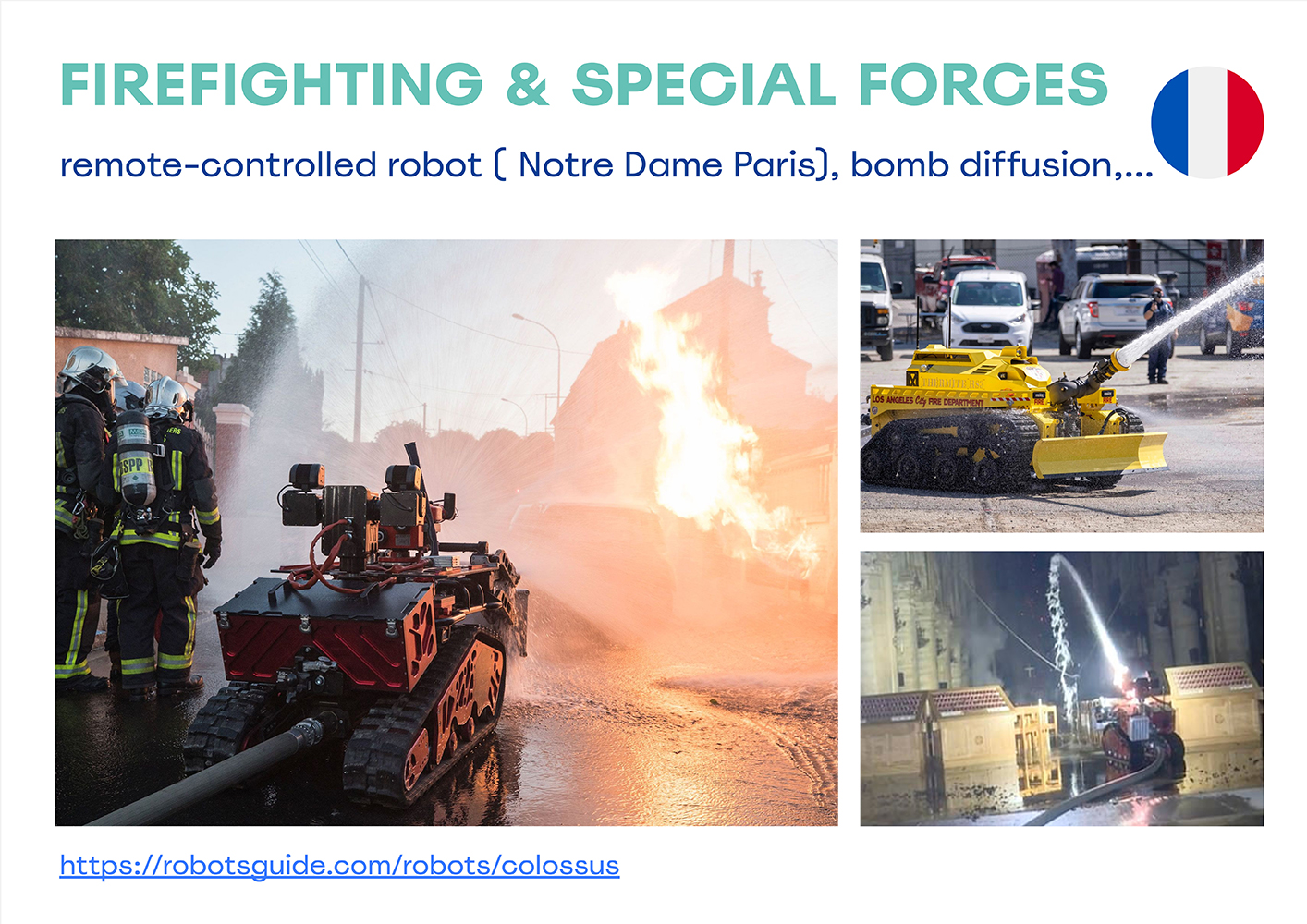
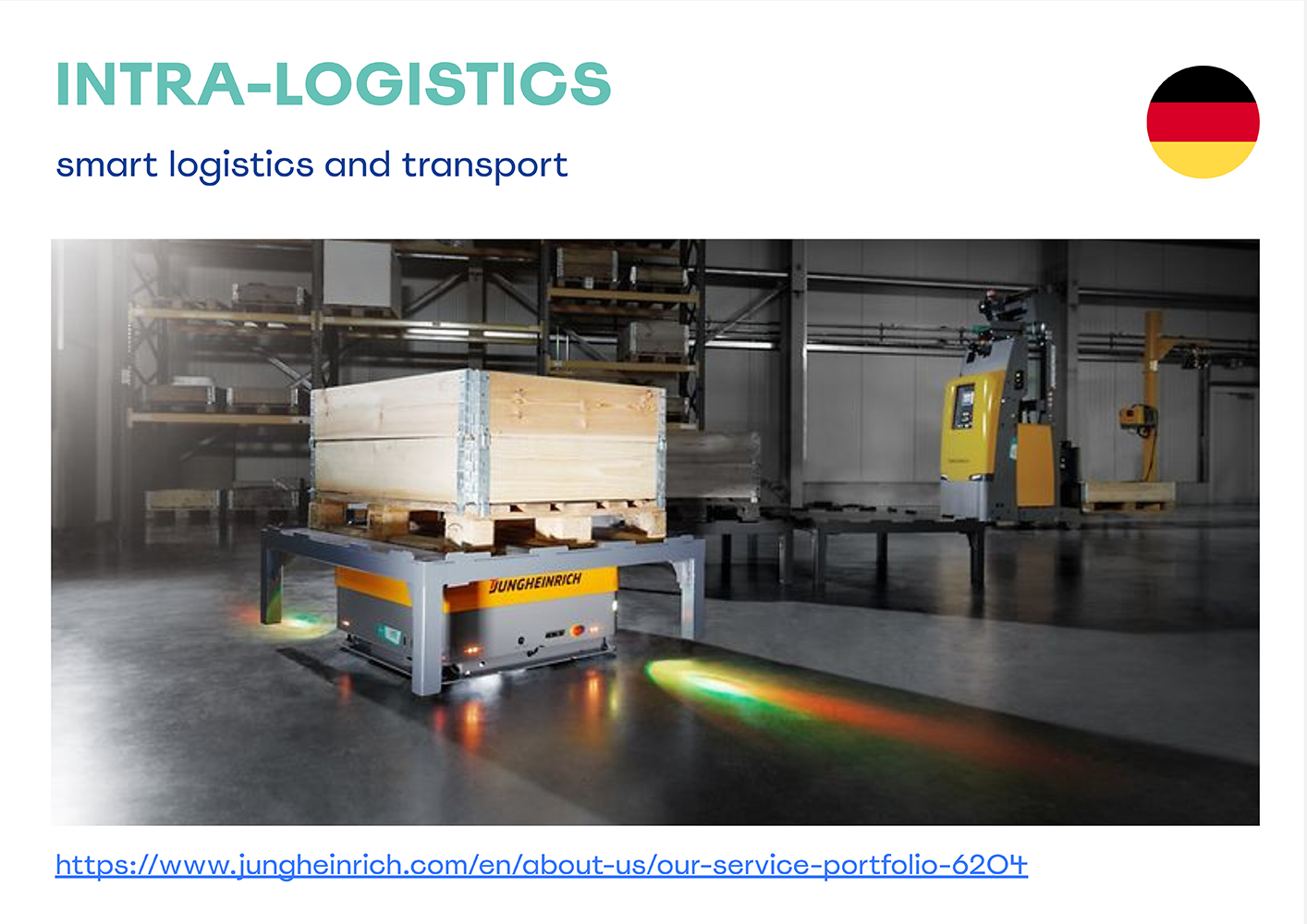
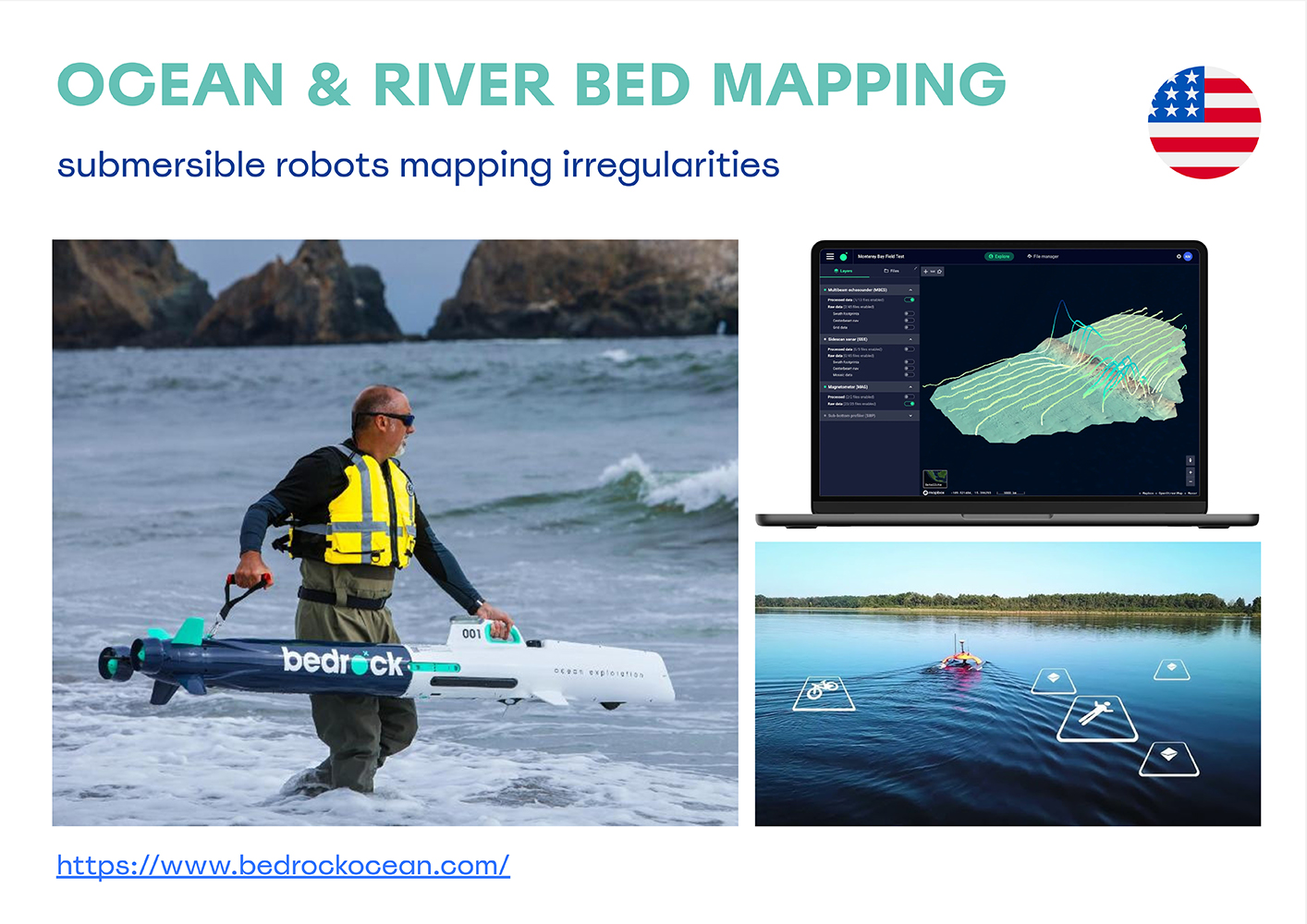
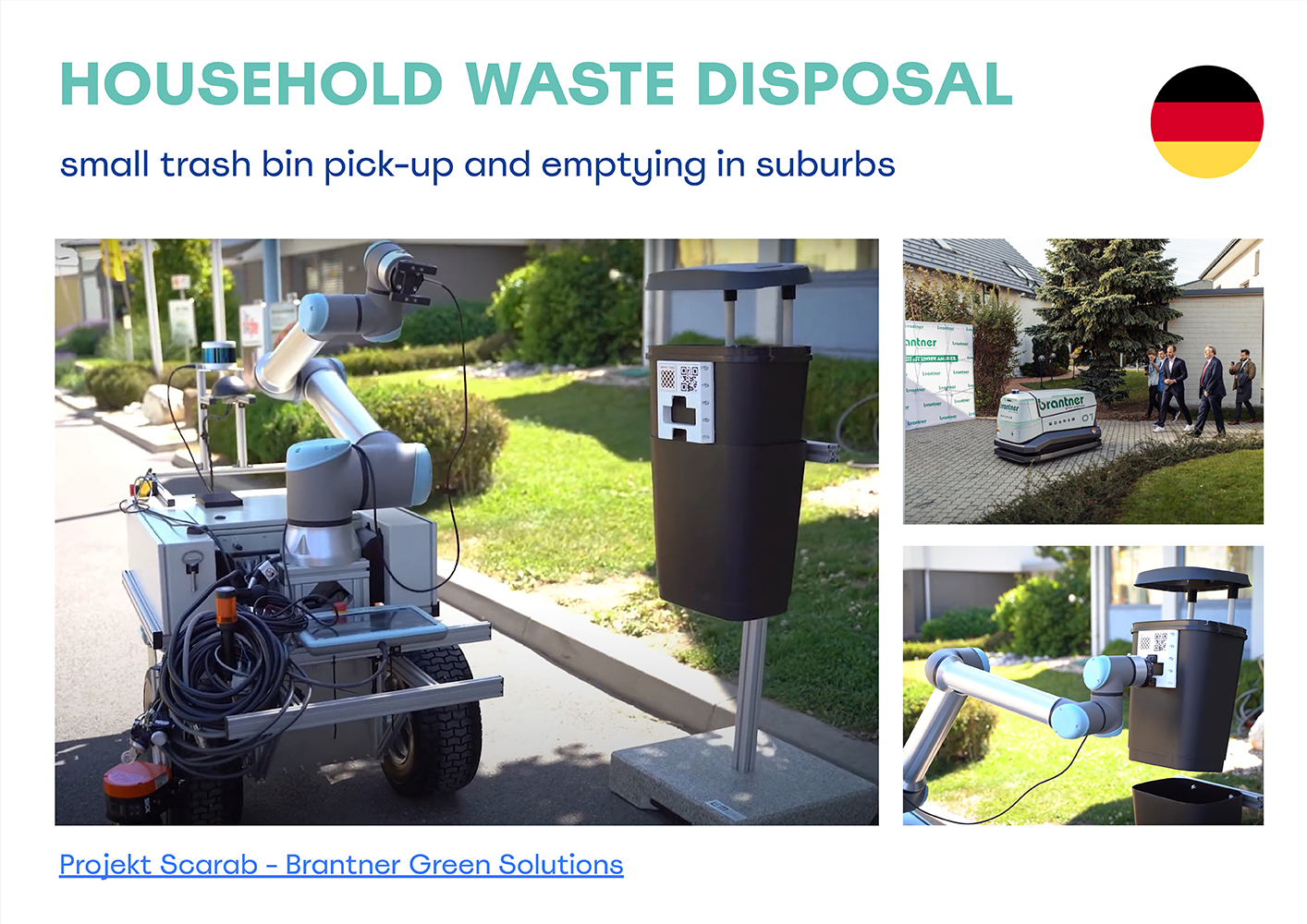
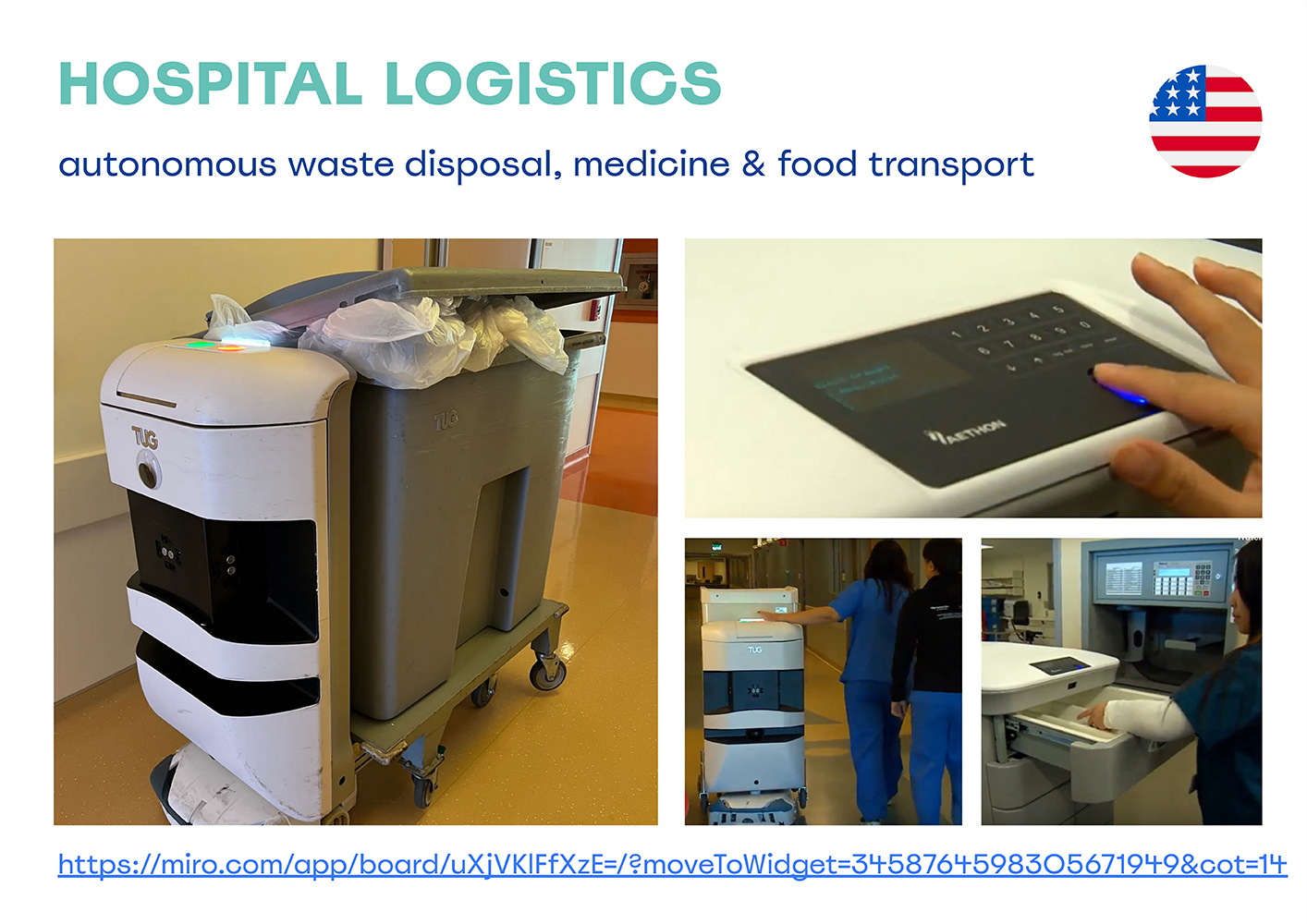
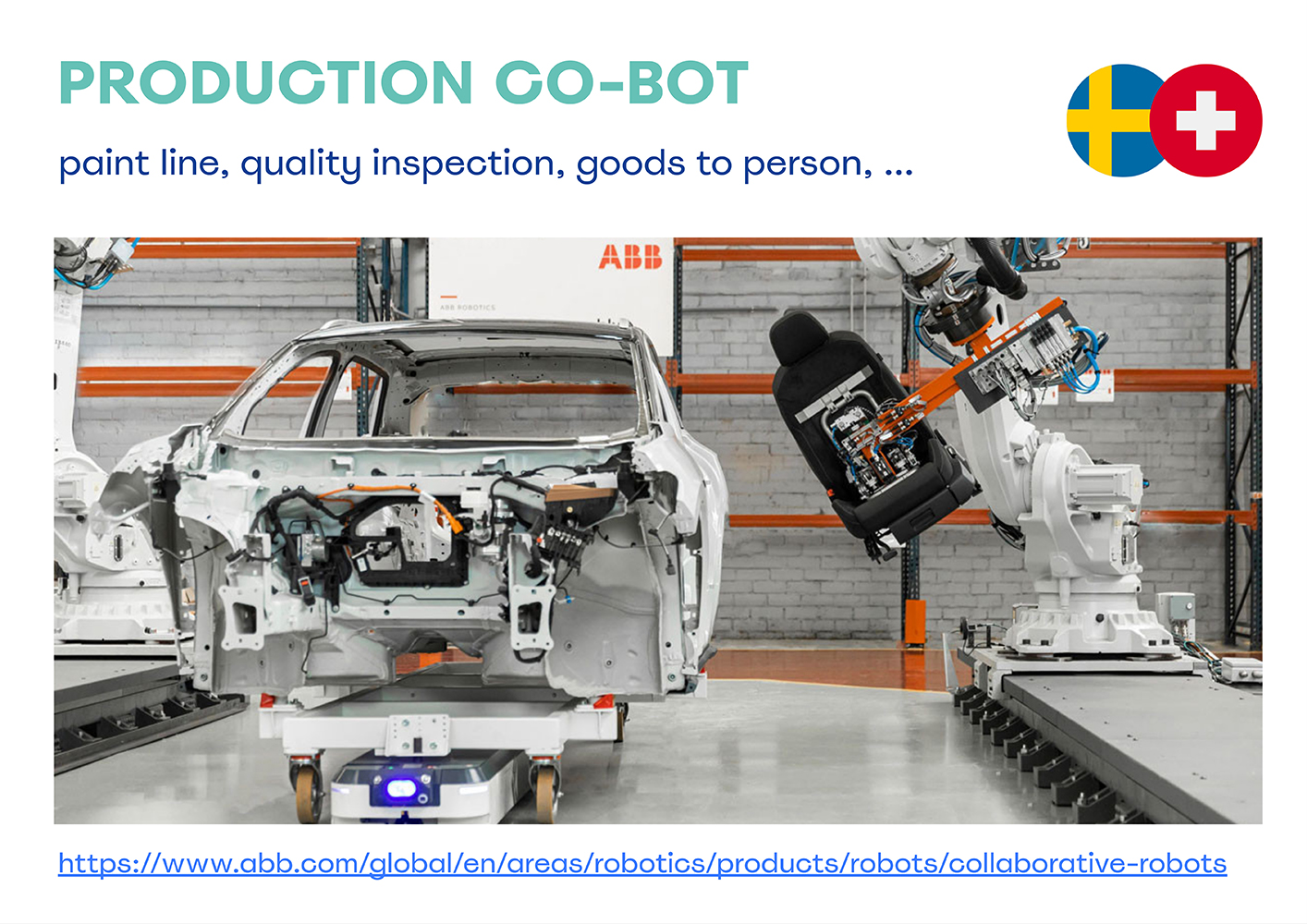
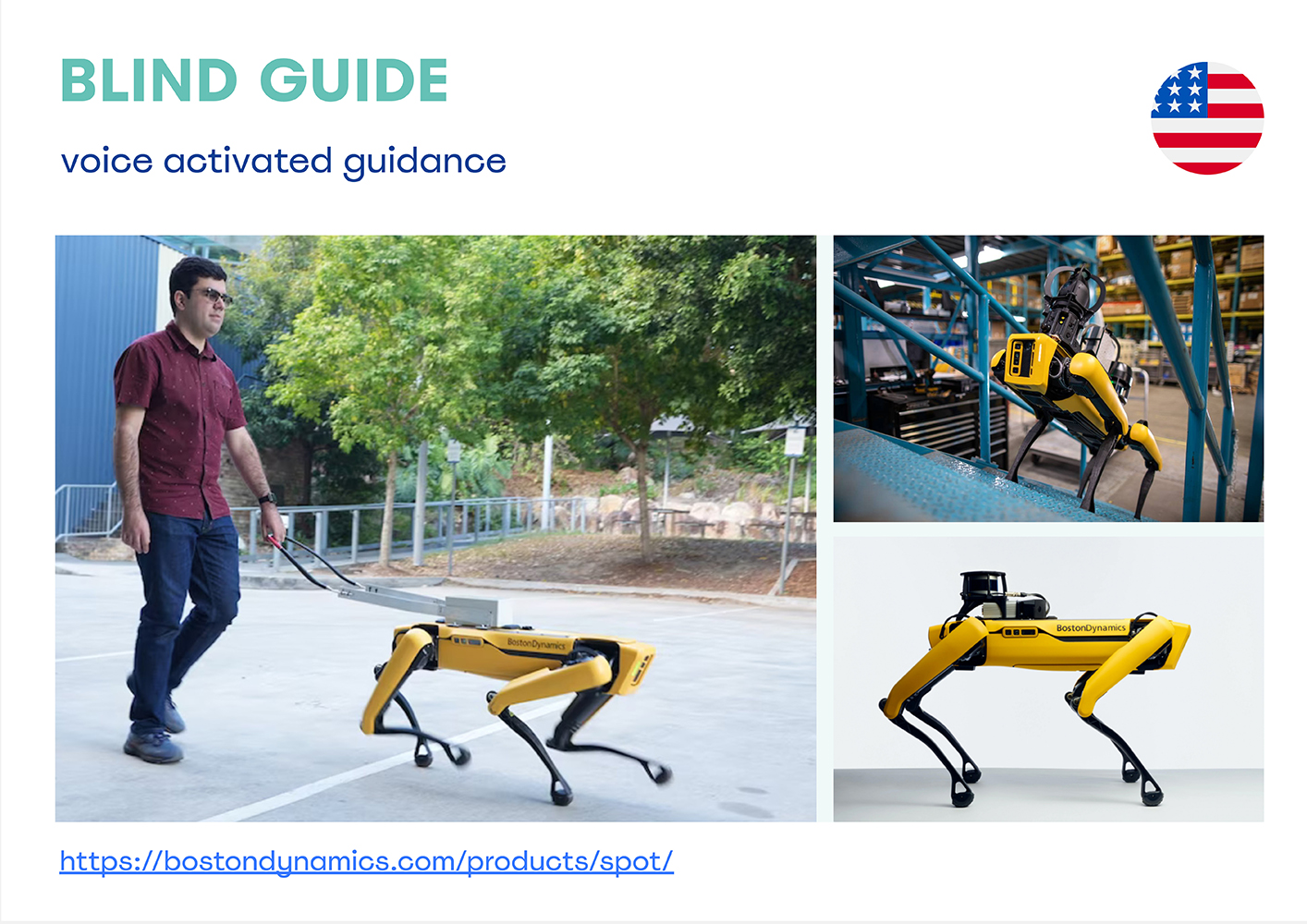
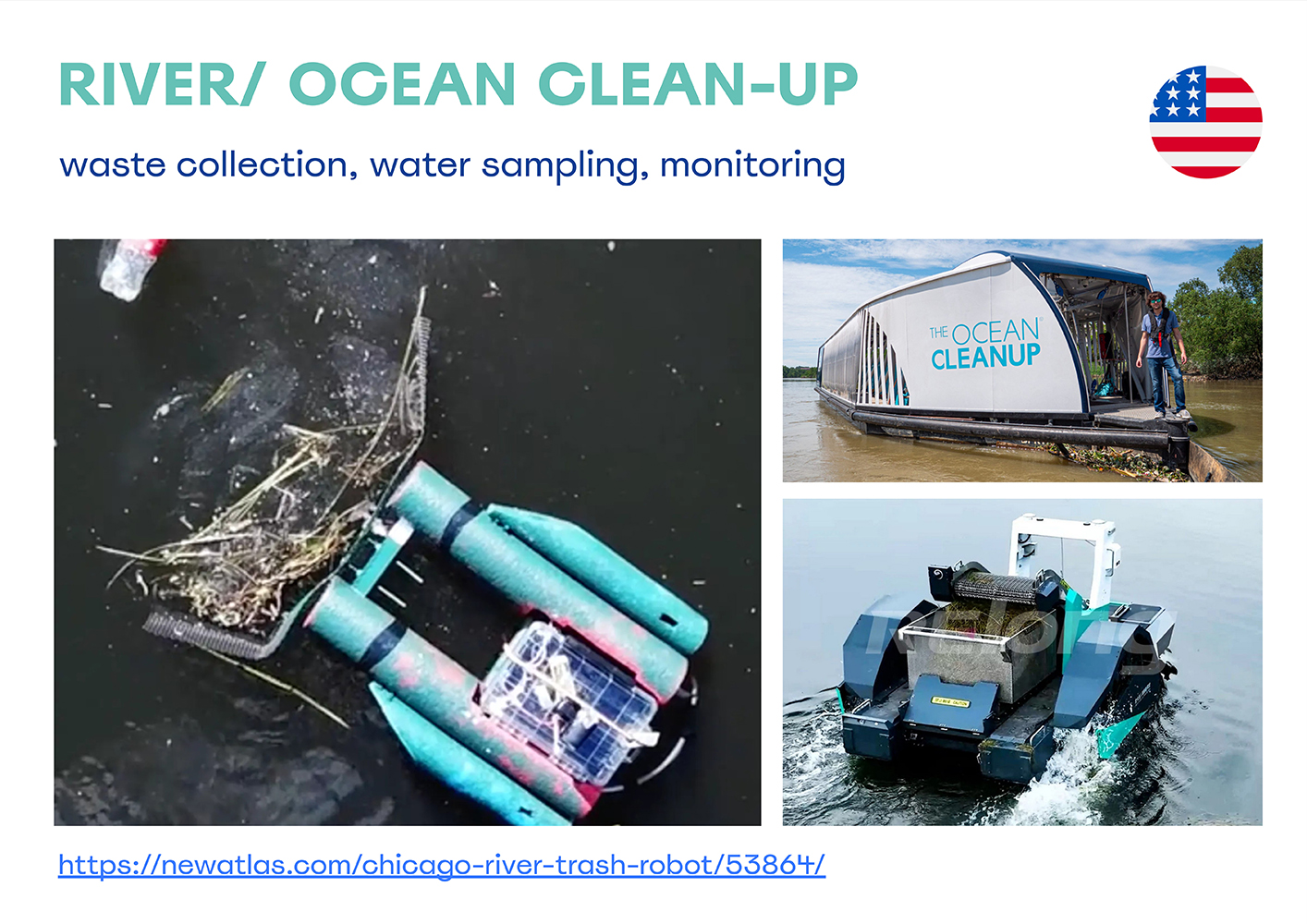
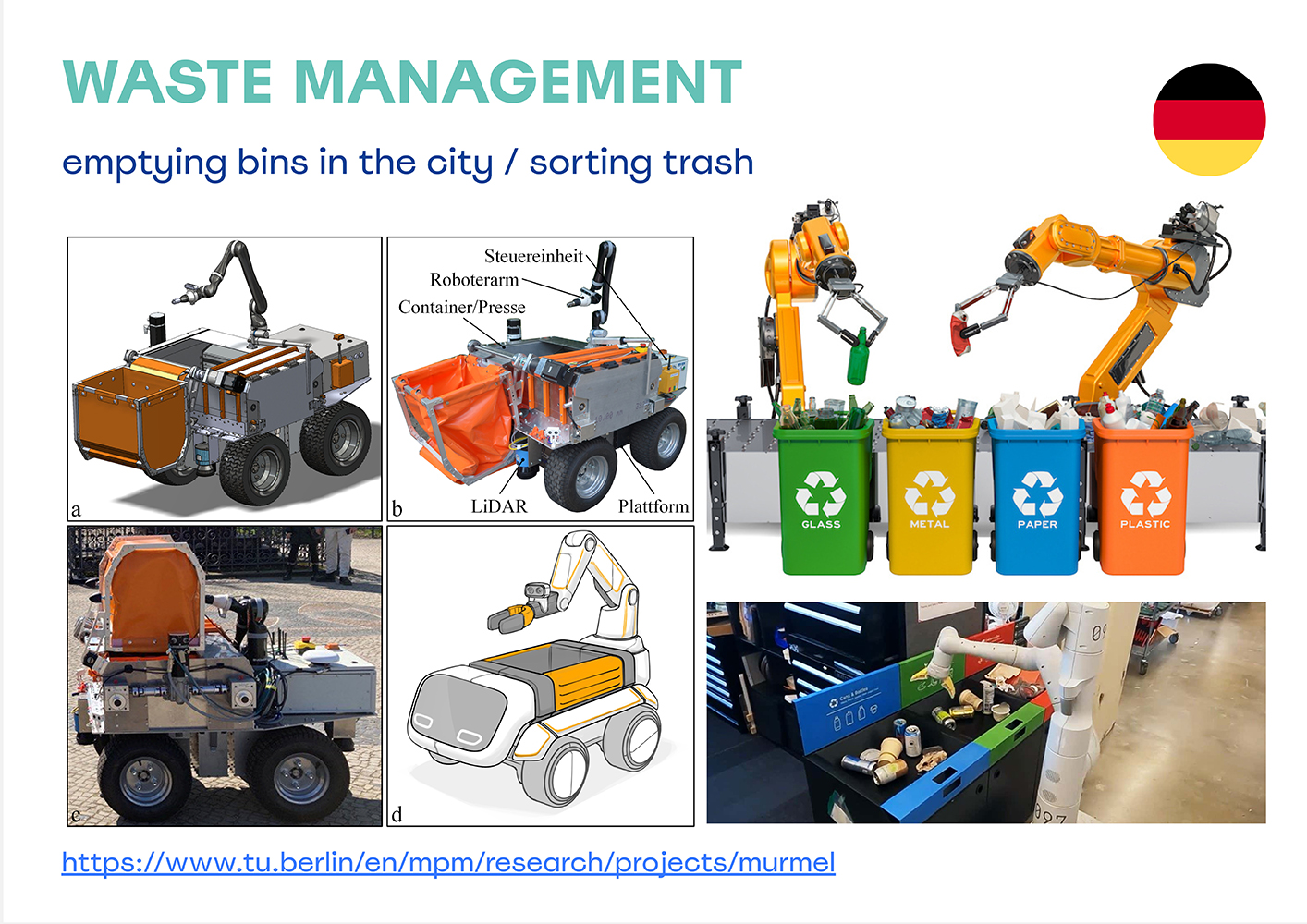
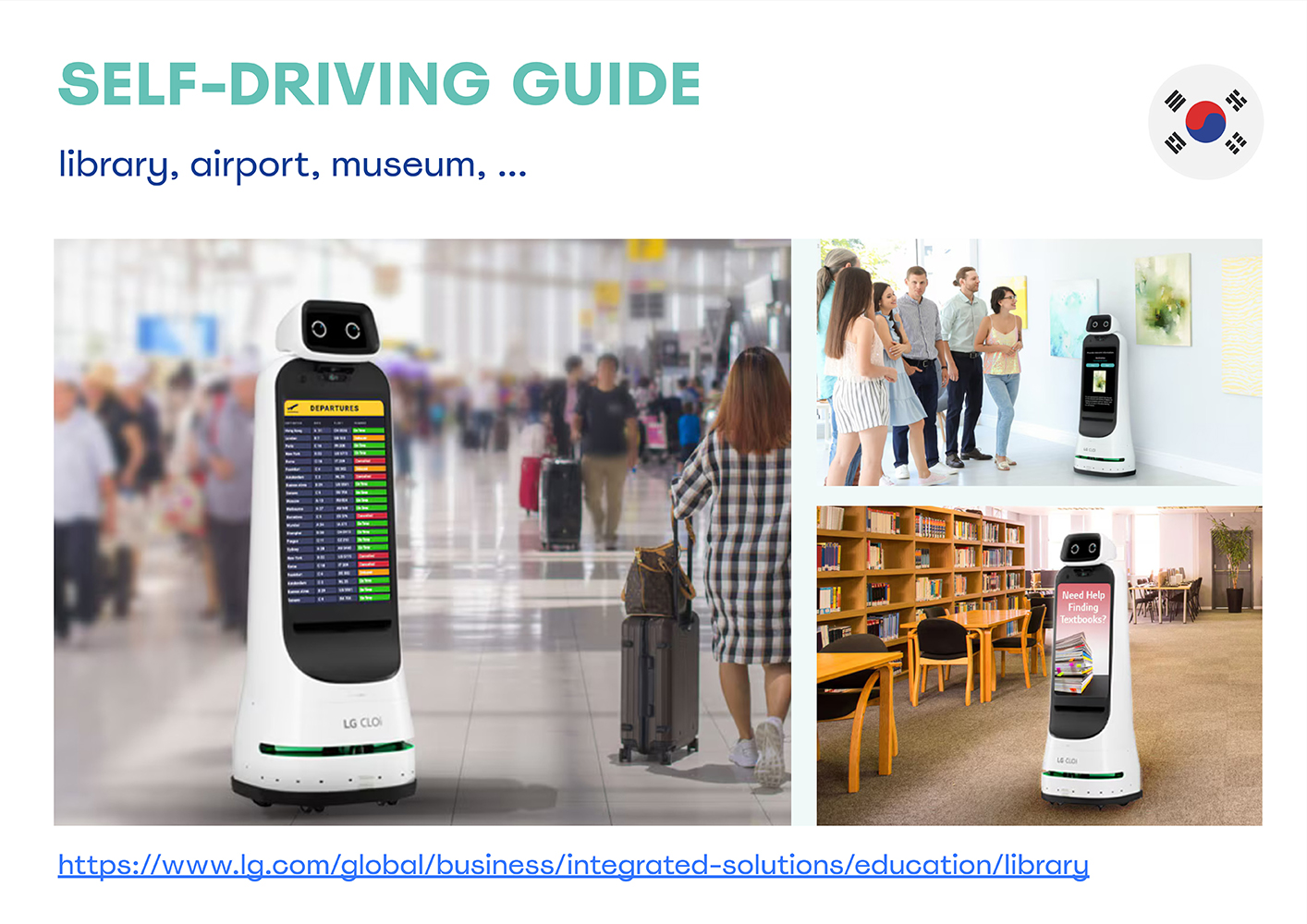
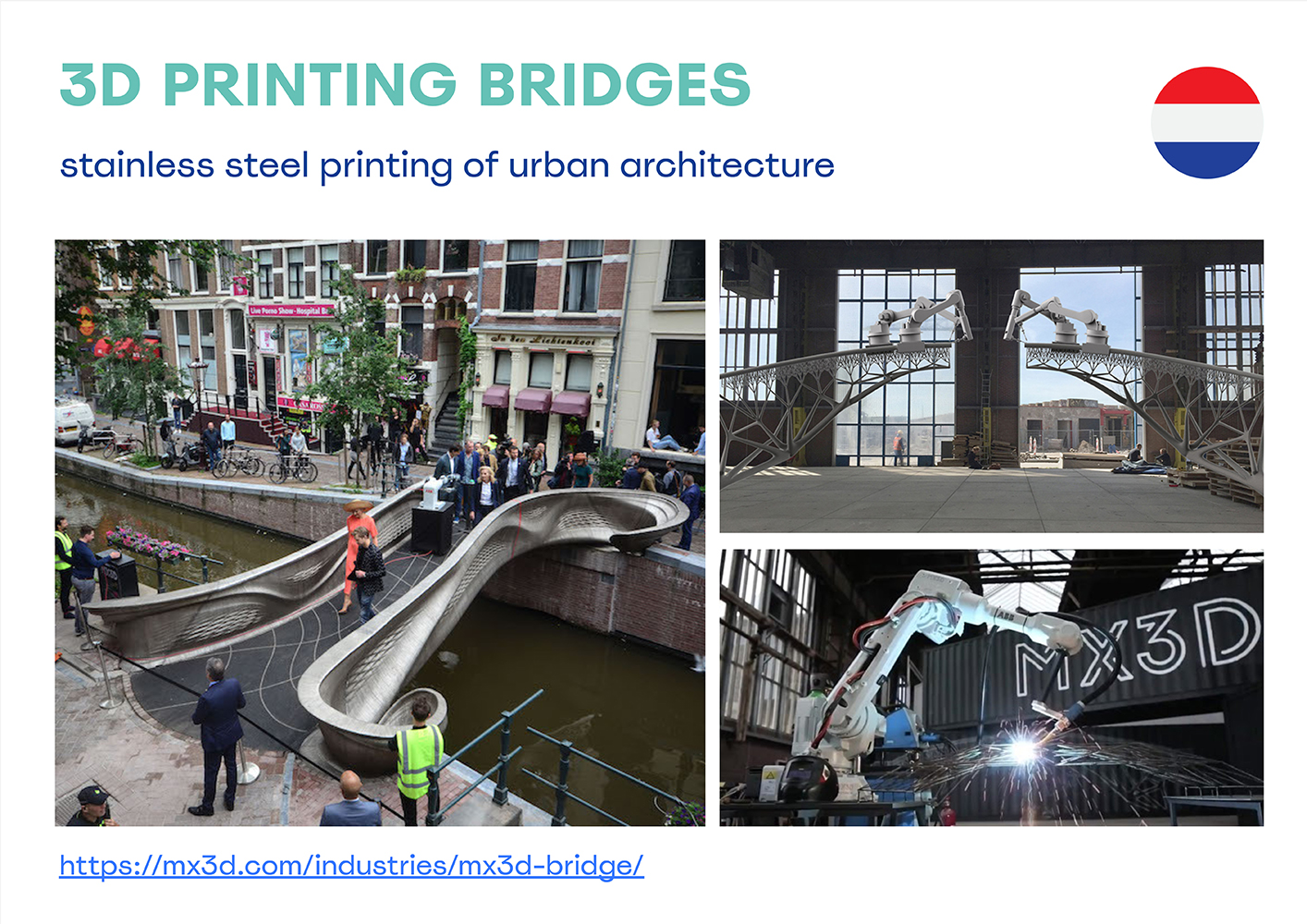
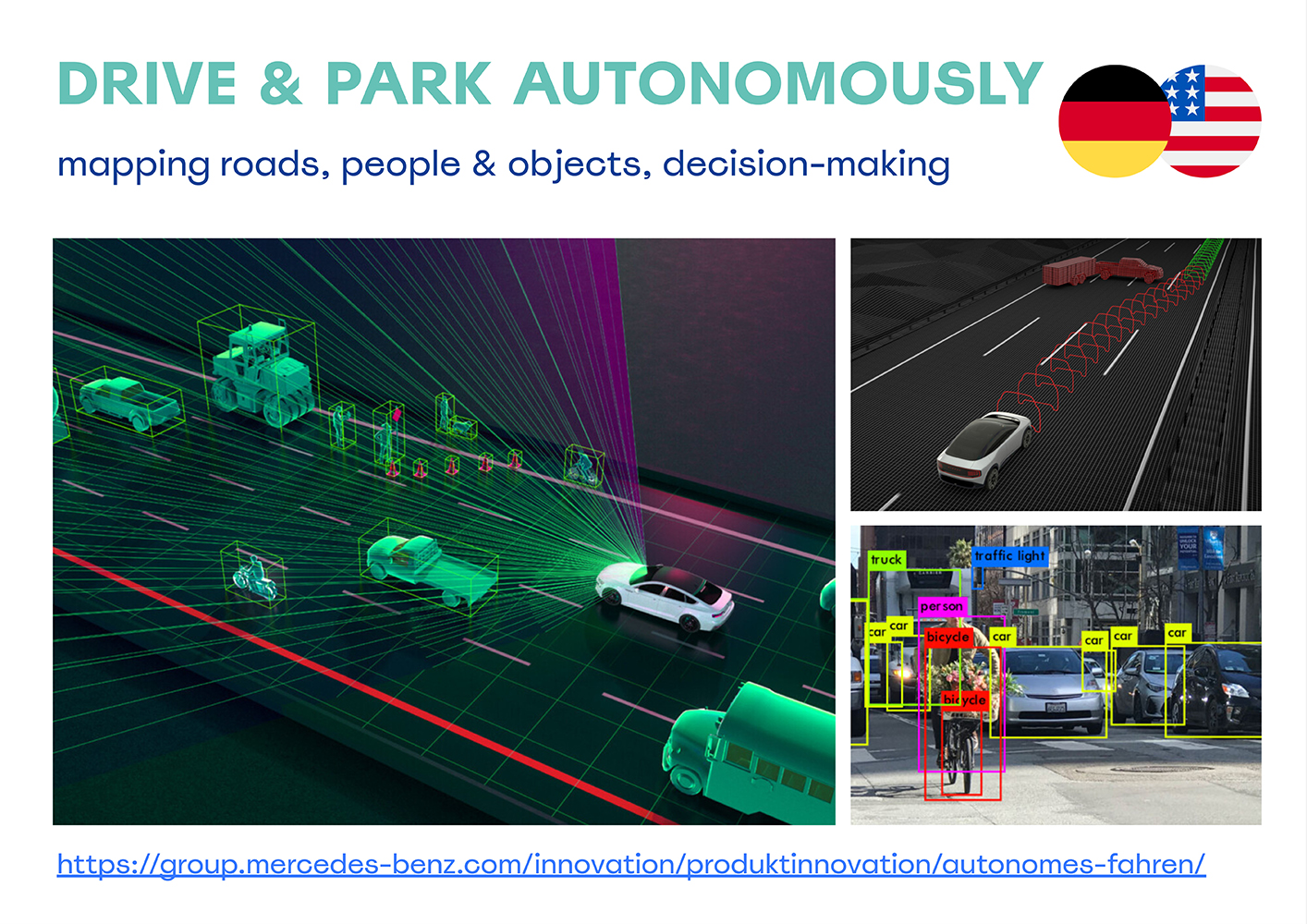
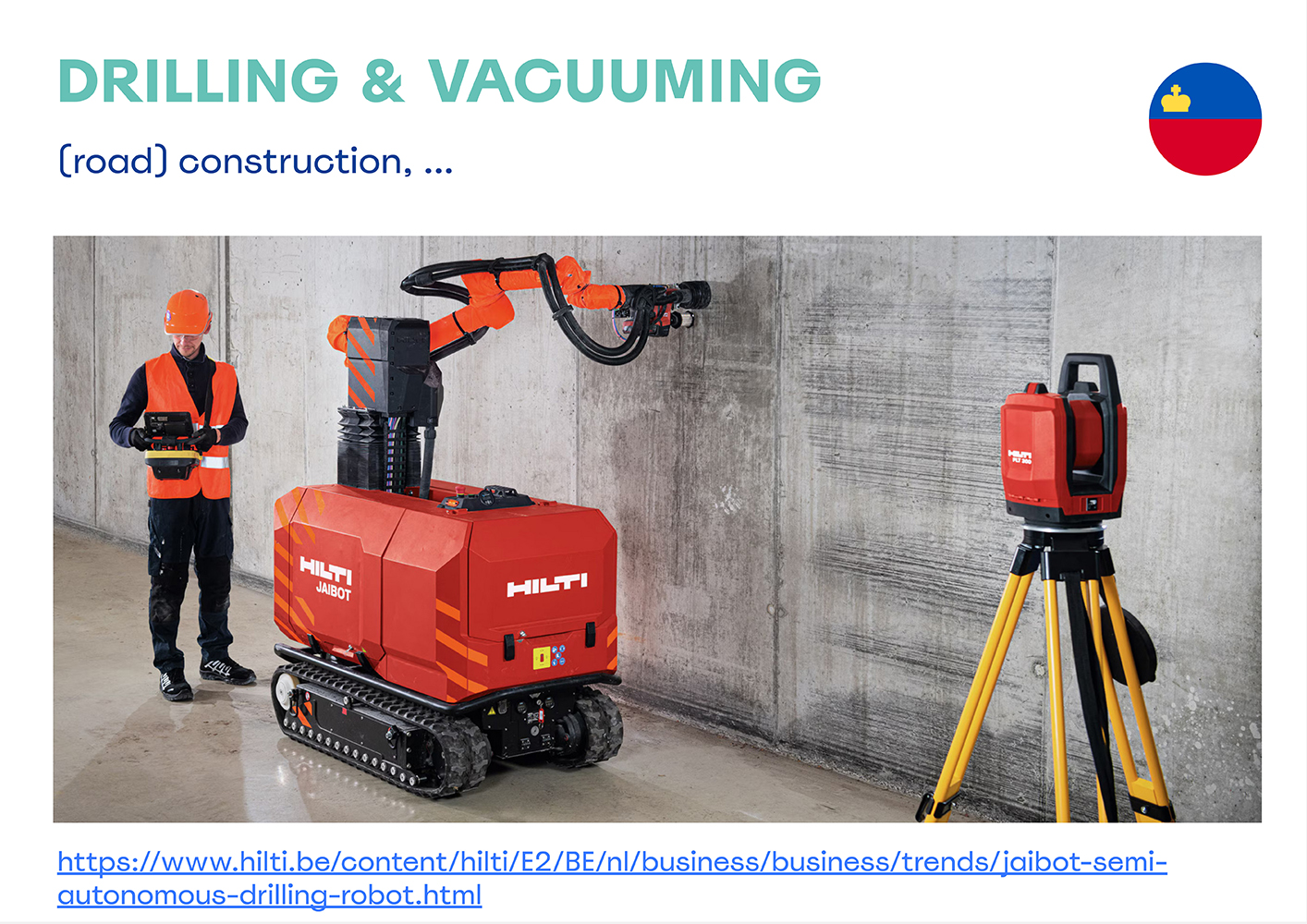
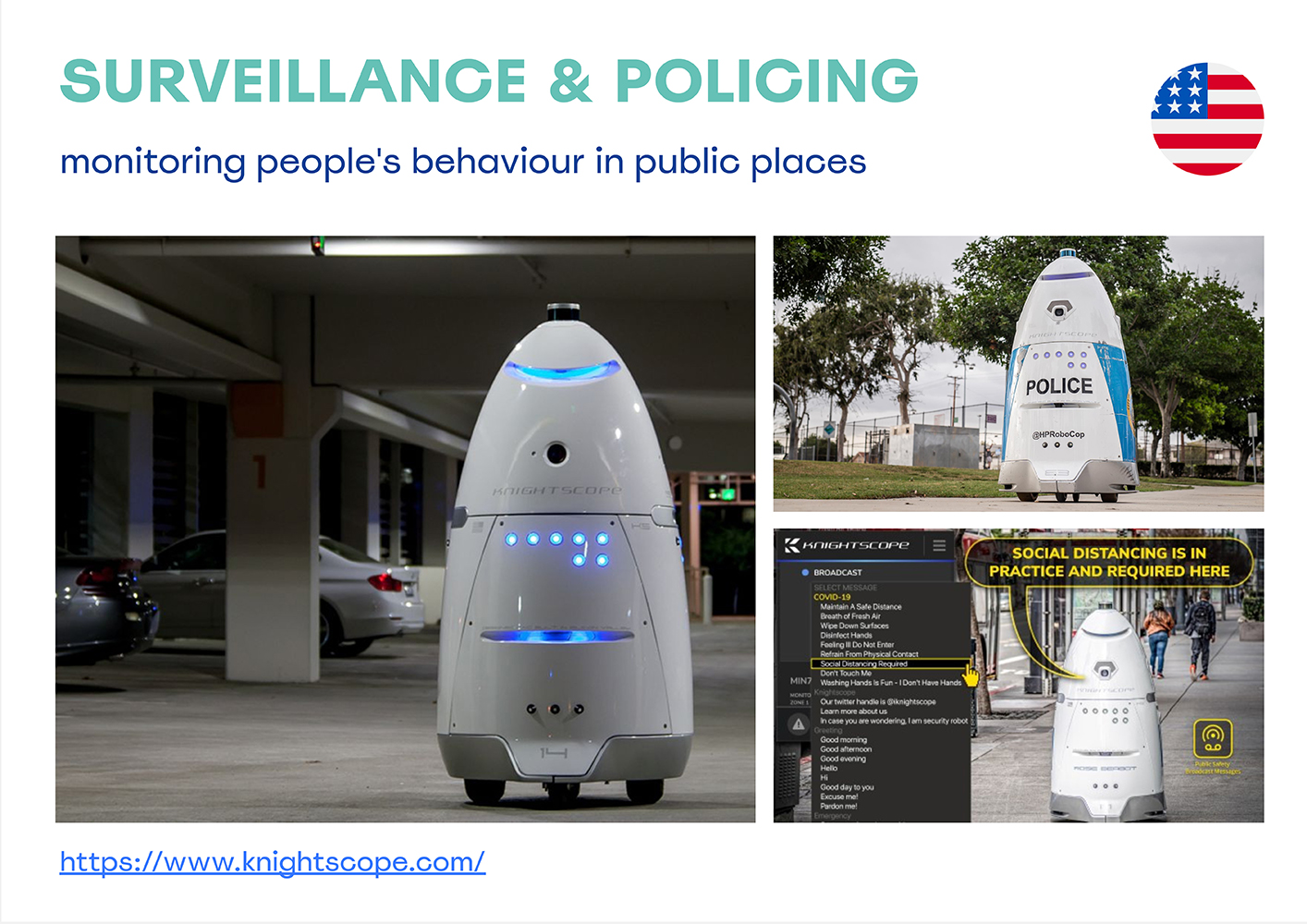
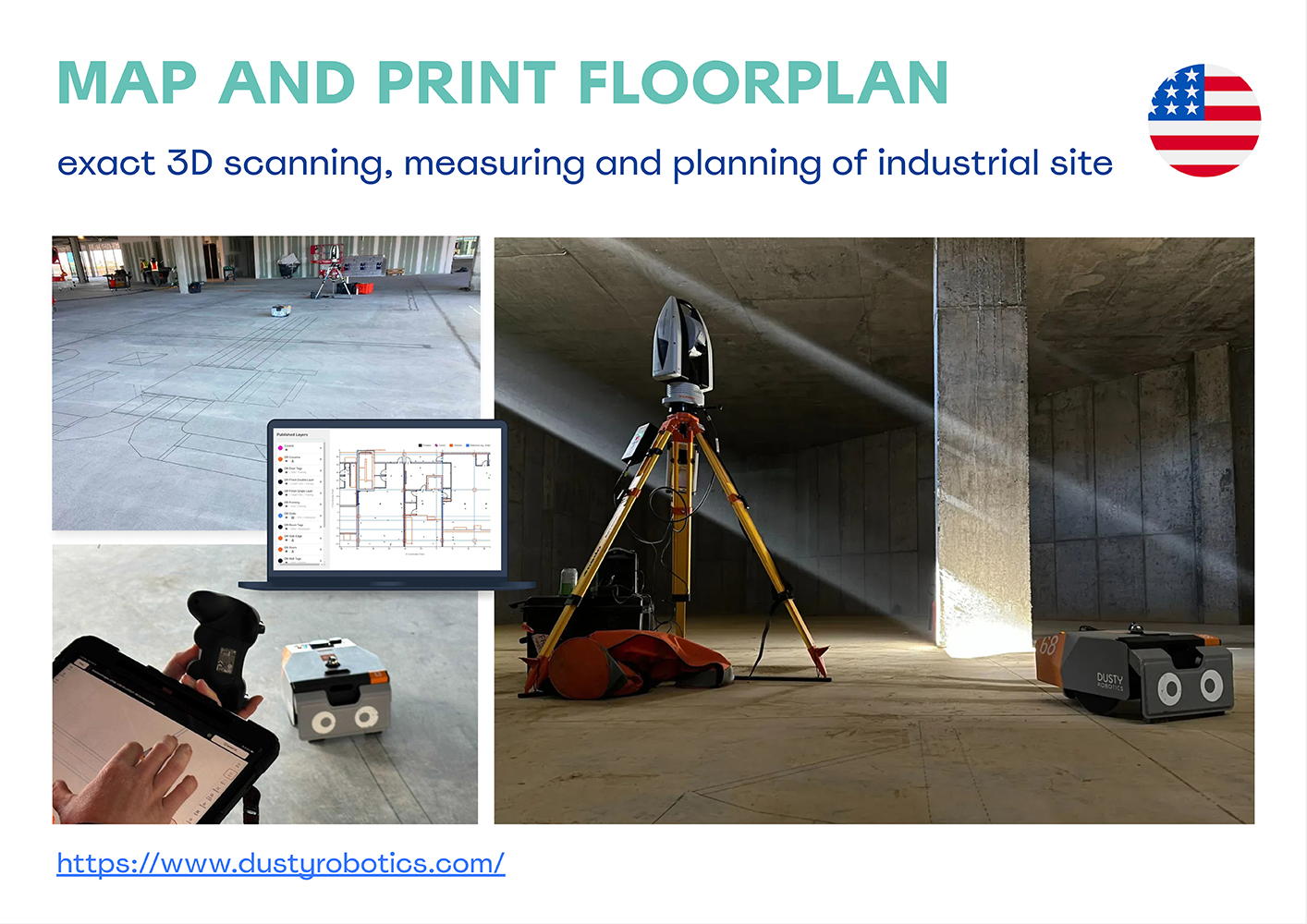
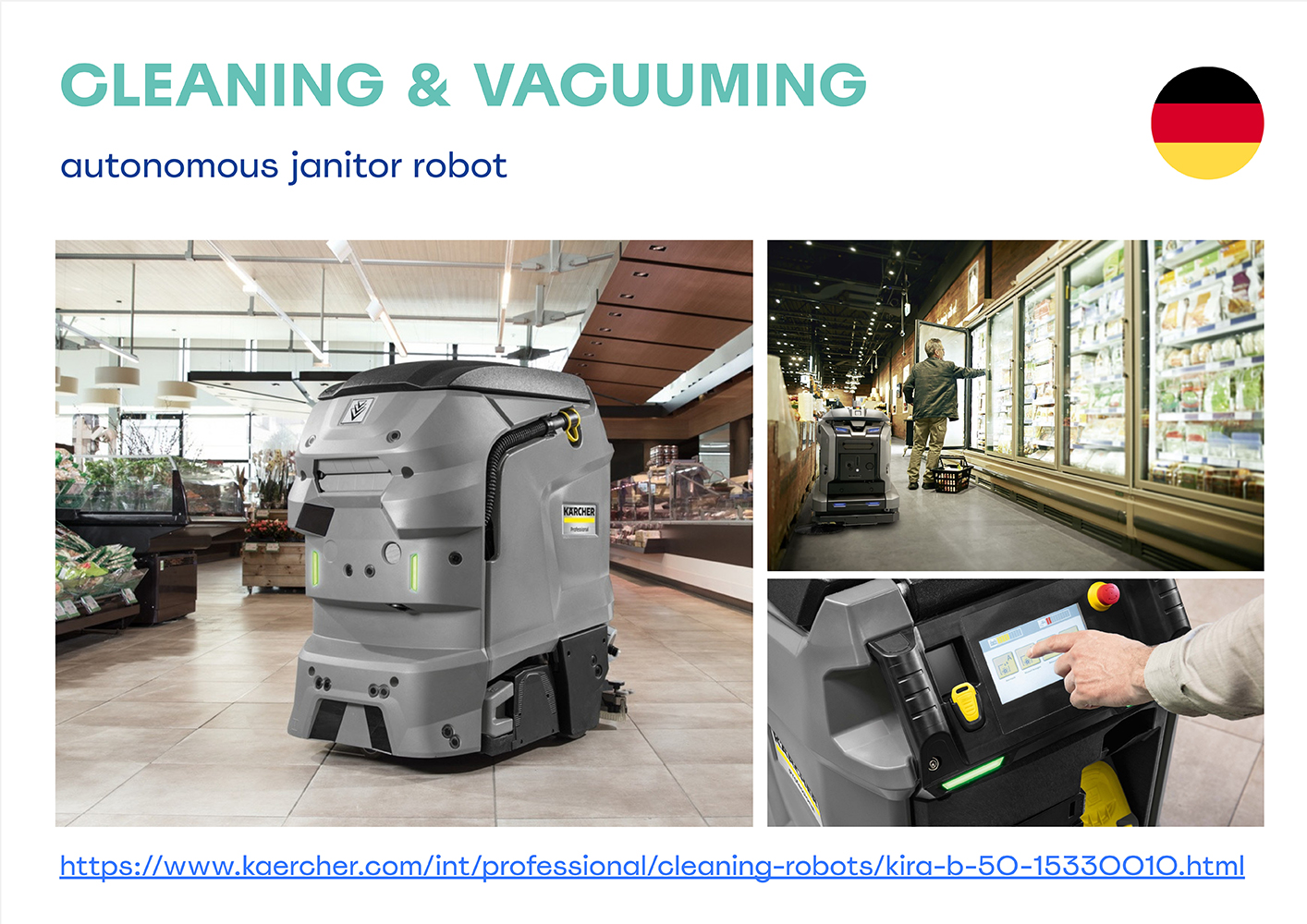
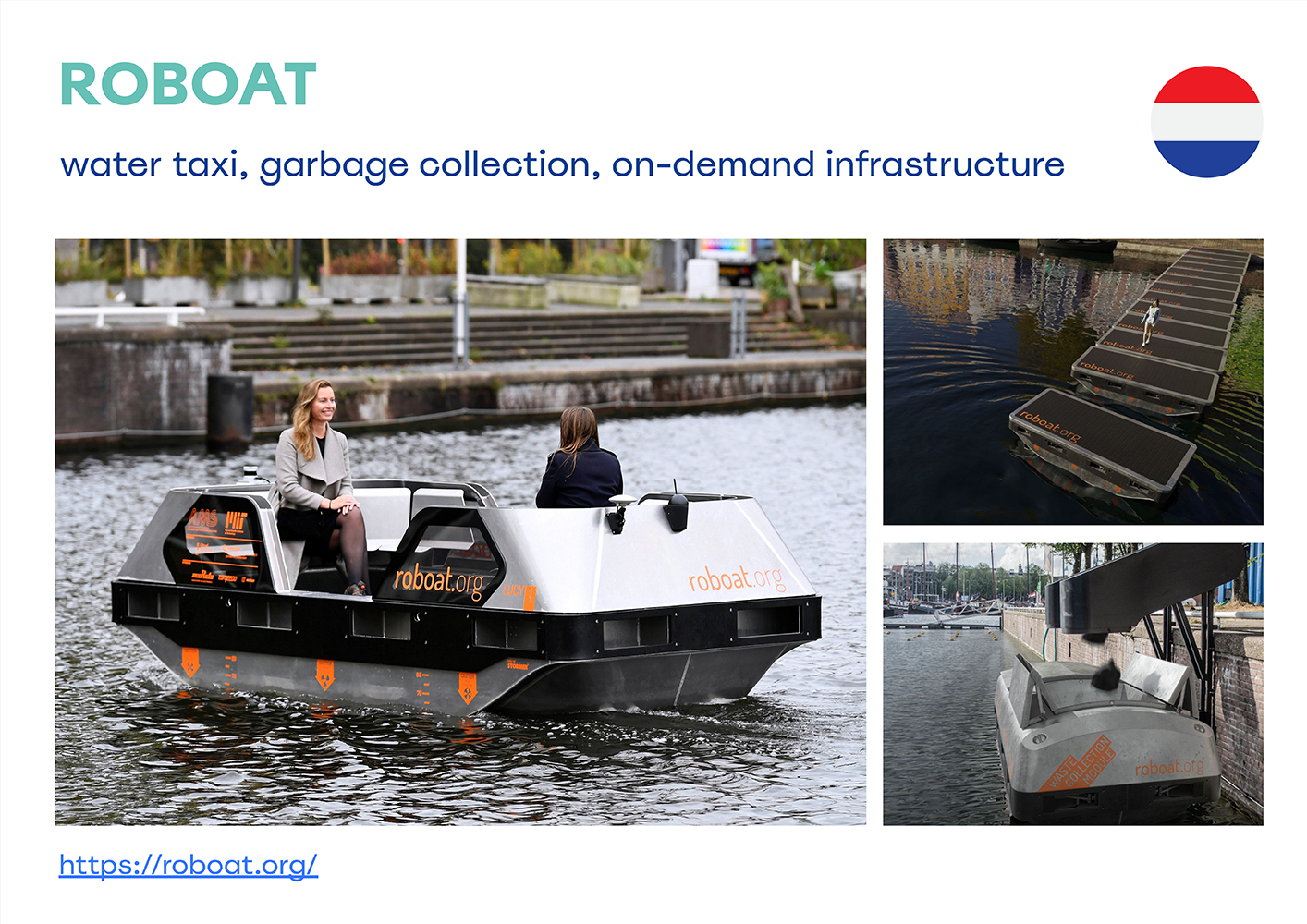
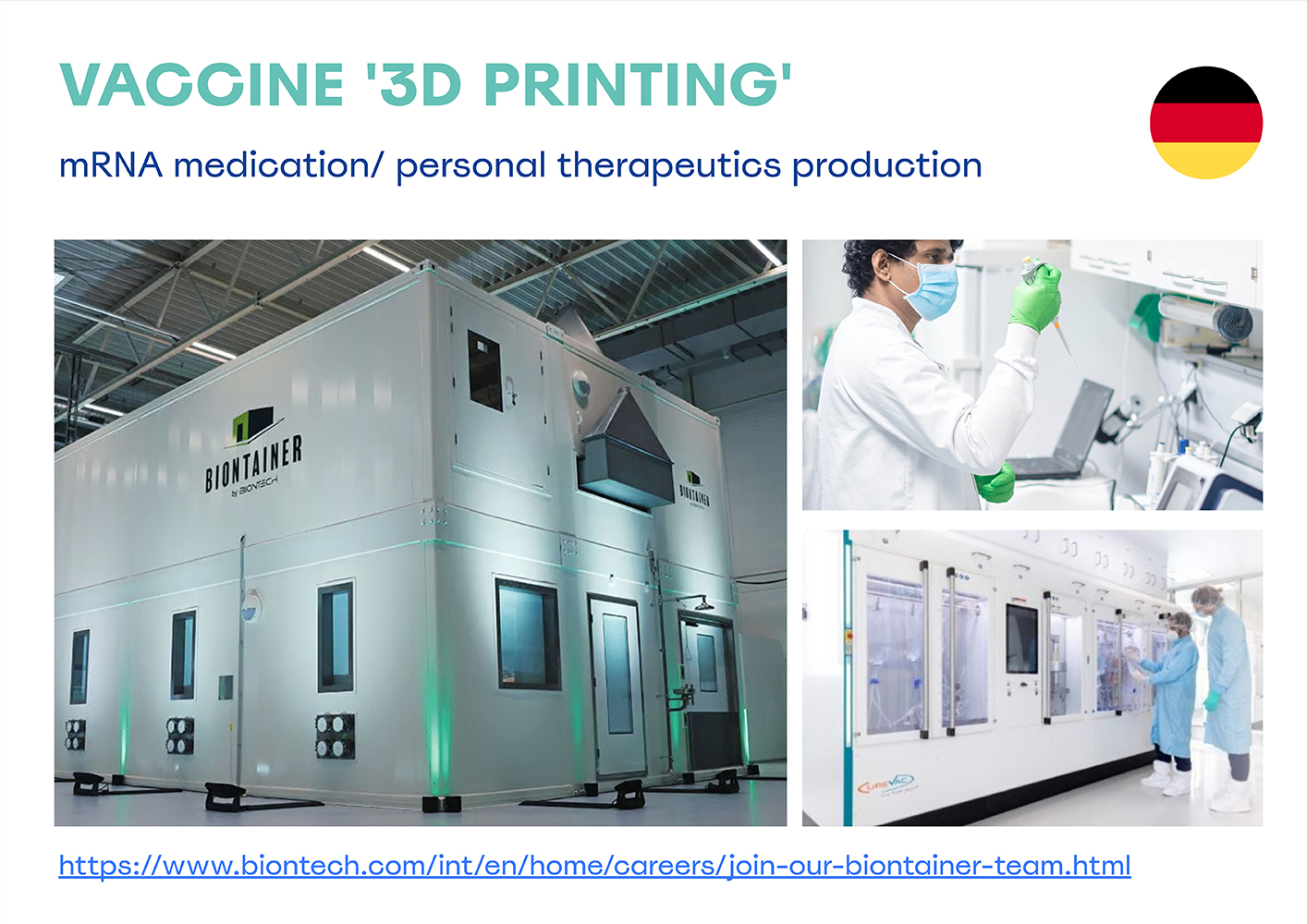
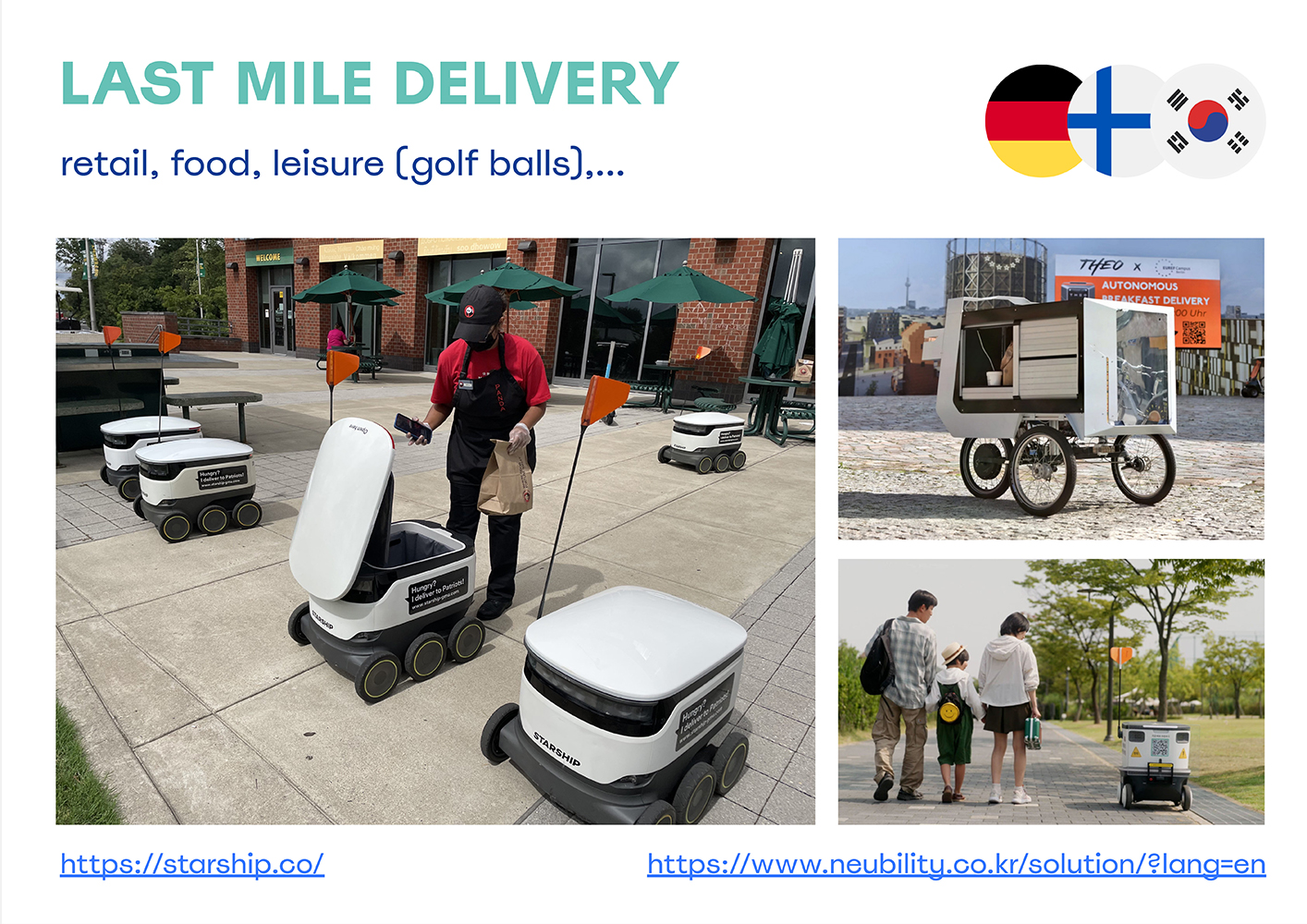
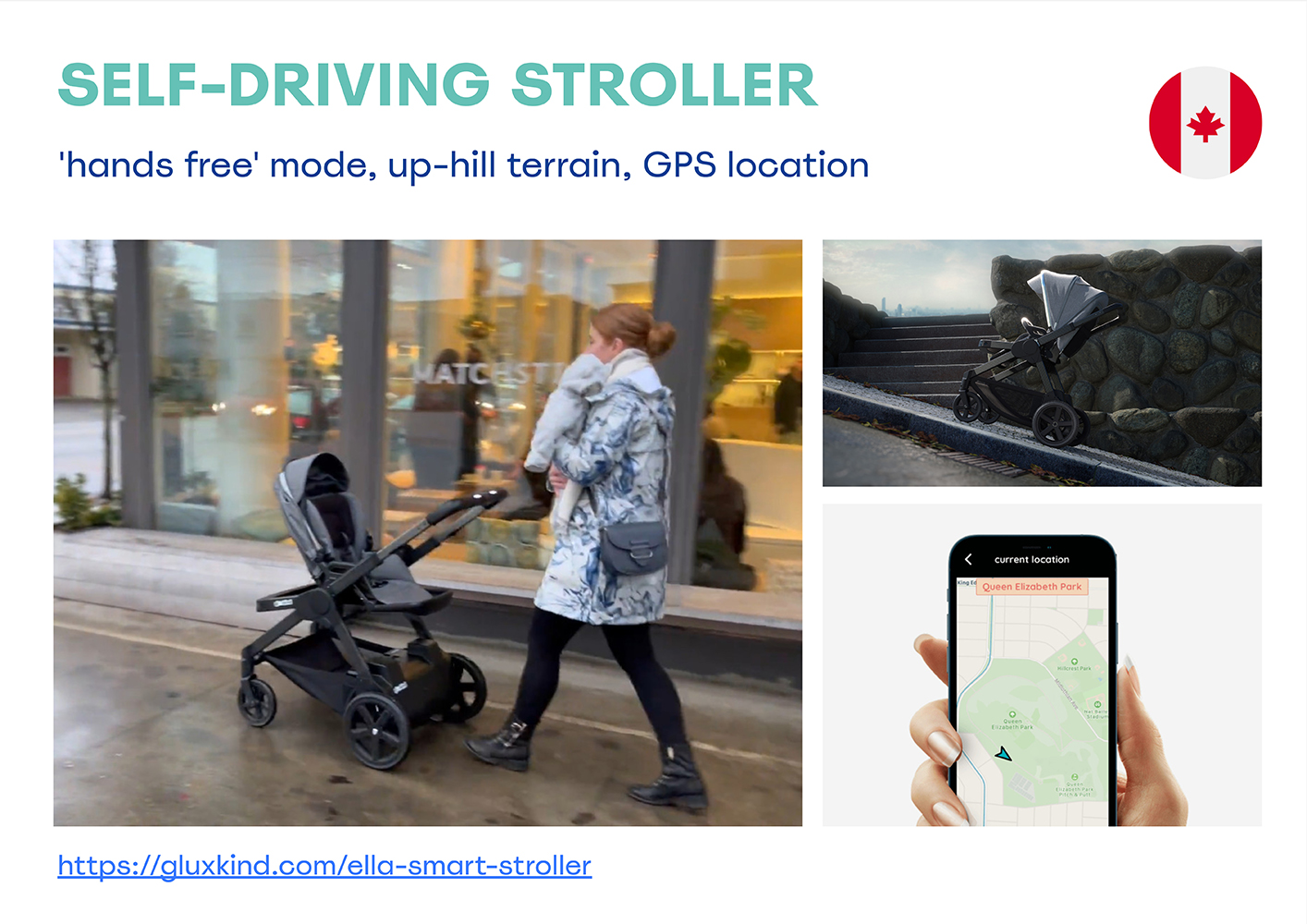
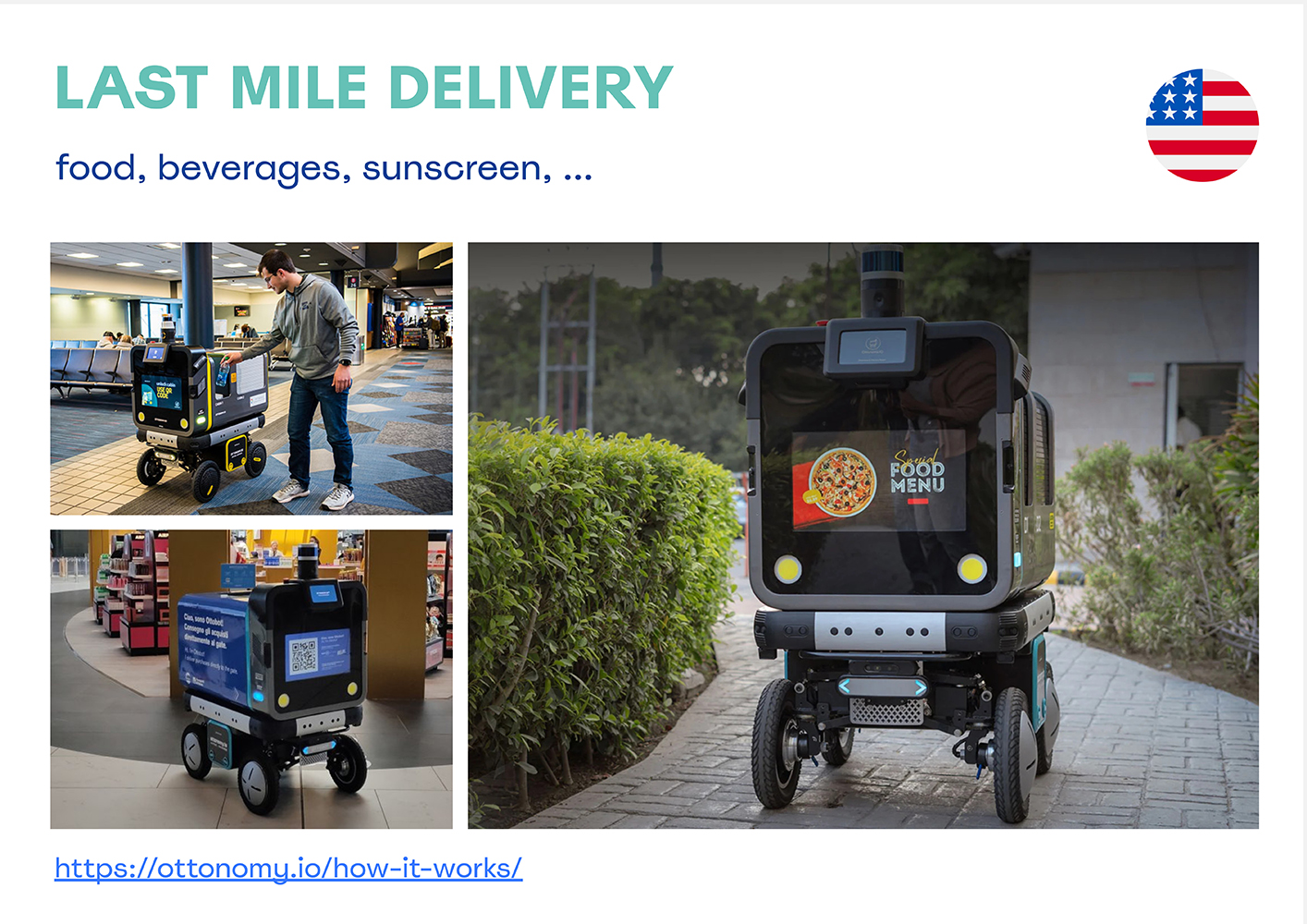
we show-cased service robotics trends and scenarios to help participants envision responsible and meaningful applications of robots in the Brussels-Capital Region, inspired by robot applications in the air, water and on the ground (view image carousel for examples of drones for forest planning, underwater robots for sewage inspection, healthcare, intralogistics, etc.)

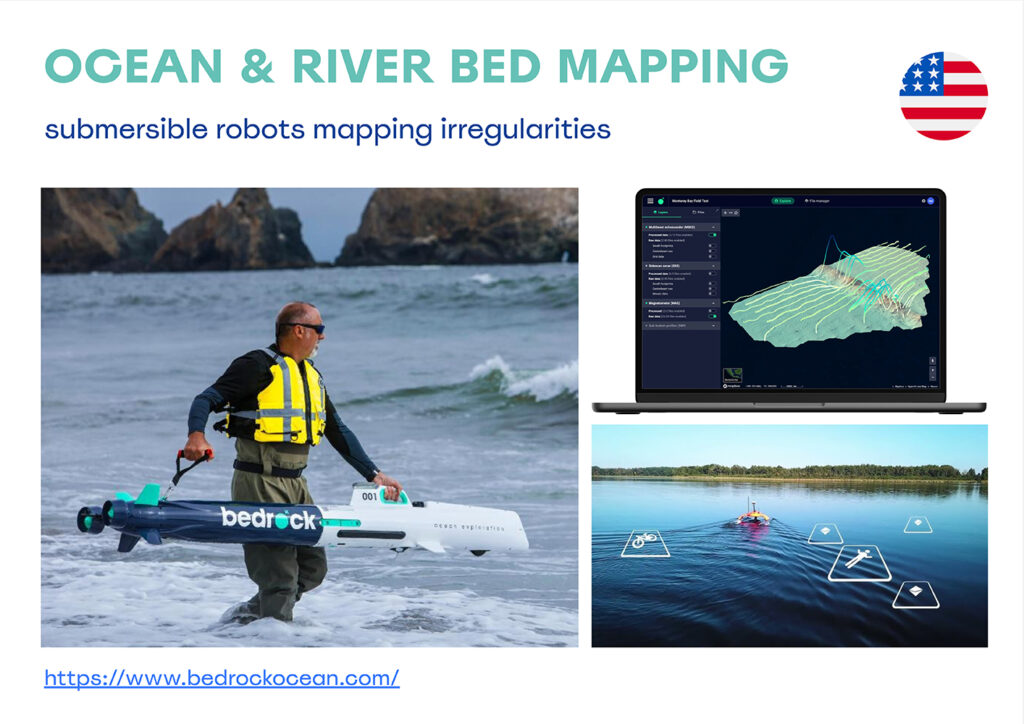
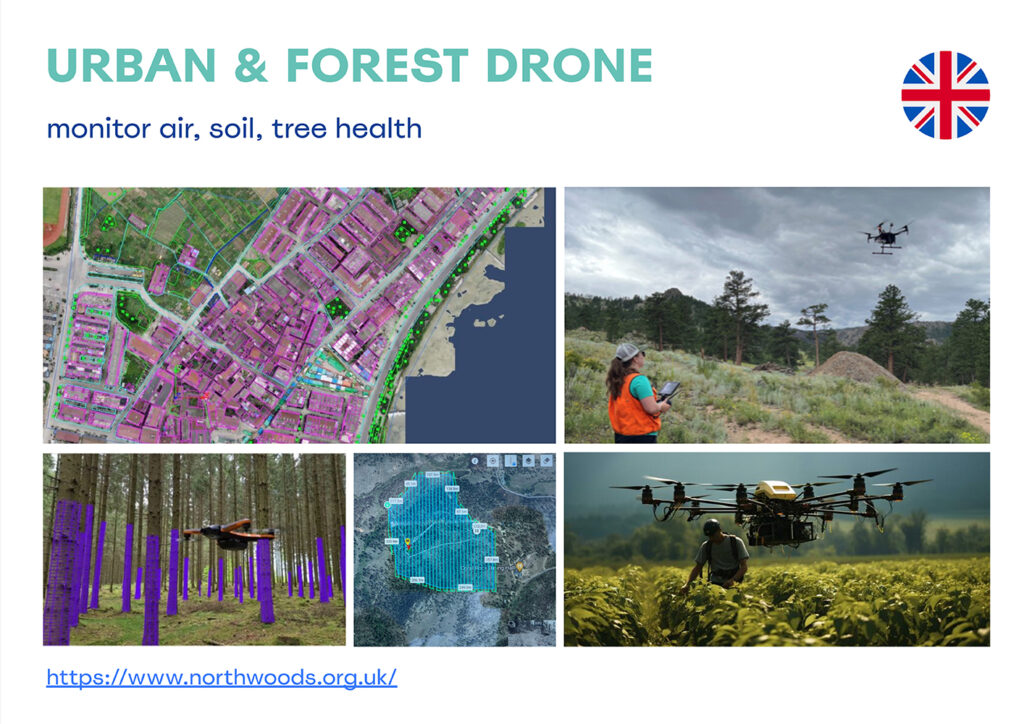

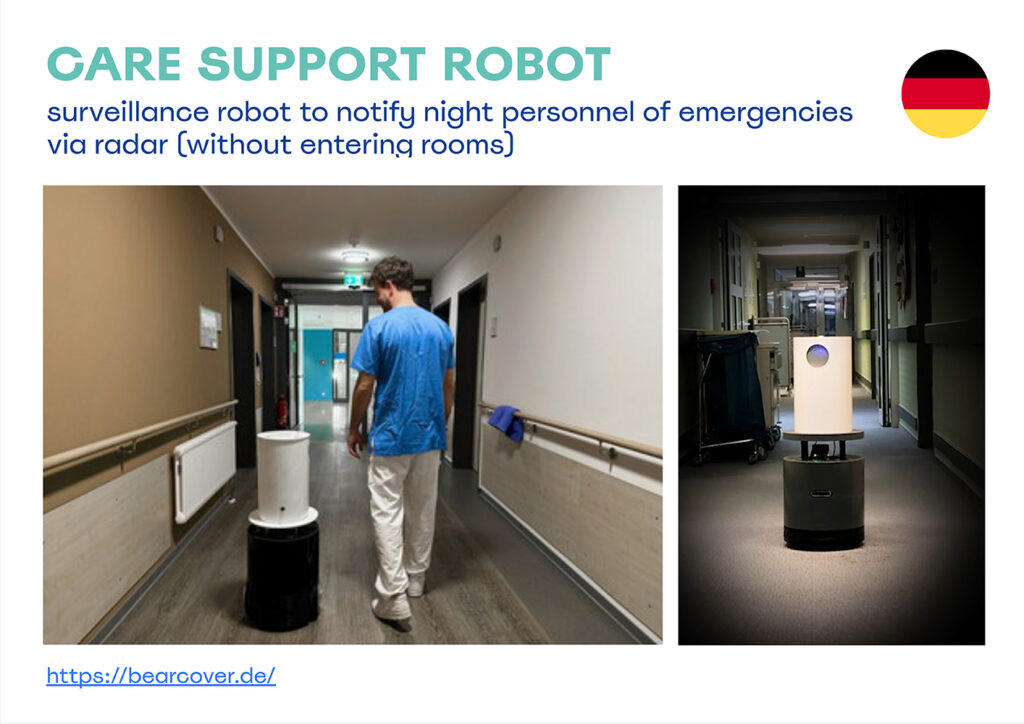
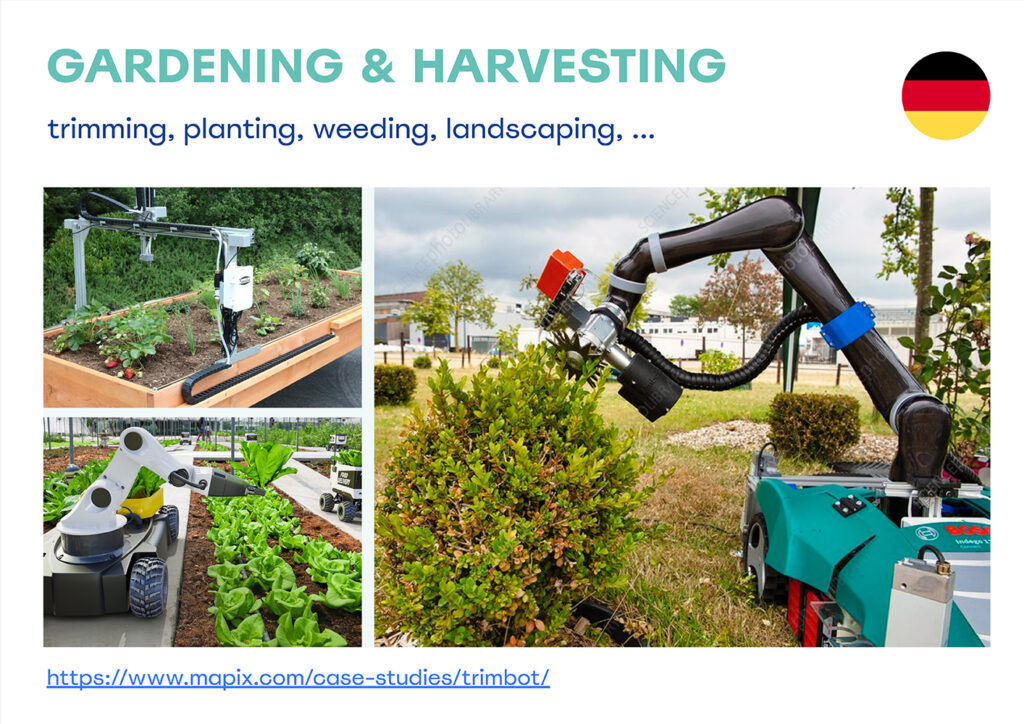



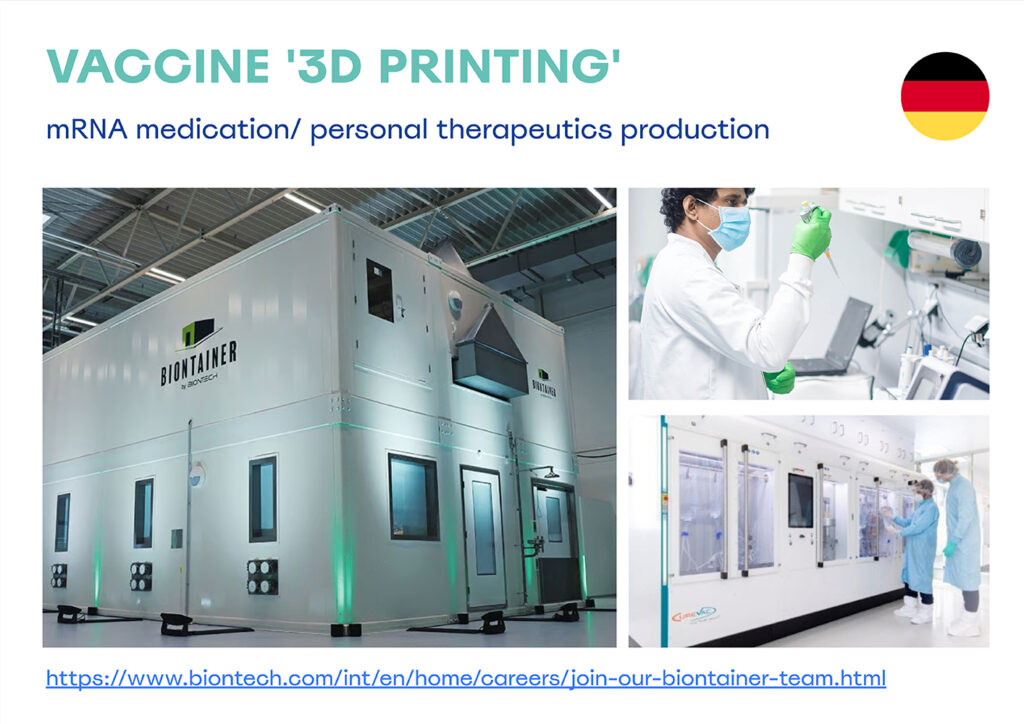
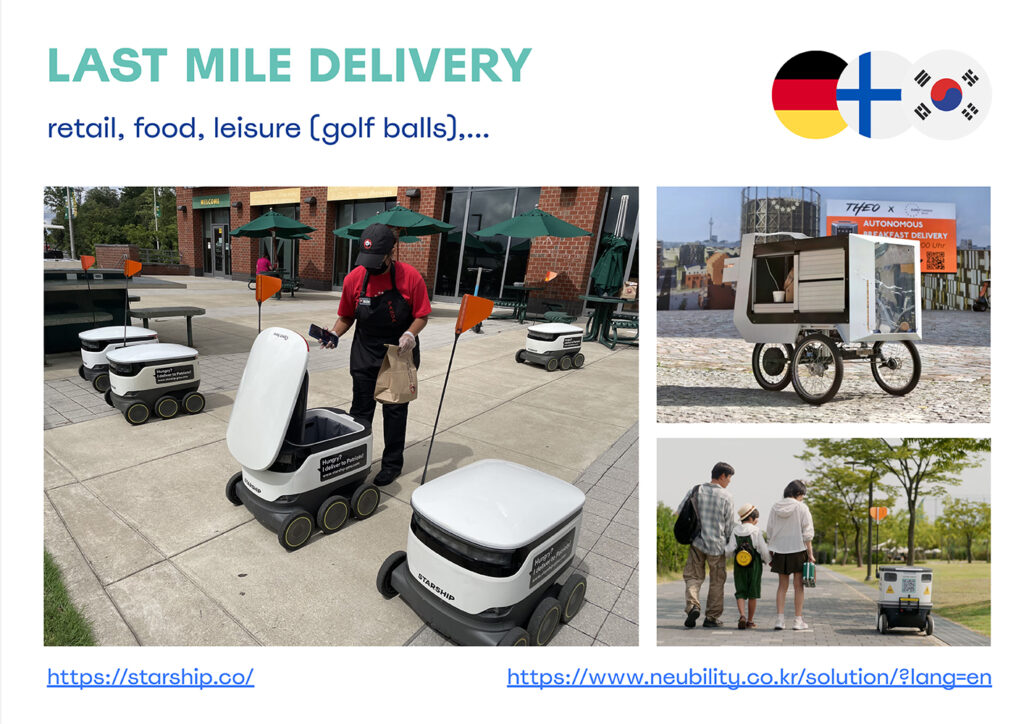
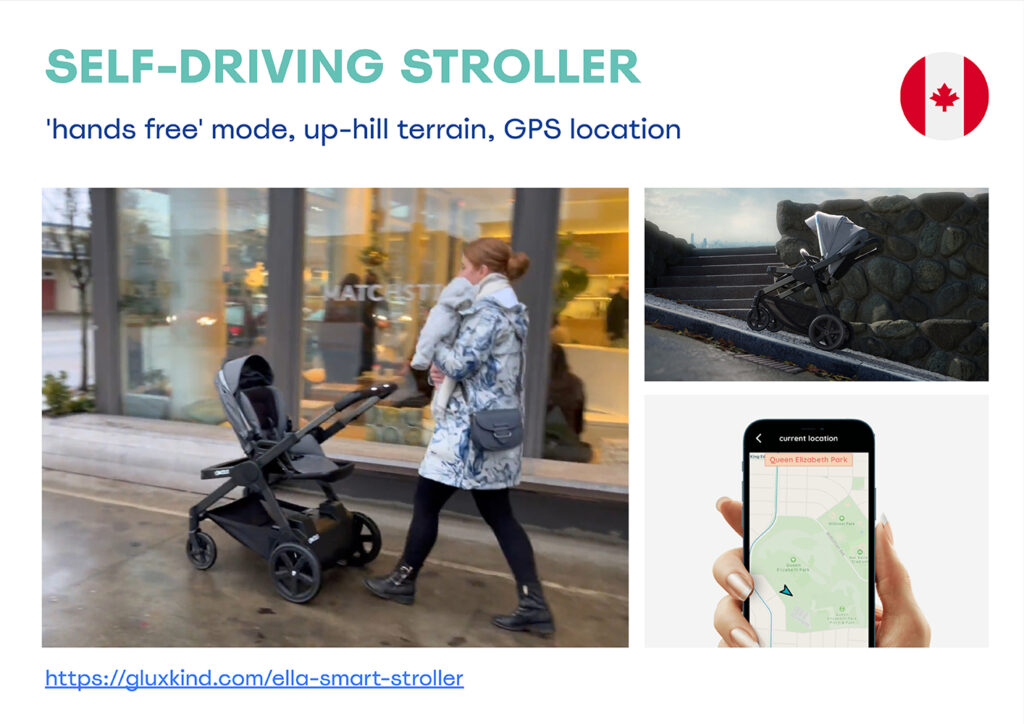
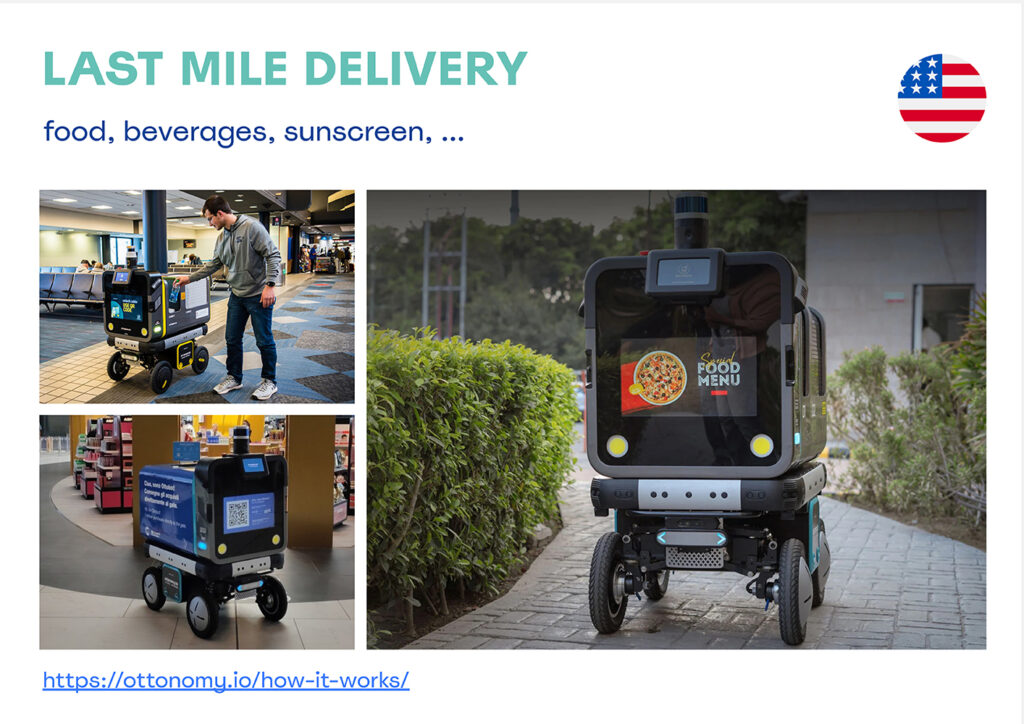

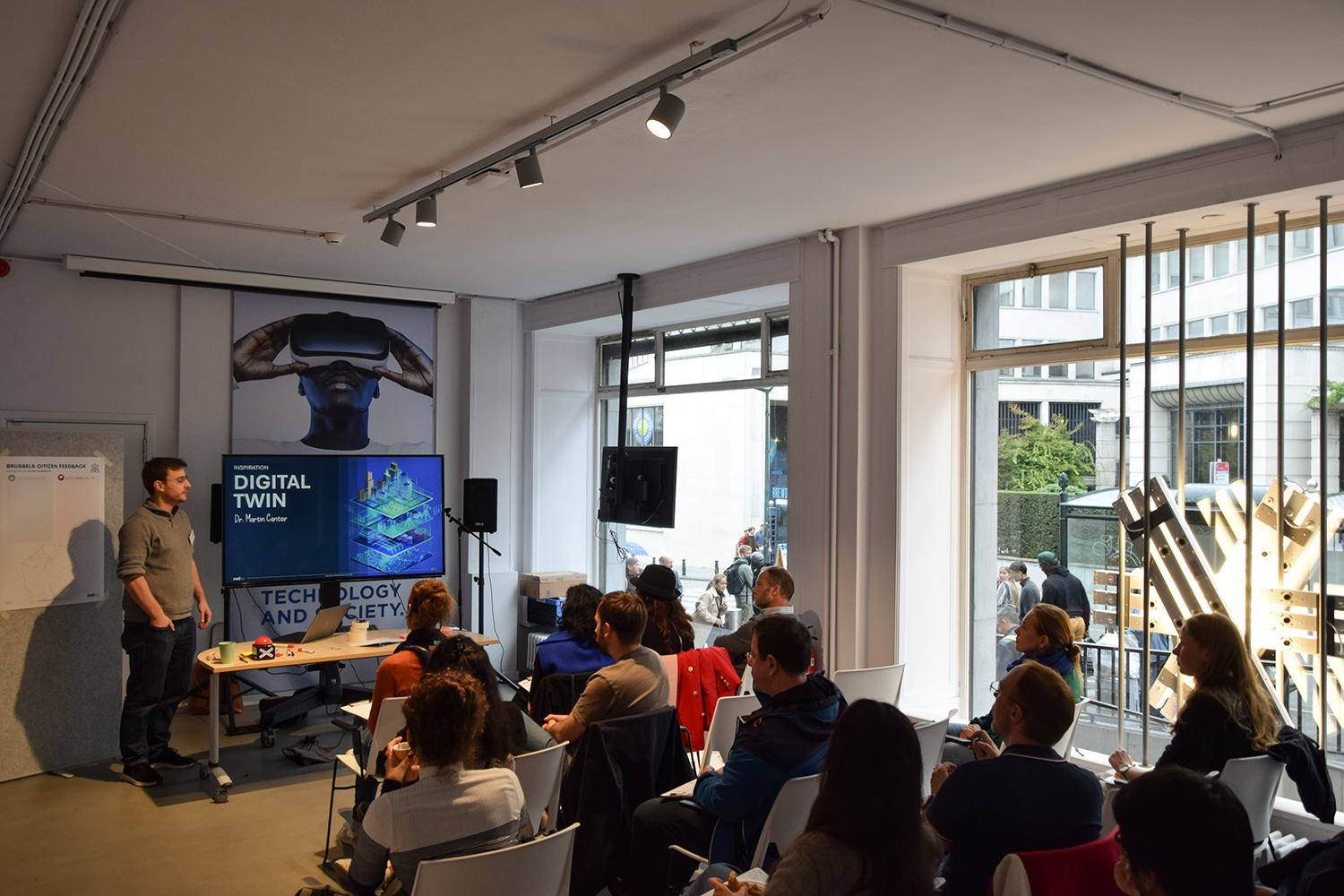
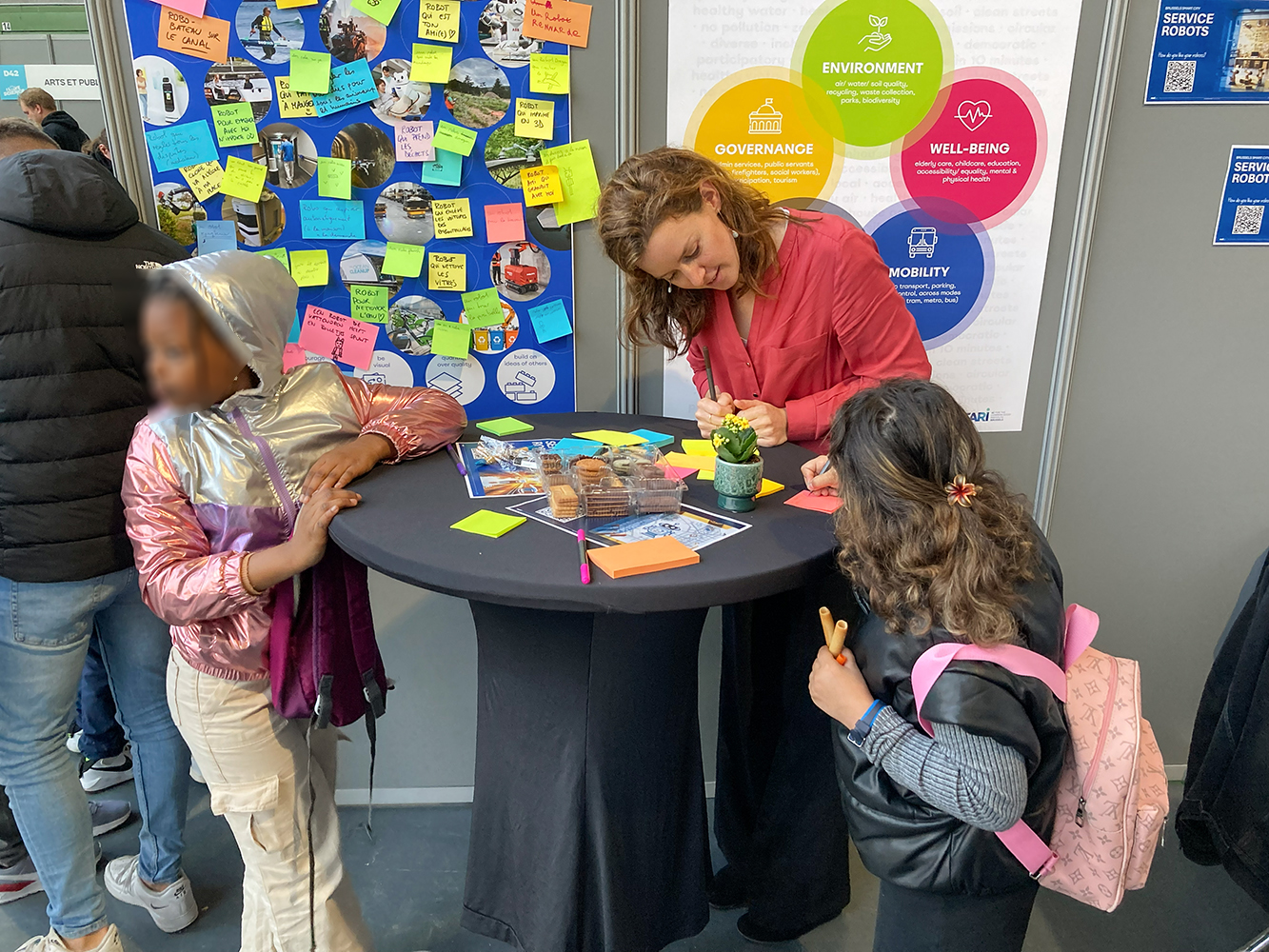
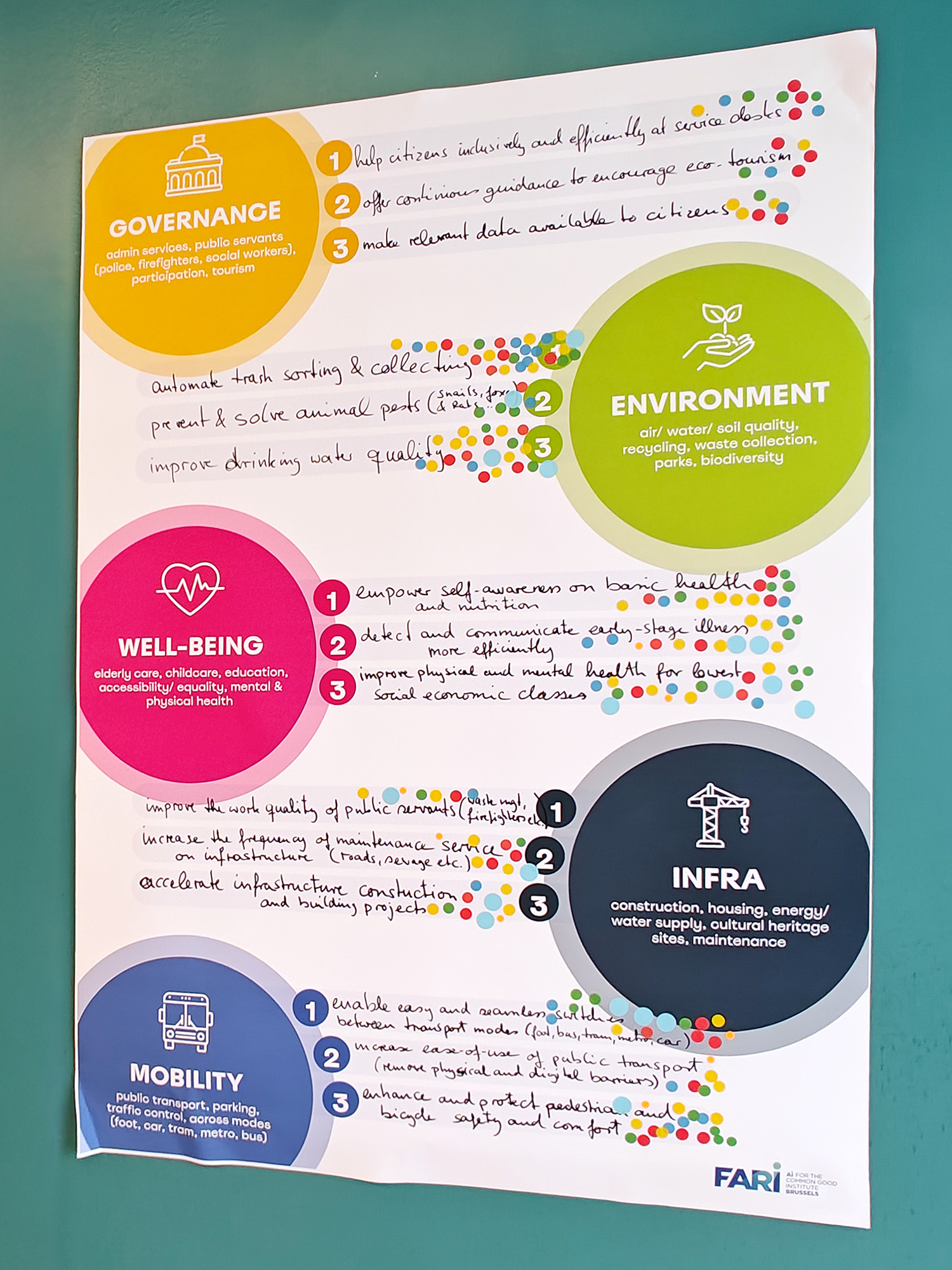
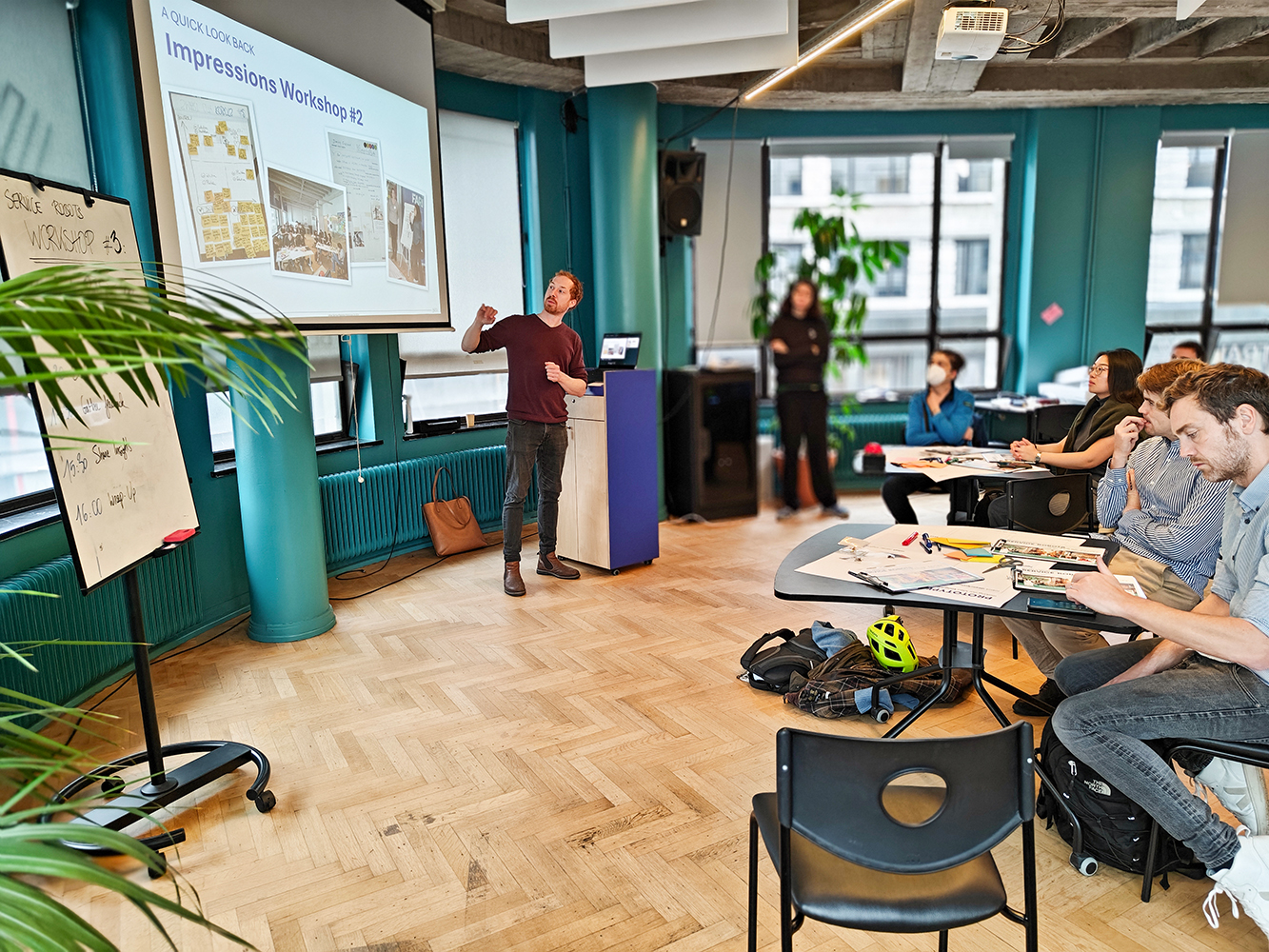

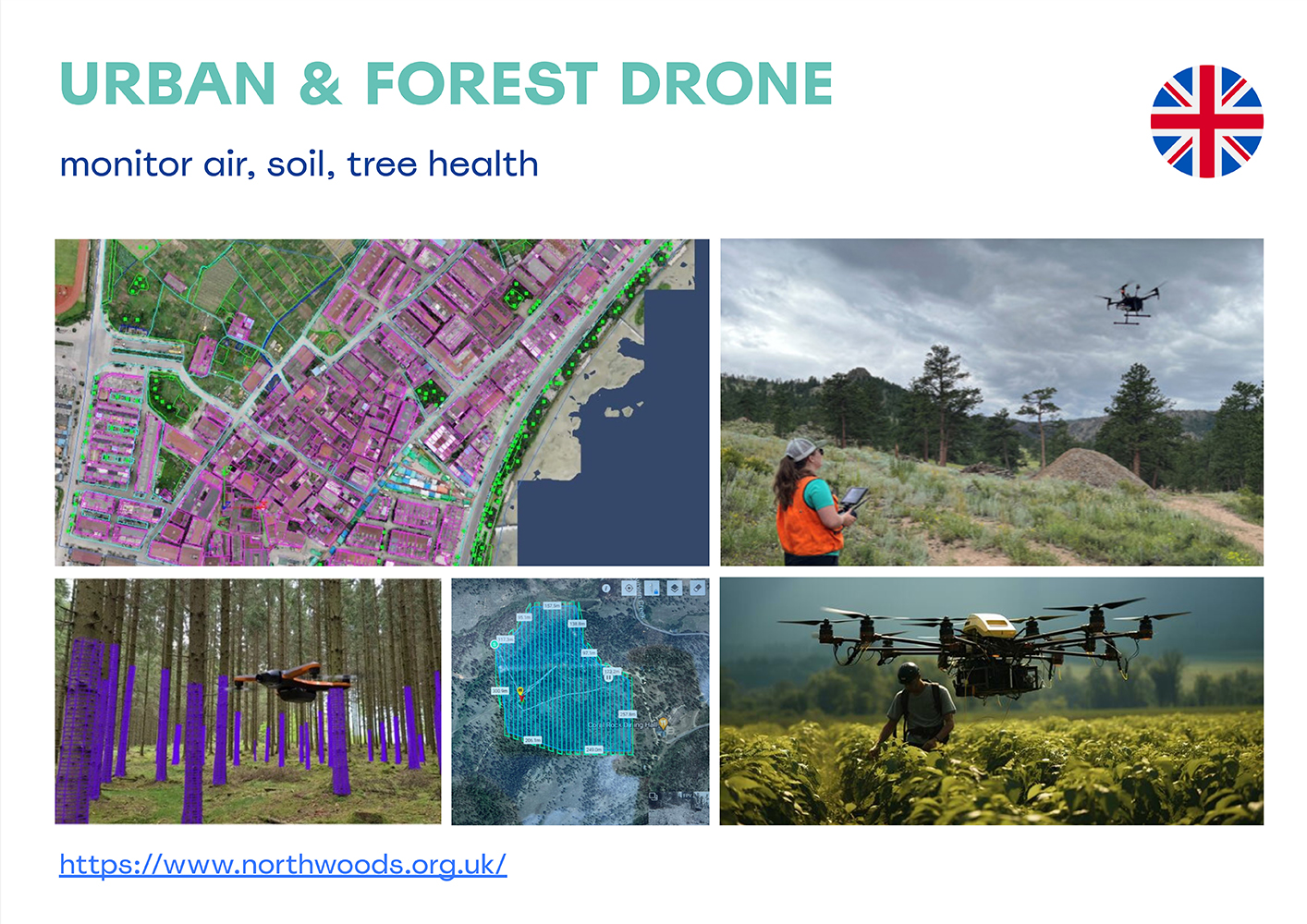
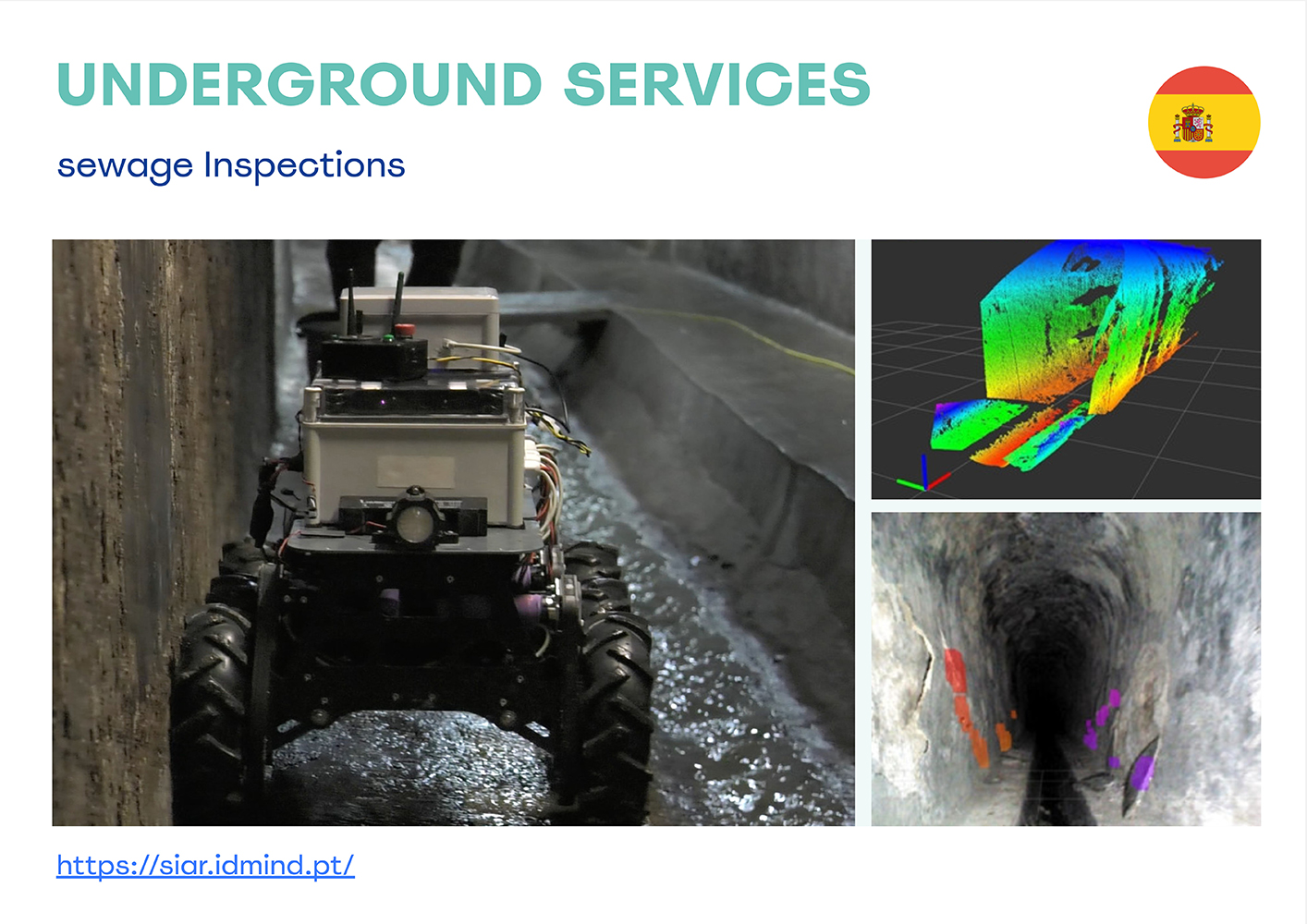
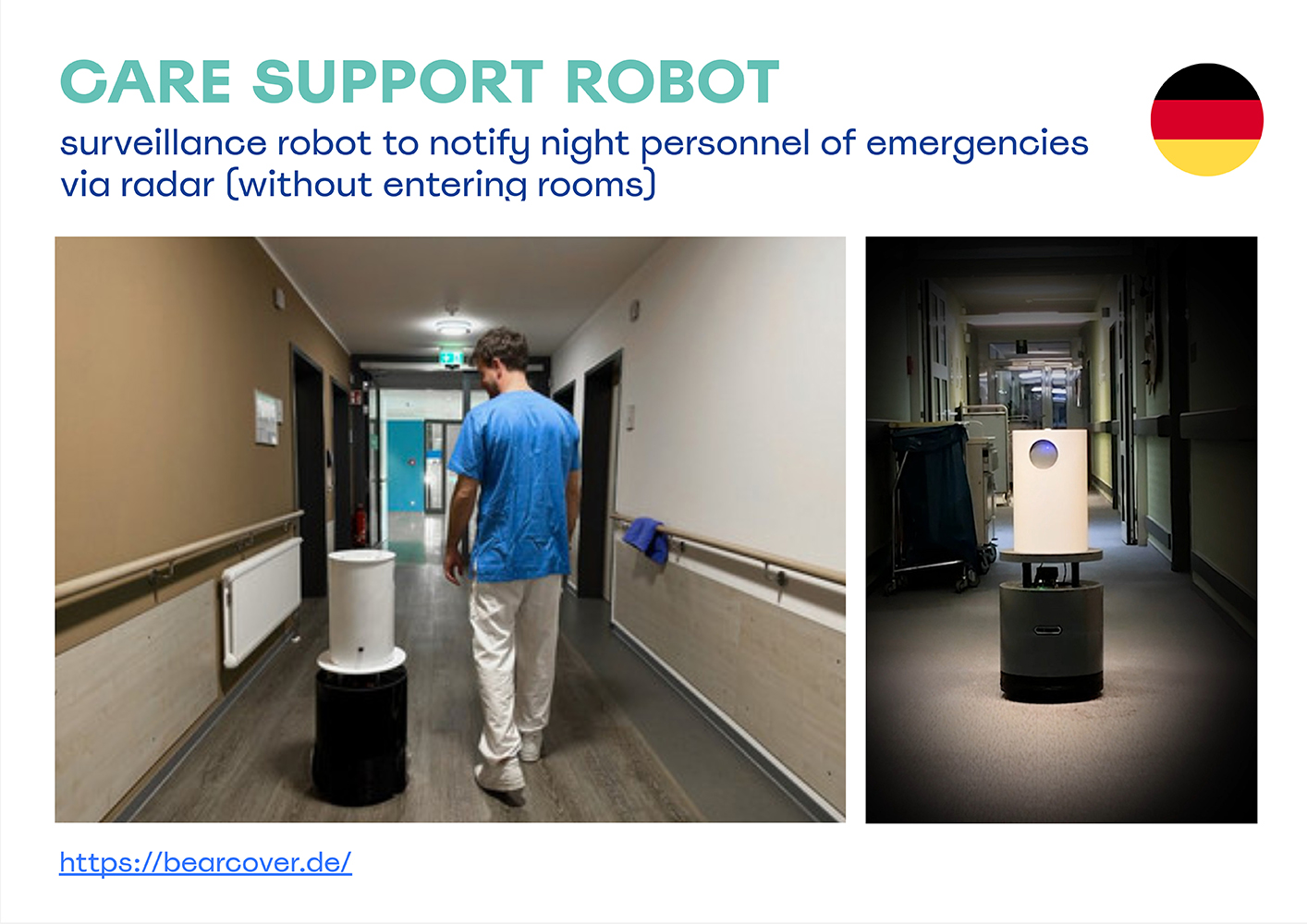
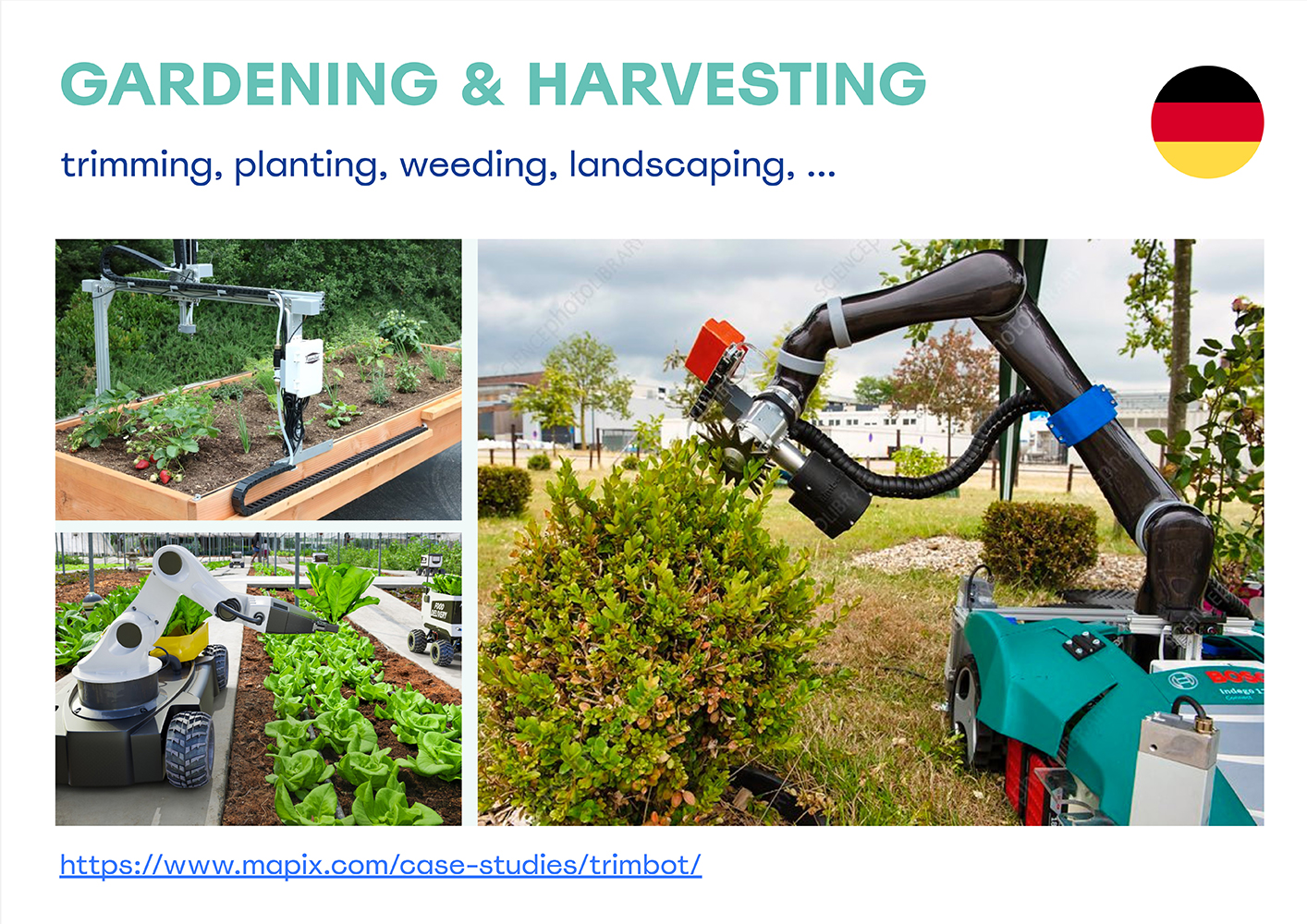

”It was crucial to work with a professional facilitator specialized in Service Design and Design Thinking, Diana Schneider, for this series of workshops.
Dr. Michel Joop Van der SchoorResponsible Service Robots
outcome
form factor, legal & ethical robot requirements
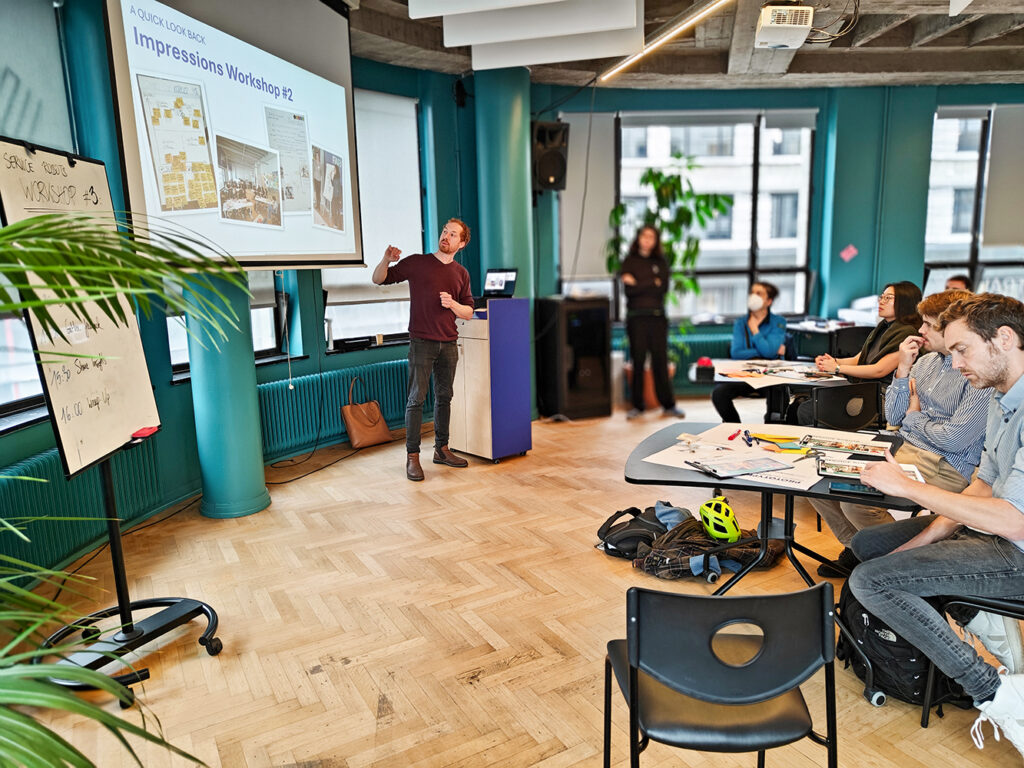
the project transformed the research question, “how can AI-enabled service robots create value in Brussels?” into a structured citizen engagement Design Thinking workshop series, where citizens, civil servants and researchers explored urban challenges, identified opportunities and co-created service concepts for a smarter, more inclusive Brussels
beyond concept generation, the project uncovered how people perceive emerging technologies, what drives trust and acceptance, and which features matter most in public-sector innovation.
the workshops culminated in a set of human-centred design principles for urban robotics, including accessibility, simplicity, transparency, sustainability, stakeholder involvement and ethical responsibility: a practical foundation for future AI, robotics and smart city initiatives seeking to create responsible innovation with and for citizens. The resulting framework demonstrated the value of participatory design for defining user needs, identifying functional requirements and building public confidence in AI-enabled robotics solutions
client briefing
as Artificial Intelligence (AI) and robotics move from research labs into public spaces, cities face the question: how can new technologies create meaningful value for citizens while remaining trustworthy, inclusive and ethically responsible?
value of design
- Citizen needs translated into innovation opportunities
- Public trust embedded into AI and robotics design
- Complex technology made tangible and actionable
- Shared alignment across citizens, researchers and public administrations
- Human-centred principles for responsible AI adoption
for FARI, the AI for the Common Good Institute in Brussels, we designed and facilitated a citizen-centred co-creation programme that helped explore this question through the lens of urban service robotics. Collaborating with robotics researcher Dr. Michel Joop Van der Schoor, we designed and facilitated a co-creation process that translated ambitious research objectives into an accessible and engaging participant experience. The workshop series followed the 4-phased Double Diamond Design Thinking approach:
inspired
by this project?
Do you have a question about this project? Head over to the blogpost published by FARI. Would you like to discuss how a similar approach can benefit your organisation?